Olympic vs Standard Plates: Dumbbell Behind Head Exercise
Compare Olympic vs standard weight plates for your 2026 home gym. Discover which setup best supports the dumbbell behind head exercise and heavy lifts.

The Core Clash: 1-Inch Standard vs. 2-Inch Olympic Plates
Building a home gym in 2026 requires navigating a maze of equipment specifications, and the most foundational decision you will make is choosing between standard and Olympic weight plates. While the untrained eye might only see a difference in the center hole size—1 inch for standard and 2 inches (50mm) for Olympic—the implications of this choice ripple through every exercise in your routine. From heavy compound barbell lifts to precise isolation movements, the plate system you select dictates your equipment ecosystem, safety margins, and biomechanical efficiency.
In this head-to-head comparison, we are going beyond basic barbell specs. We will analyze how these two plate systems impact adjustable dumbbell setups, specifically focusing on clearance, ergonomics, and safety during the classic dumbbell behind head exercise (commonly known as the overhead triceps extension or French press). Whether you are outfitting a garage gym on a strict budget or investing in commercial-grade urethane, understanding the mechanical nuances of these plates is critical for long-term progress.
💡 Quick Spec Primer:- Standard Plates: 1-inch (25.4mm) center hole. Typically cast iron or vinyl-encased cement. Max load per dumbbell handle usually caps at 50–80 lbs.
- Olympic Plates: 2-inch (50.8mm) center hole. Available in cast iron, calibrated steel, urethane, and rubber bumpers. Max load per handle frequently exceeds 150+ lbs.
Biomechanics and the Dumbbell Behind Head Exercise
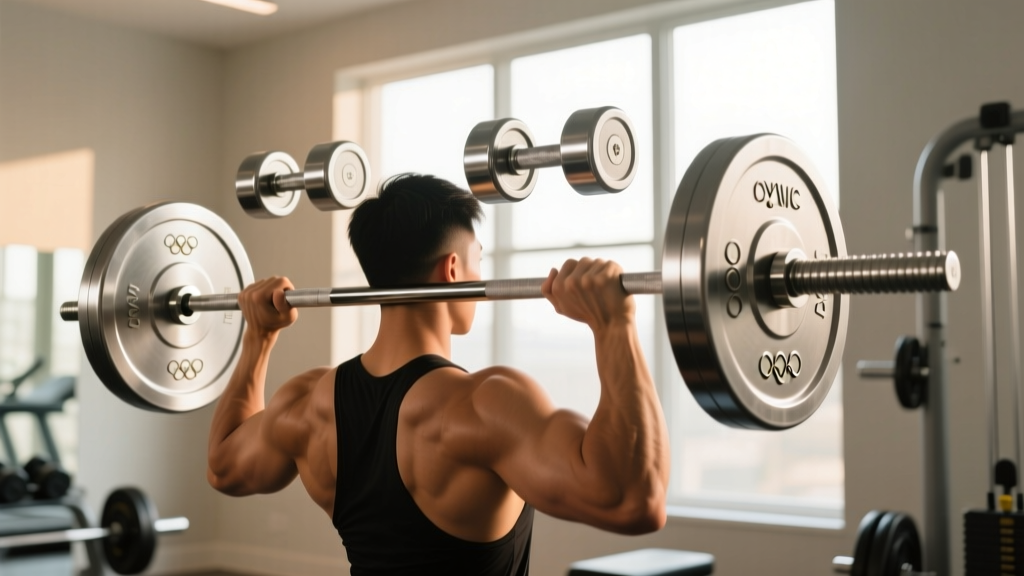
To truly understand the practical differences between these plate types, we must apply them to a specific, highly technical movement: the dumbbell behind head exercise. This isolation movement primarily targets the long head of the triceps brachii, requiring deep elbow flexion while the shoulder is held in a flexed, overhead position. According to kinesiology data from the ExRx Kinesiology Directory, maximizing the stretch at the bottom of the movement is crucial for hypertrophy, but it introduces a significant spatial challenge.
The Clearance Problem: Plate Diameter vs. Forearm Path
When you lower a dumbbell behind your head, the physical profile of the weight plates determines whether you achieve a full range of motion or if the plates prematurely strike your head, neck, or forearms. Here is where the standard vs. Olympic debate gets highly nuanced:
- Standard 1-Inch Plates: Because the center hole is smaller, standard cast iron plates (especially in the 2.5 lb, 5 lb, and 10 lb denominations) have a significantly smaller outer diameter. When loaded onto a standard 1-inch spinlock dumbbell handle, these compact plates allow your forearms to descend deeply past your ears without the plates clipping your skull. For light-to-moderate isolation work, standard plates offer superior spatial clearance.
- Olympic 2-Inch Plates: Olympic plates, particularly standard cast iron or thick urethane grip plates, feature a larger minimum diameter even at lower weights. When mounted on an Olympic loadable dumbbell handle, the bulky 2-inch sleeve and the wider plate profile can obstruct the forearm's path during deep flexion. If you are using 10 lb Olympic plates for a high-rep burnout set of the dumbbell behind head exercise, you may find the plates hitting your forearms before the triceps reach a full stretch.
Safety and Collar Security Overhead
Performing any weight-bearing movement over your face or head demands absolute equipment reliability. Standard dumbbell handles rely on threaded spinlock nuts. Over time, the threads on budget 1-inch handles can strip, and the nuts can vibrate loose during repetitive flexion. Dropping a 25 lb standard plate on your forehead because a plastic-coated spinlock nut failed is a catastrophic failure mode.
Olympic loadable dumbbell handles, such as the Rogue Loadable Dumbbell Handles, utilize smooth sleeves secured by heavy-duty spring collars or machined aluminum clamps. While the initial investment is higher, the mechanical security of an Olympic collar during a dumbbell behind head exercise is vastly superior, eliminating the risk of plates sliding off mid-set.
'When training the long head of the triceps overhead, joint stability and equipment security are paramount. The shoulder is in a vulnerable, stretched position, and any equipment shift can lead to acute elbow valgus stress or impact injuries.' — Principles derived from the National Strength and Conditioning Association (NSCA) guidelines on overhead lifting mechanics.
Head-to-Head Comparison Matrix
| Feature | Standard (1-Inch) | Olympic (2-Inch) |
|---|---|---|
| Center Hole | 1 inch (25.4mm) | 2 inches (50.8mm) |
| Dumbbell Clearance | Excellent (smaller plate diameters) | Moderate (bulkier plates/sleeves) |
| Max Load per DB | ~50–80 lbs (handle limitation) | 150+ lbs (commercial grade) |
| Collar Security | Spinlock nuts (prone to loosening) | Spring/Pro-lock collars (highly secure) |
| Average Cost per lb | $1.00 - $1.50 | $2.00 - $4.50 |
Equipment Spotlight: Handles and Durability
The plates are only half the equation; the handles they mount to dictate the actual user experience. In 2026, the market for adjustable dumbbells has bifurcated into budget standard sets and premium Olympic loadable systems.
The Standard Setup: CAP Barbell 1-Inch Cast Iron
A typical standard setup involves a pair of 14-inch threaded iron handles and a 300 lb kit of cast iron plates. The total cost often hovers around $250 to $300. The primary advantage is the sheer affordability and the compact nature of the smaller plates, which, as noted, is highly beneficial for the dumbbell behind head exercise. However, the failure modes are prominent: the chrome plating on budget handles often flakes after a year of heavy use, and the threaded bars can bend if dropped, rendering the spinlock nuts useless.
The Olympic Setup: Rogue Loadable Dumbbell Handles
Transitioning to Olympic requires a steeper buy-in. The Rogue Loadable Dumbbell Handles feature a 13.15-inch loadable sleeve and a machined steel construction that can withstand being dropped from overhead. Priced at approximately $165 for the pair (plates sold separately), they are an investment. When paired with urethane Olympic grip plates, you get a commercial-grade experience. However, for isolation movements, you must be mindful of plate selection. To maintain clearance for behind-the-head triceps work, Olympic users should invest in 'fractional' or 'change' plates (e.g., 1.25 lb or 2.5 lb Olympic plates) which have smaller diameters, rather than using standard 10 lb Olympic plates that might obstruct the movement path.
2026 Cost Breakdown: Building Your Plate Arsenal
Let us break down the real-world costs of building a functional 200 lb adjustable dumbbell kit in both ecosystems, factoring in current 2026 market pricing for home gym equipment:
- Standard Iron Kit (200 lbs total):
- Handles (Pair): $35
- Cast Iron Plates: $1.20/lb = $240
- Spinlock Collars: Included
- Total Estimated Cost: $275
- Olympic Urethane Kit (200 lbs total):
- Loadable Handles (Pair): $165
- Urethane Grip Plates: $3.00/lb = $600
- Spring Collars (Pair): $45
- Total Estimated Cost: $810
While the Olympic setup is nearly three times the cost, the longevity, safety, and compatibility with standard barbells and power racks make it the undisputed choice for serious lifters. Standard plates are strictly recommended only for those with severe budget constraints or those exclusively performing light rehabilitation and isolation work.
The Final Verdict: Which Should You Buy?
If your training revolves around heavy compound lifts, progressive overload, and you want equipment that will outlast you, Olympic plates are the mandatory choice. The 2-inch standard is universally compatible with commercial racks, barbells, and sleds. To mitigate the clearance issues during the dumbbell behind head exercise, simply supplement your Olympic kit with a pair of 2.5 lb and 5 lb fractional plates, which offer the slim profile needed for deep triceps stretches without sacrificing the security of an Olympic collar.
However, if you are building a micro-gym in a small apartment, have a budget under $300, and your routine consists primarily of light isolation work, lateral raises, and the dumbbell behind head exercise, a high-quality standard cast iron set remains a viable, space-saving entry point. Just be vigilant about checking your spinlock nuts before every single set.
Frequently Asked Questions
Can I use Olympic plates on a standard 1-inch dumbbell handle?
No. The 2-inch center hole of an Olympic plate will not fit onto a 1-inch standard handle. Adapters exist to use standard plates on Olympic bars, but there is no safe adapter to shrink an Olympic plate hole for a standard handle.
Why do my forearms hit the plates during the dumbbell behind head exercise?
This is a clearance issue caused by the outer diameter of the plates. Switch to smaller denomination plates (like 5 lbs instead of a single 10 lb plate) or use adjustable selectorized dumbbells which have a more compact, rectangular footprint.
Are rubber-coated standard plates safe for overhead work?
Budget rubber-coated standard plates often feature a cement/sand filler inside. If dropped overhead, they can crack and leak filler material. For overhead work, always use solid cast iron standard plates or premium urethane Olympic plates.
More gear to consider
All reviews
Loadable Dumbbell Maintenance for Triceps Dumbbell Bench Press

Olympic vs Standard Plates: Sizing for Antique Dumbbells
Barbell Knurling & Weight Guide: The One Arm Dumbbell Clean and Press

Olympic vs Standard Plates: Setup & Workouts with Dumbbells for Arms

Kettlebells vs Shoulder Exercises Using Dumbbells: Cast Iron Guide