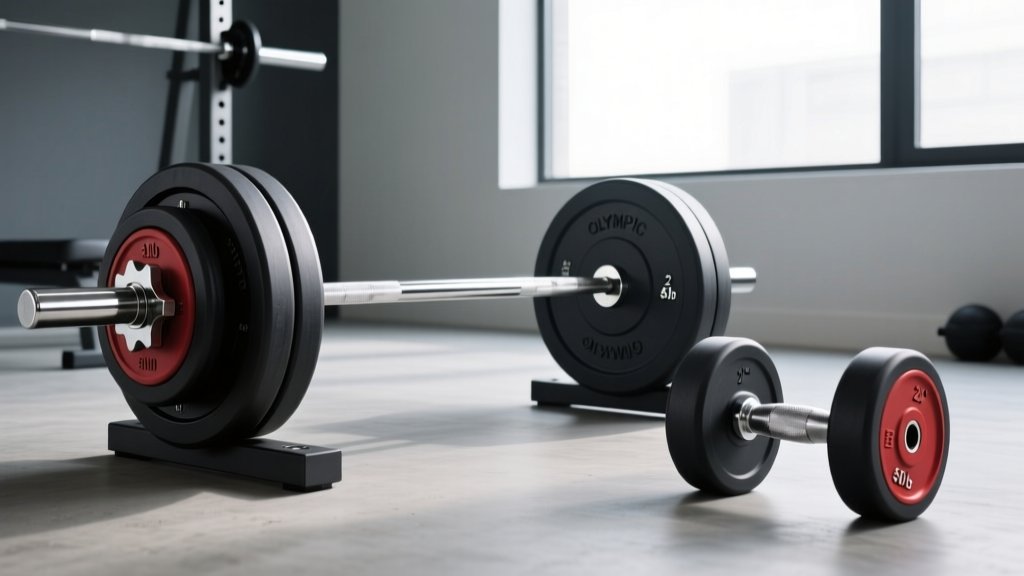
Olympic vs Standard Plates: Which Fits Your Different Dumbbell Setup?
Discover the critical differences between Olympic and standard weight plates, and how your choice impacts barbell and different dumbbell setups today.

The Core Divide: 1-Inch vs 2-Inch Sleeve Architecture
Setting up a home gym requires navigating a minefield of incompatible equipment. The most common mistake beginners make is purchasing standard (1-inch) plates, only to realize within a year that they need a completely different dumbbell and barbell ecosystem to progress safely. The debate between Olympic and standard weight plates is not just about the size of the hole in the center; it is about the structural integrity, rotational physics, and long-term scalability of your entire free weight setup.
According to the International Weightlifting Federation standards, Olympic equipment mandates a 50mm (approximately 2-inch) sleeve diameter. This standard was engineered to accommodate rotating sleeves with bushings or needle bearings, which absorb the rotational torque of the barbell during explosive lifts like the clean and jerk. Standard plates, featuring a 1-inch center hole, are entirely excluded from this engineering standard, relying on fixed, non-rotating solid steel or hollow tubular bars.
Expert Insight: The 1-inch 'standard' is actually a misnomer. It is an arbitrary commercial size created for budget home-gym kits, whereas the 2-inch 'Olympic' size is the universal standard for commercial gyms, powerlifting federations, and serious garage gyms worldwide.Head-to-Head Matrix: Standard vs Olympic Plates
| Feature | Standard Plates (1-Inch) | Olympic Plates (2-Inch) |
|---|---|---|
| Center Hole | ~1 inch (25.4mm) | ~2 inches (50mm) |
| Max Bar Capacity | 200 - 300 lbs (before bending) | 500 - 1,500+ lbs |
| Common Materials | Vinyl/Cement, Basic Cast Iron | Calibrated Steel, Urethane, Bumper Rubber |
| Average Cost/Lb | $0.75 - $1.25 | $1.50 - $3.50+ |
| Resale Value | Poor (Low demand) | Excellent (High demand) |
| Dumbbell Compatibility | 14-inch Threaded Handles | Loadable Handles, Adjustable Add-on Kits |
Standard Plates: The Budget Beginner's Trap
Standard plates are typically sold in beginner kits at big-box sporting goods stores. While the upfront cost is undeniably lower, the hidden failure modes make them a poor long-term investment.
The Vinyl and Cement Problem
Many budget standard plates are not solid iron; they are a cement or sand mixture encased in a vinyl shell. These plates are incredibly bulky. A 25lb vinyl plate can be over 2.5 inches thick, meaning you physically cannot fit enough weight on a standard 14-inch dumbbell handle or a standard barbell sleeve to reach heavy loads. Furthermore, the vinyl shells are prone to cracking, splitting, and leaking sand or cement onto your gym floor when dropped.
The 1-Inch Bar Bending Failure Mode
Even if you buy solid cast iron standard plates, you are limited by the bars. Standard 1-inch bars are typically made of lower-grade solid steel or hollow tubing. Once you surpass 200 to 250 pounds on a standard barbell, the steel begins to yield. This results in a permanent, dangerous bend in the bar, which ruins the roll and makes racking the weight unsafe. According to BarBend's home gym equipment guides, replacing bent standard bars is a recurring frustration for intermediate lifters who outgrow their starter kits.
Olympic Plates: The Lifetime Investment
Transitioning to Olympic plates opens the door to commercial-grade durability and a massive variety of specialized plate types. When you browse the Rogue Fitness Olympic plate catalog, you will notice distinct categories engineered for specific training modalities:
- Cast Iron / Machined Steel: Ideal for powerlifting and bodybuilding. They are thin, allowing you to load over 500 lbs on a standard barbell sleeve. Pricing typically ranges from $1.50 to $2.50 per pound.
- Urethane Grip Plates: Coated in a highly durable, odorless polyurethane with ergonomic handles. These protect your floors and make loading/unloading easier. Expect to pay $2.50 to $4.00 per pound.
- Bumper Plates: Made of dense virgin or crumb rubber with a steel insert. Designed to be dropped from overhead during Olympic weightlifting. Standard bumper plates are 17.5 inches in diameter across all weights (from 10lbs to 55lbs), ensuring the barbell always hits the rubber plate first, not your floor.
How Plate Choice Dictates Your Adjustable Dumbbell Strategy
This is where the plate ecosystem directly impacts your hand-weight training. If you commit to standard plates, your only option for heavy dumbbell work is using standard 14-inch plate-loaded dumbbell handles. These handles are notoriously unwieldy. The 1-inch threaded collars require constant tightening with a star-lock nut, and the overall length of the handle restricts your range of motion during dumbbell bench presses and goblet squats.
If you choose the Olympic ecosystem, you unlock a completely different dumbbell experience. You can invest in Olympic loadable dumbbell handles, such as the Rogue Loadable Dumbbell Handles (priced around $135 per pair). These feature a compact 6.5-inch sleeve and a knurled handle that mimics a high-end fixed dumbbell. Because they accept standard 2-inch Olympic plates, you can micro-load your dumbbell presses in 1.25lb increments using fractional Olympic plates—a luxury impossible with standard threaded handles.
Warning on Adapters: You can purchase 1-inch to 2-inch sleeve adapters to use Olympic plates on a standard bar. Do not do this for heavy lifting. These adapters add 2 to 3 inches of dead space to the end of your barbell sleeves, altering the bar's whip, shifting the center of gravity, and creating a severe safety hazard during squats and bench presses.Real-World Cost Breakdown: Building a 300lb Set
Let us look at the actual financial reality of building a 300-pound plate set in 2026, factoring in the necessary hardware.
Scenario A: The Standard Route
- 300 lbs Standard Cast Iron Plates: ~$300 (at $1.00/lb)
- Two 14-inch Standard Dumbbell Handles: ~$30
- One 6-foot Standard Barbell: ~$45
- Total Initial Cost: ~$375
- Hidden Cost: Replacing a bent barbell ($50) and eventually selling the set at a 50% loss when you outgrow it.
Scenario B: The Olympic Route
- 300 lbs Olympic Cast Iron Plates (e.g., Titan Fitness): ~$450 (at $1.50/lb)
- Pair of Olympic Loadable Dumbbell Handles: ~$135
- One 7-foot Olympic Barbell (190k PSI tensile strength): ~$150
- Total Initial Cost: ~$735
- Long-Term ROI: Zero equipment failure, lifetime usability, and a resale value that retains 70-80% of the purchase price.
Expert Verdict: Which Ecosystem Should You Buy?
Choose Standard Only If:
- You are strictly on a sub-$200 budget.
- You are only doing light rehabilitation or high-rep endurance work under 100 lbs.
- You are outfitting a temporary space and plan to dispose of the weights later.
Choose Olympic If:
- You plan to progressively overload and lift heavier than 200 lbs.
- You want access to high-quality, compact loadable dumbbell handles.
- You want equipment that retains resale value and will never bend or break.
- You are interested in Olympic weightlifting or CrossFit-style drop sets.
Ultimately, the transition from a basic home gym to a serious lifting space almost always necessitates a different dumbbell and barbell approach. While standard plates offer a cheap entry point, the 2-inch Olympic ecosystem is the undisputed champion of durability, safety, and versatility. Invest in the 50mm standard once, and you will never have to upgrade your plate compatibility again.
More gear to consider
All reviews
Best Racks for a 200 lbs Dumbbell Set: 2026 Budget Guide

Cast Iron vs Competition Kettlebells vs Tone Fitness Dumbbells

Maximizing Dumbbell Step Up Benefits: Top Loadable Dumbbells (2026)

Space-Saving Layouts for Your 12 Week Dumbbell Workout Plan PDF

EZ Bar vs Straight Bar: Upper Body Dumbbell Exercises PDF Included
