
Olympic vs Standard Plates: Your Bulgarian Deadlift Dumbbell Guide
Discover the crucial differences between Olympic and standard weight plates. Learn how to choose the right gear for your Bulgarian deadlift dumbbell workouts.

The Home Gym Dilemma: 1-Inch vs. 2-Inch Plates
Building a home gym in 2026 requires navigating a maze of equipment specifications, and no choice causes more buyer's remorse than selecting the wrong weight plates. When beginners start outfitting their garage gyms, they inevitably hit a fork in the road: standard (1-inch) or Olympic (2-inch) weight plates? Making the wrong choice can limit your lifting capacity, ruin your barbells, and stall your progress.
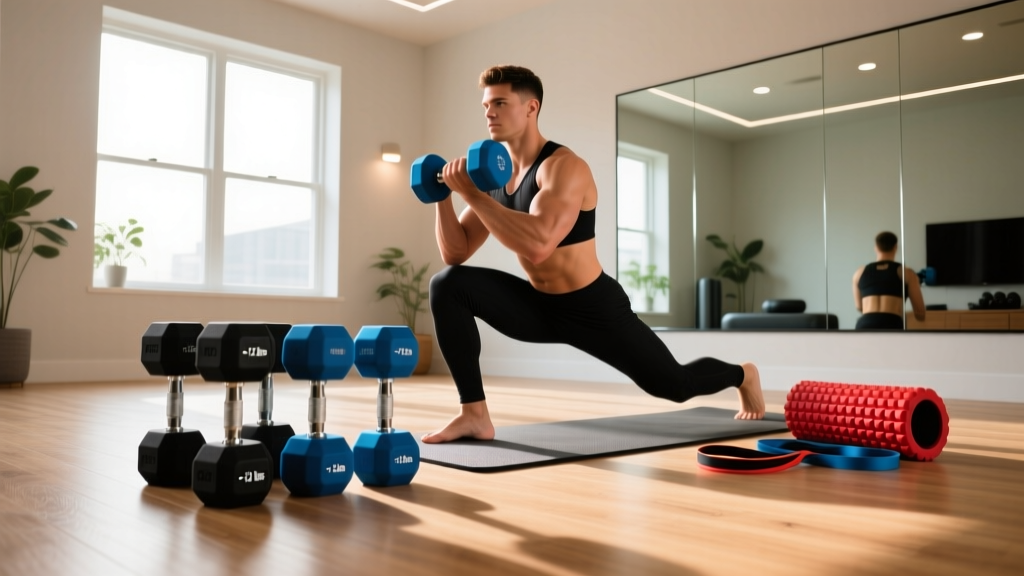
Furthermore, as you expand your exercise repertoire, you will encounter highly specific movement patterns. For instance, when beginners search for a bulgarian deadlift dumbbell routine, they are typically conflating two highly effective posterior chain movements: the Bulgarian Split Squat (a knee-dominant, rear-foot elevated exercise) and the Single-Leg Romanian Deadlift (a hip-dominant hinge). To execute these single-leg dumbbell variations safely, you need adjustable dumbbells loaded with the correct plate type. This guide breaks down the exact mechanical, financial, and practical differences between Olympic and standard plates so you can build a rack that supports everything from heavy barbell pulls to precise unilateral dumbbell work.
Expert Insight: The term 'Olympic' does not just mean 'big.' It refers to the standardized 50mm (approx. 2-inch) sleeve diameter mandated by the International Weightlifting Federation (IWF). Standard plates lack this global governing standard, leading to wild variations in hole sizing and bar compatibility.Core Specifications: Standard vs. Olympic Plates
Before diving into step-by-step buying advice, you must understand the physical differences between these two plate categories. The center hole diameter dictates everything from the barbell you buy to the maximum weight you can safely load.
| Feature | Standard Plates (1-Inch) | Olympic Plates (2-Inch) |
|---|---|---|
| Center Hole Diameter | 1 inch (25.4 mm) | 2 inches (50.8 mm) |
| Barbell Compatibility | Standard straight bars, spin-lock dumbbell handles | Olympic barbells, specialized deadlift bars, Olympic dumbbell handles |
| Max Safe Load (Barbell) | 200 - 250 lbs (before bar whip/failure) | 500 - 1,000+ lbs (depending on bar tensile strength) |
| Sleeve Length | Typically 10 - 12 inches | Typically 15 - 16.5 inches |
| Average Cost (2026) | $1.20 - $1.80 per lb | $2.00 - $4.50 per lb |
Step-by-Step Guide to Choosing Your Plates
Follow this three-step framework to determine which plate type belongs in your home gym.
Step 1: Audit Your Current and Future Lifts
If your training strictly involves light-to-moderate isolation work, upper body pumping, and basic unilateral movements, standard plates might suffice. However, if you plan to perform heavy compound barbell lifts (squats, conventional deadlifts, Olympic lifts), Olympic plates are non-negotiable. According to the ExRx Exercise Directory, heavy bilateral hinges place immense torque on the barbell; standard 1-inch bars simply lack the tensile strength (usually under 50,000 PSI) to handle loads over 250 lbs without permanently bending.
Step 2: Evaluate Dumbbell Loading for Unilateral Work
This is where the bulgarian deadlift dumbbell search intent comes into play. To perform single-leg Romanian deadlifts or rear-foot elevated hinges with dumbbells, you need adjustable spin-lock dumbbell handles. These handles almost exclusively use standard 1-inch plates. If you buy an Olympic-only setup, you will be forced to purchase expensive fixed-weight rubber dumbbells or specialized Olympic dumbbell handles (which are incredibly thick and can limit your range of motion on single-leg hinges).
Step 3: Calculate the True Cost of Ownership
Standard plates are cheaper upfront, but they represent a 'dead end' investment. If you start with standard plates and eventually upgrade to an Olympic barbell and power rack, your entire collection of 1-inch plates becomes obsolete. Olympic plates hold their resale value exceptionally well and are universally compatible with commercial gym equipment.
Deep Dive: Standard Weight Plates (1-Inch)
Standard plates are typically made of cast iron or cement-filled vinyl. They are the legacy standard for budget-friendly, entry-level home gyms.
- Best For: Adjustable spin-lock dumbbells, light barbell curling, and beginners on a strict sub-$300 budget.
- The Failure Mode: The primary failure point is the barbell, not the plate. Standard bars use low-grade steel. When you load a standard bar with four 45-lb iron plates, the bar will 'whip' excessively and eventually take a permanent downward bend.
- Top 2026 Pick: CAP Barbell Standard Cast Iron Plates. They offer consistent calibration and a durable enamel finish, usually pricing around $1.40/lb on the used market or $1.80/lb new.
Deep Dive: Olympic Weight Plates (2-Inch)
Olympic plates feature a 2-inch center hole designed to slide onto barbells with rotating sleeves. These sleeves utilize bushings or needle bearings, allowing the bar to spin independently of the plates during explosive movements like cleans and snatches, reducing wrist and elbow torque.
- Best For: Heavy deadlifts, squats, Olympic weightlifting, and dropping from overhead.
- Bumper vs. Iron: For deadlifts and floor work, virgin rubber bumper plates are superior. The Rogue Fitness Echo Bumper Plates remain the gold standard in 2026, offering a dead bounce rating that prevents the bar from bouncing back and injuring the lifter. They cost roughly $3.00/lb.
- Calibration: High-end Olympic plates (like Rep Fitness Deep Dish Iron) are calibrated to within 1% of their stated weight, whereas standard plates can be off by 3-5%.
Applying Your Gear to the Bulgarian Deadlift Dumbbell Variation
Let us clarify the biomechanics and equipment needs for the highly searched bulgarian deadlift dumbbell movement. As noted, this usually refers to a Single-Leg Romanian Deadlift (SLRDL) or a hybrid rear-foot elevated hinge.
- The Setup: You need a pair of 14-inch or 16-inch spin-lock dumbbell handles. These require standard 1-inch plates.
- The Loading: Load 10-lb and 5-lb standard iron plates onto the handles. Standard plates are thinner than Olympic bumpers, allowing you to fit more weight onto a short dumbbell sleeve without the collars bottoming out.
- The Execution: Elevate your rear foot on a bench (the 'Bulgarian' position). Hinge at the hips, keeping your spine neutral, and lower the dumbbells toward the floor. This targets the hamstrings and glutes of the lead leg while demanding immense core stability.
- The Gear Synergy: While your heavy bilateral deadlifts require an Olympic barbell and 2-inch bumper plates, your unilateral accessory work relies heavily on standard 1-inch plates and spin-lock handles. This is why many well-rounded 2026 home gyms maintain a small 'fractional plate' set of standard irons specifically for dumbbell loading, even if their main rack is entirely Olympic.
Frequently Asked Questions (FAQ)
Can I use Olympic plates on a standard barbell?
No. The 2-inch hole of an Olympic plate will not fit onto a 1-inch standard barbell sleeve. Conversely, standard 1-inch plates will slide onto a 2-inch Olympic bar, but they will rattle violently, damage the bar's chrome finish, and create a dangerous imbalance during lifts.
Are cement-filled vinyl standard plates worth buying?
Avoid them if possible. Cement plates are incredibly bulky—up to three times thicker than cast iron. This bulk prevents you from loading heavy weights onto standard dumbbell handles or barbell sleeves because you simply run out of physical space on the sleeve.
What is the best plate type for dropping during CrossFit or Olympic lifting?
You must use Olympic rubber bumper plates. Standard cast iron plates will shatter upon impact with the floor, and standard barbells will snap under the dynamic shock load of a dropped bar.
Final Verdict
If your budget allows, invest in an Olympic plate and barbell ecosystem as the foundation of your home gym. The durability, safety, and resale value of 2-inch gear far outweigh the initial cost savings of standard plates. However, do not discard standard plates entirely; keeping a modest set of 1-inch cast iron plates is the most cost-effective way to load adjustable spin-lock dumbbells for targeted unilateral work, including the highly effective bulgarian deadlift dumbbell variations. Equip your gym intelligently, respect the mechanical limits of your steel, and your home setup will serve you for decades.
More gear to consider
All reviews
Standard vs Olympic Plates: Impact on Dumbbell Sumo Squat Form

Barbell Collar Types & Bench Supported Dumbbell Rows: Mistakes

Best Adjustable Dumbbells for Bent Over Dumbbell Flys (2026)

Power Rack vs Squat Rack vs Stand: Beyond the Dumbbell Buying Guide
Bulgarian Split Squat Dumbbell Weight: Neoprene Guide
