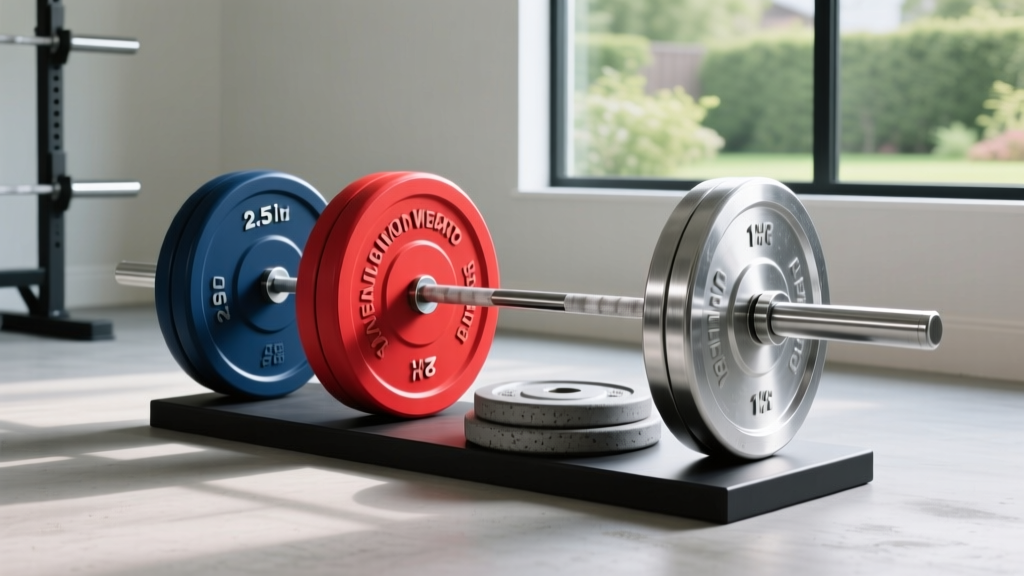
Olympic vs Standard Weight Plates: Ditching Barbie Dumbbells
Compare Olympic vs standard weight plates. Learn why upgrading from cheap barbie dumbbells and 1-inch cement plates to 2-inch cast iron is vital for gains.

The Home Gym Dilemma: Outgrowing Your Beginner Gear
Every lifter remembers their first home gym setup. For many, it involves a trip to a big-box sporting goods store and the purchase of a lightweight, vinyl-encased weight set. In the fitness community, these cheap, pastel-colored, sand-filled or cement-filled novelty weights are often dismissively referred to as 'barbie dumbbells.' While they serve as an accessible entry point for absolute beginners learning basic movement patterns, they quickly become a bottleneck for progressive overload. If you are currently relying on what the lifting community colloquially calls barbie dumbbells or standard 1-inch hollow plates, you have likely hit a structural and biomechanical wall.
Transitioning from inadequate novelty weights to a dedicated, calibrated plate setup is the most critical equipment upgrade you will make in 2026. The fundamental crossroads in this upgrade is choosing between Standard Weight Plates (1-inch hub) and Olympic Weight Plates (2-inch hub). This in-depth buying guide breaks down the metallurgy, tolerances, pricing, and real-world failure modes of both systems to help you build a home gym that actually supports long-term strength gains.
The Anatomy of a Weight Plate: Standard vs. Olympic Hubs
The primary distinction between standard and Olympic plates is the inner diameter of the center hub, which dictates the barbell or dumbbell handle it can accommodate.
Dimensional Breakdown:- Standard Plates: Designed for a 1-inch (25.4mm) barbell sleeve. However, due to cheap manufacturing processes, the actual hole diameter often fluctuates between 26mm and 30mm, leading to excessive 'slop' and rattling during lifts.
- Olympic Plates: Engineered with a strict 50.4mm inner diameter to slide seamlessly onto 50mm Olympic barbell sleeves. This tight tolerance ensures the plate sits flush against the collar, minimizing shifting and noise.
According to equipment standards outlined by organizations like the International Weightlifting Federation (IWF), Olympic gear must adhere to rigorous dimensional and calibration tolerances to ensure safety and fairness in competition. Standard plates have no such governing body, resulting in wild variances in quality.
Why 'Barbie Dumbbells' and Vinyl Standard Plates Fail
Before diving into the comparison, it is vital to understand the failure modes of beginner-grade standard plates. Often sold in sets alongside those aforementioned barbie dumbbells, vinyl-coated standard plates are typically filled with a cement-sand mixture rather than solid iron.
Common Failure Modes of 1-Inch Cement Plates:
- Calibration Inaccuracy: A 25 lb cement plate can easily weigh anywhere from 22 lbs to 28 lbs. When you are tracking progressive overload, a 10-15% variance in weight ruins your programming.
- Structural Cracking: The plastic vinyl shell is brittle. Dropping a 25 lb cement plate from waist height will frequently crack the shell, causing the internal sand to leak onto your gym floor.
- Barbell Bending: Standard 1-inch bars are typically made from low-grade steel with a tensile strength under 35,000 PSI. Once you load a standard bar past 150 lbs, the bar will permanently bend, rendering it useless for barbell squats or bench presses.
The Mayo Clinic emphasizes that progressive overload is the cornerstone of muscle hypertrophy and bone density improvement. You cannot safely or accurately apply progressive overload with equipment that bends, cracks, or misrepresents its weight.
Deep Dive: Standard Weight Plates (1-Inch Hub)
While we strongly advocate moving away from novelty sets, legitimate cast-iron standard plates do still exist and have a narrow use case in 2026.
Pros of Standard Cast Iron Plates
- Cost-Effective: Standard cast iron plates are generally the cheapest solid metal option, averaging $1.00 to $1.30 per pound on the used market.
- Space Saving: 1-inch dumbbell handles and short standard bars take up slightly less physical space in a cramped apartment closet.
Cons of Standard Cast Iron Plates
- Lack of Heavy Barbell Support: You cannot safely squat or deadlift heavy loads due to the lack of high-tensile 1-inch barbells.
- Resale Value: The market is flooded with abandoned standard plates; they have virtually zero resale value compared to Olympic gear.
Verdict: Only purchase standard cast iron plates if you are strictly building a light-rehabilitation corner or a budget apartment gym where your maximum lift will never exceed 100 lbs.
Deep Dive: Olympic Weight Plates (2-Inch Hub)
Olympic plates are the undisputed gold standard for commercial gyms, CrossFit boxes, and serious home garages. When you browse the catalog of premium manufacturers like Rogue Fitness, the vast majority of their inventory is dedicated to the 2-inch Olympic ecosystem.
Material Variations in Olympic Plates
Unlike standard plates, which are almost exclusively cheap cast iron or cement, Olympic plates come in several specialized materials:
- Cast Iron (Machined): The traditional choice. Machined on the flat sides for a precise fit. Ideal for powerlifting and general strength. Price: $1.50 - $2.20/lb.
- Urethane-Coated: Cast iron encased in a thick, odorless urethane layer. Protects floors and dampens noise. Standard in high-end commercial gyms. Price: $2.50 - $4.00/lb.
- Rubber Bumper Plates: Made of solid virgin or recycled rubber with a stainless steel hub insert. Designed to be dropped from overhead during Olympic weightlifting (cleans, snatches). Price: $2.00 - $3.50/lb.
- Calibrated Competition Plates: Machined to extreme tolerances (accurate within 10 grams). Color-coded per IWF or IPF standards. Price: $6.00 - $10.00+/lb.
Head-to-Head Comparison Matrix
Use the table below to evaluate which plate system aligns with your 2026 fitness goals and budget.
| Feature | Standard (1-Inch) | Olympic (2-Inch) |
|---|---|---|
| Hub Diameter | 25.4mm (often sloppy) | 50.4mm (precise) |
| Max Safe Barbell Load | ~150 lbs (bar bends) | 500 - 1,500+ lbs |
| Weight Accuracy | +/- 10% to 15% | +/- 2% (Machined) |
| Plate Materials | Cement, Vinyl, Basic Iron | Iron, Urethane, Rubber |
| Resale Value | Very Low | High (Holds value well) |
The 2026 Home Gym Upgrade Pathway
If you are currently sitting on a pile of standard plates and barbie dumbbells, do not simply throw them in the dumpster. Follow this step-by-step pathway to transition your gym without wasting capital:
- Liquidate the Old Gear: List your standard plates and 1-inch dumbbell handles on local marketplace apps. Price them aggressively ($0.50/lb). Beginners are always looking for cheap starter kits, and you will easily find a buyer.
- Invest in the Barbell First: Before buying plates, purchase a high-quality Olympic barbell with 190,000 PSI tensile strength and needle bearings. The bar is your primary point of contact; never skimp here.
- Buy a 'Starter' Olympic Plate Set: Look for a used or discounted machined cast-iron Olympic set. A basic pairing of (4x 45lb), (2x 25lb), (2x 10lb), and (4x 5lb) plates gives you the versatility to progress on all major compound lifts.
- Utilize Adapters for Dumbbells: If you want to build heavy adjustable dumbbells, purchase a pair of Olympic dumbbell handles (like the Rogue Loadable Dumbbell Handles). They accept Olympic plates and eliminate the need to buy 20 different pairs of fixed-weight rubber dumbbells.
Expert Warning: Never attempt to use a plastic or metal adapter sleeve to mount 2-inch Olympic plates onto a 1-inch standard barbell. The added leverage and uneven weight distribution of heavy Olympic plates will cause the low-grade standard bar to permanently bend or catastrophically snap under load, posing a severe injury risk.
Frequently Asked Questions (FAQ)
Can I use Olympic plates on standard dumbbell handles?
No. Olympic plates have a 2-inch hole, while standard dumbbell handles are 1-inch thick. Without a specialized (and often clunky) adapter, the plates will not fit. Furthermore, standard dumbbell handles are not rated for the heavy loads that Olympic plates can provide.
Are rubber-coated Olympic plates better than bare cast iron?
It depends on your environment. Bare cast iron is more durable, thinner (allowing more weight on the bar), and cheaper. However, it can rust if kept in a humid, unclimate-controlled garage and will damage concrete floors if dropped. Urethane or rubber-coated plates are better for noise reduction and floor protection, making them ideal for residential home gyms.
Why do Olympic plates have a raised lip or grip holes?
Modern Olympic plates often feature a raised outer lip (flange) to protect the flat face of the plate from scraping when loaded onto a barbell resting on the floor. Grip holes (often 3-hole or 4-hole designs) are included on lighter bumper and urethane plates to allow lifters to easily carry, load, and use the plates independently for plate-loaded core exercises or farmer carries.
What is the minimum weight I need to start an Olympic setup?
To effectively utilize an Olympic barbell (which typically weighs 45 lbs), you should aim for a minimum starting plate package of 100 lbs to 150 lbs. This allows you to load the bar to 145-195 lbs, which is sufficient for beginner to intermediate bench pressing, overhead pressing, and squatting progressions.
More gear to consider
All reviews
Power Rack vs Squat Rack vs Stand: The One Hand Dumbbell Row Test

EZ Curl vs Straight Bar: Space Layouts for Dumbbell Workout Routines

EZ Curl Bar vs Straight Bar: Good Upper Body Workouts with Dumbbells

Olympic vs Standard Plates: Setup and Dumbbell Row Guide for Women
Budget Racks for Your Dumbbell Pullover Chest Workout Weights
