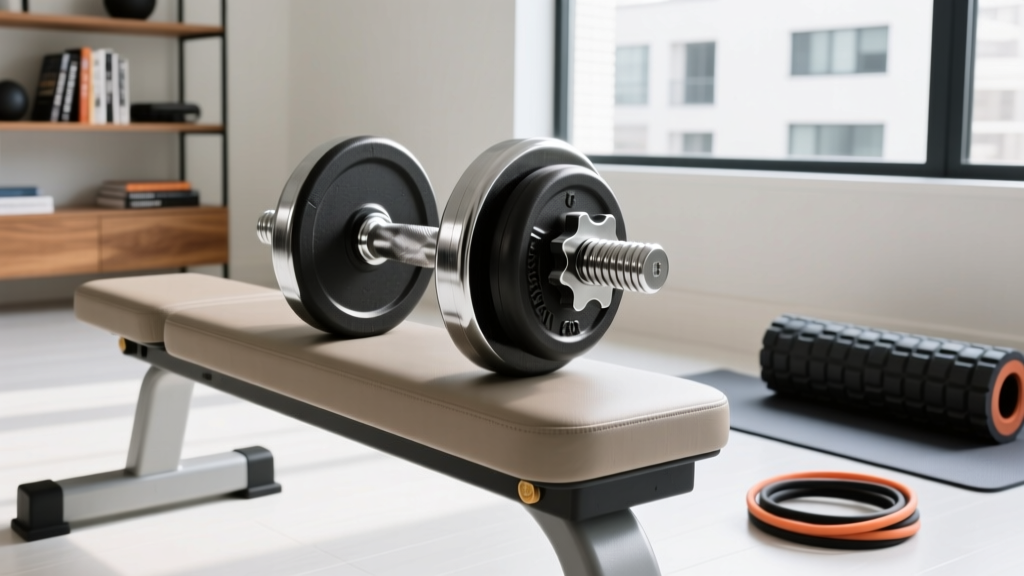
Olympic vs Standard Plate Setup & Incline Dumbbell Press Weight Kg
Master your gym setup with our Olympic vs standard plate installation guide, plus expert tips on finding your ideal incline dumbbell press weight in kg.

The Foundation: Understanding 50mm vs 25mm Weight Plates
Building a functional, safe home gym requires a fundamental understanding of your iron. The free weights market is strictly divided into two categories: Olympic plates with a 2-inch (50.4mm) center hole, and Standard plates with a 1-inch (25.4mm) center hole. As of 2026, the fitness industry has largely standardized around Olympic-spec equipment for serious lifters, but Standard plates remain prevalent in budget-friendly or space-constrained setups. Before unboxing your new gear, you must understand the metallurgical and dimensional differences that dictate how your equipment will be assembled, stored, and utilized.
⚠️ Critical Safety Warning: Never attempt to use an adapter sleeve to mount 1-inch standard plates onto a 2-inch Olympic barbell for heavy compound lifts. The lateral shear force during exercises like the barbell bench press can snap plastic or thin-metal adapters, leading to catastrophic plate shifts and severe injury.Hub Materials and Tolerances
The center hub is the most critical component of any weight plate. According to the International Weightlifting Federation (IWF) Technical Rules, certified Olympic plates must feature precise steel or brass bushings to ensure a snug fit on the barbell sleeve, minimizing wear and tear on the zinc or chrome bar coating. Budget standard plates, such as the ubiquitous vinyl-cement models, often utilize molded plastic hubs that can warp under heavy loads or crack when dropped, making them strictly unsuitable for dynamic movements.
Step-by-Step Installation: Assembling Your Weight Tree
Proper installation of your weight storage solution is not just about organization; it is a matter of physics and safety. A fully loaded vertical weight tree can easily exceed 800 kg (1,760 lbs). Here is the definitive walkthrough for assembling and loading a heavy-duty vertical plate tree.
- Base Alignment and Hardware Seating: Begin by laying the tree base flat. Insert the M12 carriage bolts through the bottom flange. Use a rubber mallet to tap the square neck of the carriage bolt into the steel slot to prevent it from spinning during tightening.
- Torque Specifications: Using a socket wrench, tighten the base nuts to approximately 50-60 ft-lbs. Do not overtighten to the point of stripping the threads, but ensure there is zero lateral wobble in the main vertical post.
- Angling the Horns: Most premium trees (like those from Rogue or Rep Fitness) feature angled weight horns. Ensure the longer horns intended for 45lb/20kg plates are positioned at the bottom, and the shorter horns for 10lb/5kg plates are at the top.
- The Center of Mass Loading Protocol: Always load your heaviest bumper or cast-iron plates on the bottom pegs first. Loading 20kg plates on the top horns while the bottom is empty raises the center of gravity dangerously high, creating a tipping hazard if the tree is bumped or if a plate is removed unevenly.
Barbell Sleeve Math and Capacity
When setting up your barbell station, you must calculate sleeve capacity to ensure you can safely secure the collars. An Olympic barbell sleeve is typically 16.3 inches (415mm) long. Standard barbell sleeves vary wildly but usually max out around 12 inches (300mm). Below is a capacity matrix based on standard plate thicknesses.
| Plate Type | Weight | Thickness | Max Plates per Olympic Sleeve |
|---|---|---|---|
| Calibrated Steel | 20 kg | 29 mm | 12 plates (240 kg + bar) |
| Virgin Rubber Bumper | 20 kg | 55 mm | 6 plates (120 kg + bar) |
| Standard Cast Iron | 20 kg (45 lbs) | 33 mm | 9 plates (180 kg + bar) |
Always leave at least 2 inches (50mm) of sleeve space at the end of the bar to securely fasten a spring collar or lock-jaw clamp. Failure to do so risks the collar slipping off during a lift.
Accessory Loading: What Is a Good Incline Dumbbell Press Weight Kg?
Once your barbell rack and plate tree are securely installed, the next phase of gym setup involves stocking your dumbbell rack and planning your accessory programming. When transitioning from your primary barbell movements to upper-chest isolation, a highly common question we receive at FitGearPulse is: what is a good incline dumbbell press weight kg for building hypertrophy?
The incline dumbbell press requires significant stabilization from the rotator cuff and anterior deltoids, meaning you will inherently lift less weight than on a flat barbell bench press. Furthermore, dumbbells allow for a deeper stretch at the bottom of the movement, increasing time-under-tension. According to strength standards compiled by ExRx.net, your target kg weight depends heavily on your training age and body weight.
For a male lifter weighing 80 kg (176 lbs), an intermediate strength standard for the incline dumbbell press (1RM per hand) is approximately 32 kg. For an 8-rep hypertrophy set, you should be working with roughly 24 kg to 26 kg dumbbells per hand.
Progressive Overload Framework for Dumbbells
Unlike Olympic plates where you can micro-load with 0.5kg fractional plates, fixed dumbbells usually jump in 2.5kg or 5kg increments. To safely progress your incline press weight in kg, follow this setup protocol:
- Beginner (0-6 months): 10 kg - 14 kg per hand. Focus entirely on scapular retraction and the mind-muscle connection. The incline angle should be set to 30 degrees to minimize front delt takeover.
- Intermediate (6-24 months): 18 kg - 28 kg per hand. At this stage, you should invest in adjustable dumbbells (like the Nuobell or PowerBlock Elite) for your home gym, as buying fixed pairs in this range becomes cost-prohibitive.
- Advanced (2+ years): 35 kg - 45+ kg per hand. Lifting heavy dumbbells into position requires a specific knee-kick technique to avoid tearing a bicep tendon during the setup phase.
Long-Term Maintenance and Hub Care
Equipment longevity relies on routine maintenance. For Olympic plates, the steel or brass hubs can accumulate oxidized zinc dust and chalk over time. Every six months, remove the plates from the tree and wipe the inner hubs with a dry microfiber cloth. If you notice scoring on your barbell sleeves, apply a light coat of 3-in-One oil to the sleeve and cycle the plates on and off to distribute the lubricant.
Standard plates with painted or vinyl-coated hubs require different care. Avoid dropping standard cast iron plates on bare concrete, as the 1-inch center holes are not designed to absorb the sheer impact forces that Olympic bumper plates handle. Always use a 3/4-inch horse stall mat or specialized drop pads to protect both your flooring and the structural integrity of the plate hubs.
Final Setup Verification
Before loading your first working set, perform a final sweep of your installation. Check that all tree bolts remain flush, ensure your barbell collars are rated for the axial load you plan to lift, and verify that your dumbbell rack is anchored or possesses a wide enough base to prevent forward-tipping when heavy pairs are removed from the top tier. A meticulously planned setup not only maximizes safety but eliminates friction, keeping you focused on the numbers on the bar and the kg in your hands.
More gear to consider
All reviews
Dumbbell Shoulder Press Mistakes & Adjustable Dumbbell Fixes

One Arm Overhead Dumbbell Extension: Neoprene Home Setup
Barbell Collar Types Comparison & Lower Ab Workout with Dumbbells

Maintaining Loadable Farmers Walk Dumbbells: A Longevity Guide
EZ Bar vs Straight Bar: Dumbbell Weights Exercise Alternatives