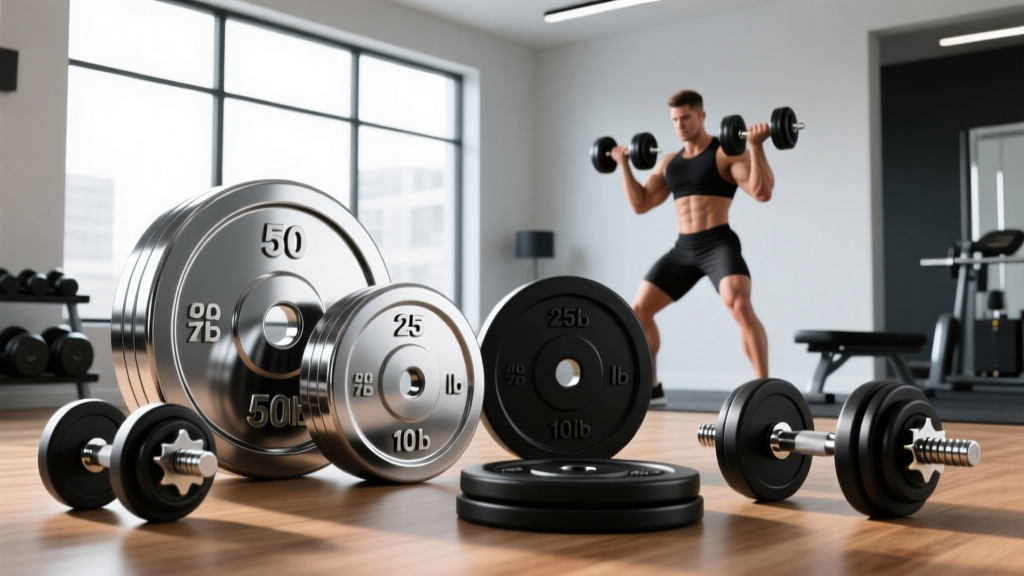
Olympic Barbell Guide: Knurling, Weight & Seated Dumbbell Curls
Master your home gym with our Olympic barbell buying guide covering weight and knurling, plus expert tips for perfecting seated dumbbell curls.

The Anatomy of an Olympic Barbell: Weight & Tolerances
Building a resilient, high-performance home gym in 2026 requires looking past marketing jargon and understanding the metallurgy and machining tolerances of your core equipment. The Olympic barbell remains the undisputed centerpiece of any serious strength setup. While standard commercial bars weigh roughly 45 lbs (20.4 kg), the precision of that weight varies wildly depending on the manufacturing standard.
According to the International Powerlifting Federation (IPF), a competition barbell must weigh exactly 20 kg with a tolerance of just +/- 0.1%. In contrast, budget bars found in big-box stores can fluctuate by 2 to 4 lbs, which severely impacts progressive overload tracking over a multi-year training cycle. Furthermore, the sleeve length is critical: a true Olympic power bar features a 16.3-inch sleeve to accommodate multiple 45-lb bumper plates while maintaining the correct bar whip and center of gravity.
Data Highlight: Tensile vs. Yield Strength
Tensile Strength (PSI): Measures the absolute breaking point of the steel. A high-quality barbell should boast a minimum of 190,000 PSI. Premium stainless steel shafts often exceed 215,000 PSI.
Yield Strength: The point at which the bar bends and fails to return to its original straight form. Many budget manufacturers only list tensile strength, hiding a low yield strength that results in a permanently bent bar after heavy squats or drop-testing.
Decoding Knurling: Volcano, Mountain, and Hill Profiles
Knurling is the cross-hatched pattern machined into the steel shaft to provide grip. The depth, width, and geometry of these cuts dictate how the bar feels in your hands. In 2026, manufacturers have largely standardized around three distinct knurl profiles, each serving a specific biomechanical purpose.
| Knurl Profile | Geometry & Feel | Aggressiveness | Best Application |
|---|---|---|---|
| Volcano | Sharp peaks with a cratered center. Provides maximum surface area for grip without tearing calluses. | High | Powerlifting, Heavy Deadlifts |
| Mountain | Pointed, jagged peaks that dig deeply into the dermal layer. Extremely aggressive. | Very High | Competition Deadlifts, Chalk-heavy lifts |
| Hill | Rounded, flattened peaks. Smooth and forgiving on the skin, but lacks bite for heavy pulling. | Low to Moderate | Olympic Weightlifting, High-rep WODs |
For a versatile home gym, a Volcano knurl (popularized by Rogue's Ohio Power Bar) offers the best compromise between aggressive grip for heavy pulls and comfort for high-volume pressing. Additionally, consider the center knurl: powerlifters require a sharp center knurl to grip the upper back during low-bar squats, whereas Olympic weightlifters and general fitness enthusiasts often prefer a passive or absent center knurl to prevent chest abrasion during cleans.
2026 Market Leaders: Barbell Comparison
When allocating your equipment budget, the barbell should command the highest priority. Here is a breakdown of the top-tier shafts dominating the 2026 market:
- Rogue Ohio Power Bar (Stainless Steel): Priced around $345, this 205,000 PSI bar features a highly refined volcano knurl and dual powerlifting/weightlifting ring marks. It remains the gold standard for durability.
- Kabuki Strength New Generation Power Bar: Retailing at $339, this bar features a unique knurled sleeve design that prevents plate slippage without requiring excessive tightening of collars. Its 200k PSI shaft offers a slightly whippier feel than the Ohio.
- Rep Fitness Colorado Bar: At approximately $229, this is a premier multipurpose bar. It features a hybrid knurl and composite bushings, making it ideal for lifters who mix heavy squats with dynamic Olympic movements.
The Isolation Imperative: Seated Dumbbell Curls
While your premium Olympic barbell builds raw systemic strength through heavy compounds like deadlifts and Pendlay rows, a balanced, injury-resilient physique requires targeted isolation work. Heavy barbell rowing places immense secondary tension on the biceps brachii and brachialis, but it rarely takes the muscle through a full, controlled range of motion at the elbow joint. This is where mastering seated dumbbell curls becomes essential for both hypertrophy and elbow tendon health.
Transitioning from heavy axial-loaded barbell work to isolation movements requires a shift in biomechanical focus. According to the exercise biomechanics database at ExRx.net, isolating the elbow flexors requires strict stabilization of the humerus to prevent the anterior deltoid from hijacking the movement.
Bench Angles and Scapular Mechanics
The most common failure mode when performing seated dumbbell curls is utilizing a bench set at a strict 90-degree vertical angle. A perfectly upright bench forces the cervical spine into extension and limits natural scapular retraction, often leading to shoulder impingement at the top of the movement.
The 2026 Expert Standard: Set your adjustable bench to a 75 or 80-degree incline. This slight recline allows the scapula to rest flush against the pad, stabilizes the shoulder joint, and places a profound, safe stretch on the long head of the biceps at the bottom of the eccentric phase. Pairing this with a set of urethane-coated hex dumbbells (which won't roll off your lap during the setup) ensures maximum safety and tension.
Execution and Failure Modes
To extract maximum hypertrophic stimulus from seated dumbbell curls, you must eliminate momentum. The seated position inherently removes the ability to use the hips and lower back to 'cheat' the weight up, a common flaw in standing barbell curls.
"Watch your elbow drift. The moment the elbow translates forward past the midline of the torso during the concentric phase of a seated dumbbell curl, the mechanical tension shifts from the biceps brachii to the front deltoid. Pin the elbow against your ribs or slightly behind the torso to maintain constant tension on the target muscle."
For optimal arm development, program seated dumbbell curls at the tail end of your pull days. Aim for 3 sets of 10-15 repetitions, utilizing a 3-second eccentric (lowering) phase. This controlled tempo stimulates collagen synthesis in the distal biceps tendon, acting as a prehab protocol against the heavy eccentric loads your biceps endure during barbell deadlifts and heavy rows.
Frequently Asked Questions
Do I need a center knurl on my Olympic barbell?
If your primary focus is powerlifting (specifically low-bar back squats), a sharp center knurl is highly recommended to prevent the bar from sliding up your back. If you primarily perform Olympic lifts, CrossFit, or general fitness, omit the center knurl to save your chest and collarbones during cleans and front squats.
Can I perform seated dumbbell curls on a flat bench?
Yes, sitting on the end of a flat bench is a viable alternative if an adjustable bench is unavailable. However, ensure your feet are planted firmly wide to create a stable base, and actively retract your shoulder blades to prevent thoracic rounding, which compromises bicep isolation.
How often should I re-knurl or replace my barbell?
A high-quality stainless steel or hard-chrome barbell with a minimum of 190k PSI tensile strength will easily outlast a lifetime of home gym use. Knurling does not 'wear flat' under normal human use; rather, it fills with dead skin, chalk, and oxidation. Clean your knurling weekly with a stiff nylon brush and light oil to maintain peak aggressiveness.
More gear to consider
All reviews
Barbell Clamp Types Comparison: Beyond the Women's Dumbbell Workout Routine PDF

Best Neoprene Dumbbells for a 10 Minute Dumbbell Workout (2026)

Beyond Dumbbells for the Pool: Barbell Collar Setup

Men's Leg Workouts with Dumbbells: Rubber vs Urethane

Neoprene Dumbbells for Home Use: Dumbbell Floor Press for Triceps