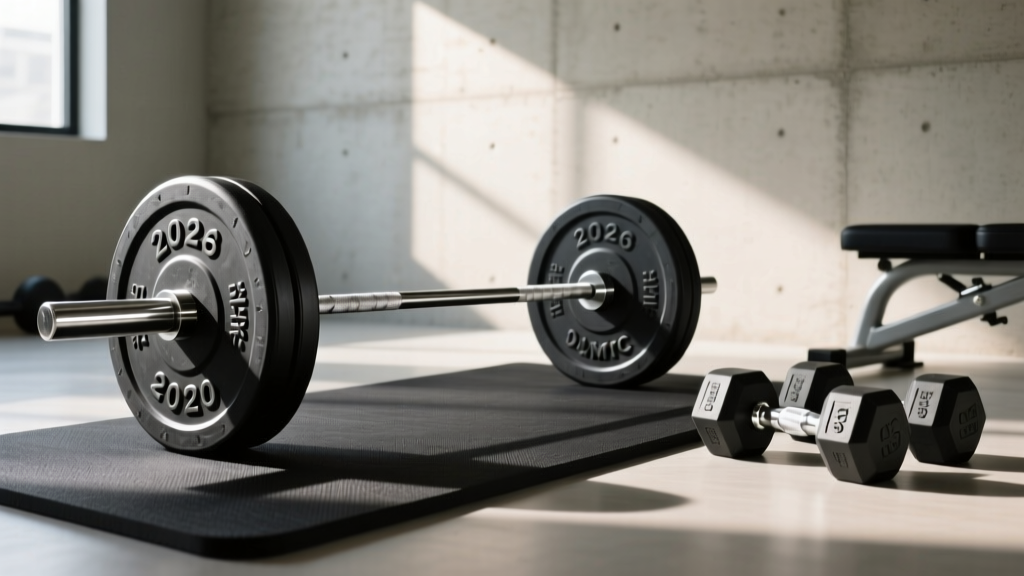
Olympic Barbell Knurling: Weight, Grip & Incline Dumbbell Curl Angle
Troubleshoot grip fatigue and joint strain with our 2026 Olympic barbell knurling and weight guide, plus tips on dialing in your incline dumbbell curl angle.

The Hidden Cost of Ignoring Barbell Ergonomics
As we navigate the fitness equipment landscape in 2026, home gym owners are increasingly investing in premium squat racks and adjustable dumbbells, yet frequently bottleneck their progress by overlooking the most critical point of contact in their training: the barbell knurl. Whether you are pulling heavy conventional deadlifts or fine-tuning isolation mechanics, the geometry of your equipment dictates your central nervous system (CNS) fatigue and joint health.
Many lifters hyper-fixate on isolation variables—such as finding the perfect incline dumbbell curl angle to maximize the stretch on the long head of the biceps—while completely ignoring the systemic grip degradation caused by a poorly chosen, overly aggressive barbell knurl. This troubleshooting guide dissects the metallurgy, knurl profiles, and weight tolerances of Olympic barbells, and connects these foundational elements to your broader biomechanical setup.
Decoding Knurling: Hill, Mountain, and Volcano Profiles
The knurl is the machined pattern on the barbell shaft designed to increase friction. However, not all knurls are created equal. Choosing the wrong profile is the number one mistake lifters make, leading to torn calluses, grip slipping, or premature forearm fatigue. According to BarBend's comprehensive barbell selection guide, understanding the three primary knurl geometries is essential for troubleshooting grip issues.
| Knurl Profile | Geometry & Feel | Best Application | Example Model |
|---|---|---|---|
| Hill | Rounded peaks, passive bite. Feels smooth but secure. | High-rep hypertrophy, Oly lifting, bare hands. | Rep Fitness EX Lifting Bar |
| Volcano | Conical peaks with a cratered center. Grippy without tearing. | Powerlifting, heavy compounds, mixed grip. | Rogue Ohio Power Bar |
| Mountain | Sharp, flat-topped peaks. Extremely aggressive and abrasive. | Elite deadlifting, chalk-heavy environments. | Eleiko IPF Powerlock |
⚠️ Troubleshooting Alert: Torn Calluses
If you are consistently tearing your hands during hook grip or mixed grip pulls, your knurl is likely a 'Mountain' profile that has accumulated oxidized chalk and dead skin. Fix: Scrub the shaft with a brass wire brush and apply a light coat of 3-in-1 oil. If the tears persist, downgrade to a Volcano profile like the Rogue Ohio Power Bar, which provides immense grip security via surface area rather than sharp peak penetration.
Weight Tolerances and Shaft Diameter: The Calibration Trap
A common purchasing mistake in 2026 is buying 'Olympic' bars from general e-commerce sites that claim to weigh 20kg (44 lbs) but actually weigh anywhere from 18kg to 22kg due to poor manufacturing tolerances. For competitive powerlifters and weightlifters, this discrepancy ruins progressive overload tracking.
- IWF (Olympic Weightlifting) Standard: Requires a tolerance of +0.05% to -0.05%. A 20kg bar must weigh between 19.99kg and 20.01kg.
- IPF (Powerlifting) Standard: Similar strict calibrations, often verified on certified scales at meets.
- Commercial/Entry-Level Tolerance: Often +/- 2% to 5%. A '45 lb' bar might actually be 43 lbs or 47 lbs.
Furthermore, shaft diameter drastically alters grip mechanics. A 29mm shaft (standard for power bars) demands more hand real estate, which can exacerbate wrist extension issues. Conversely, a 28mm shaft (Olympic weightlifting bars) allows for a deeper hook grip but may feel whippy under heavy squats. A 28.5mm multi-purpose bar offers the best middle ground for general home gym owners.
Bridging the Gap: Barbell Grip Fatigue and the Incline Dumbbell Curl Angle
Why does barbell knurling matter for dumbbell isolation work? The human body operates as a kinetic chain, and grip strength is a primary governor of CNS output. If your barbell programming utilizes an overly aggressive 29mm knurled shaft for heavy Romanian Deadlifts and Barbell Rows, your forearm flexors and brachioradialis will accumulate massive micro-trauma.
This systemic fatigue directly bleeds into your arm isolation days. When you sit down to perform bicep work, your compromised grip will force you to alter your mechanics to compensate. This is most evident when dialing in the incline dumbbell curl angle.
💡 Biomechanical Insight: The 45 vs. 60 Degree Debate
Most lifters default to a 45-degree bench angle for incline curls to maximize the stretch on the biceps brachii. However, if your anterior deltoids are tight or your forearm grip is fried from heavy barbell work, a 45-degree angle often leads to shoulder impingement and elbow flaring.
The Troubleshooting Fix: Adjust your incline dumbbell curl angle to 60 degrees. This slight elevation reduces the stretch at the shoulder joint while maintaining optimal tension on the long head of the bicep. Furthermore, ensure your dumbbell handles are clean and chalk-free; a slipping grip at the bottom of the incline curl forces you to over-squeeze the handle, shifting the tension away from the bicep belly and into the brachioradialis.
Common Purchasing Mistakes to Avoid in 2026
When outfitting your free weights and racks category, avoid these critical errors:
- Buying a Power Bar for Olympic Lifts: Power bars feature a stiff 29mm shaft and aggressive center knurl. Using them for snatches or cleans will tear up your collarbones and wrists due to the lack of 'whip' (flex).
- Ignoring Sleeve Spin Mechanics: Cheap bars use basic bushings that bind under heavy, dynamic loads. If you are doing touch-and-go bench presses or cleans, ensure the bar utilizes high-quality bronze bushings or needle bearings to allow the sleeves to spin independently of the shaft, protecting your wrists.
- Overlooking Cerakote vs. Zinc: In humid garages, standard zinc or black oxide finishes will rust within months. Invest in a Cerakote-finished shaft (which also provides a uniquely grippy, almost 'tacky' feel without the abrasiveness of deep knurling) or high-grade stainless steel.
Final Troubleshooting Checklist
Before your next training block, run through this diagnostic checklist to ensure your equipment is supporting, rather than hindering, your biomechanics:
- Knurl Check: Run a bare hand over the shaft. If it catches or scratches skin without pressure, it is too aggressive for high-volume hypertrophy work.
- Sleeve Spin Test: Spin the sleeve by hand. It should rotate smoothly for at least 3-4 seconds without grinding noises (indicating dried-out bushings).
- Isolation Setup: Re-evaluate your incline dumbbell curl angle. If you feel stretching in the front deltoid rather than the armpit/bicep tie-in, raise the bench by one notch (approx. 10-15 degrees) and tuck your elbows closer to your torso.
- Weight Verification: If you are tracking progressive overload to the micro-plate (0.5kg/1lb), ensure your barbell is certified to IWF or IPF tolerances, or weigh it on a calibrated digital scale to establish your true baseline.
'Your equipment should eliminate variables, not introduce them. Whether you are pulling 500 lbs off the floor or isolating the biceps on an incline bench, precise equipment selection is the bedrock of injury-free longevity.' — FitGearPulse Editorial Team, 2026
More gear to consider
All reviews
Single Dumbbell Workout Full Body: Rack vs Stand Setup Mistakes

Olympic vs Standard Plates & Standing Dumbbell Fly Muscles Worked
Barbell Collar Clamps Compared: Squats to Rotating Dumbbell Curls

Space-Saving Rack Layouts for Intense Dumbbell Arm Workouts

Barbell Clamps Compared: Safety for Your Dumbbell Gym Workout
