Olympic Barbell Weight & Knurling: Beyond Incline Bench Press Dumbbells
Master your Olympic barbell buying guide for weight and knurling. Learn to upgrade from incline bench press dumbbells with our 2026 step-by-step guide.

Step 1: Recognizing the Limits of Incline Bench Press Dumbbells
For most beginners, building a foundational home gym starts with adjustable weights. You have likely spent months perfecting your form and building upper chest mass using incline bench press dumbbells. Dumbbells are phenomenal for fixing unilateral muscle imbalances, increasing the range of motion, and sparing the shoulder joints from extreme external rotation. However, as your strength progresses, you will inevitably hit a ceiling. Most standard adjustable dumbbell sets max out between 50 and 90 pounds per hand. Once you can press your maximum dumbbell weight for 8-10 reps, progressive overload becomes nearly impossible without investing in prohibitively expensive heavy dumbbells.
This is the exact inflection point where transitioning to an Olympic barbell and a power rack becomes mandatory. A barbell provides unparalleled stability, allowing you to push your central nervous system to adapt to heavier loads. But buying your first Olympic barbell is not as simple as picking up a metal stick. The market is flooded with subpar options that will bend, rust, or tear your hands. To make the right investment in 2026, you must understand the critical nuances of barbell weight, shaft dimensions, and knurling patterns.
Beginner Insight: The Stability Shift
When moving from incline bench press dumbbells to a barbell, you will notice an immediate increase in the weight you can move. This is because the barbell connects your arms, eliminating the need for each side of your body to independently stabilize the load. Expect your barbell incline bench press to be roughly 10% to 15% heavier than your combined dumbbell weight within the first few weeks of neurological adaptation.
Step 2: Decoding Olympic Barbell Weight and Dimensions
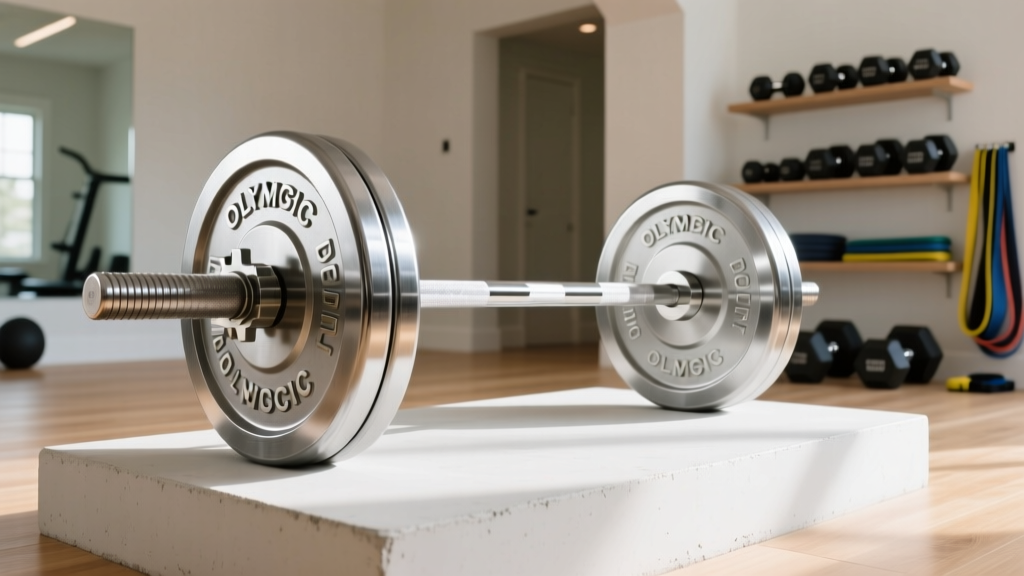
The term 'Olympic' refers specifically to the 2-inch (50mm) diameter rotating sleeves that accommodate standard Olympic weight plates. However, the shaft (the part you actually grip) and the overall weight of the bar vary significantly based on the intended use case.
The 20kg (44lb) Standard Men's Bar
The standard Olympic barbell weighs exactly 20kg (44.09 lbs) and measures 2,200mm (7.2 feet) in total length. The shaft diameter is typically 28mm to 29mm. A 28mm shaft is ideal for Olympic weightlifting (snatches and cleans) because it provides more 'whip' and is easier for smaller hands to hook grip. A 29mm shaft is stiffer and preferred for powerlifting movements like the squat and bench press, as it minimizes bar oscillation when lifting heavy loads.
The 15kg (33lb) Women's / Technique Bar
Weighing 15kg (33.07 lbs), this bar features a 25mm shaft diameter and a slightly shorter overall length (usually 2,010mm). According to the National Strength and Conditioning Association (NSCA), a 25mm shaft is crucial for lifters with smaller hand sizes to safely achieve a full lock around the bar, reducing grip fatigue and wrist strain during pressing movements. If you are a beginner with smaller hands, or if you are buying a bar specifically for a younger athlete, a 15kg technique bar is the superior starting point.
Step 3: The Knurling Matrix (Finding Your Grip)
Knurling is the cross-hatched pattern machined into the steel shaft of the barbell. It is arguably the most important factor in your buying decision, as it directly dictates your grip security and hand comfort. Manufacturers use different tooling to create three primary knurl shapes. Choosing the wrong one can result in torn calluses or a slipping grip during heavy incline presses.
| Knurl Type | Shape Profile | Aggressiveness | Best Application |
|---|---|---|---|
| Hill | Rounded, flat peaks | Low / Mild | High-rep conditioning, beginners, casual lifting |
| Mountain | Sharp, pointed peaks | High / Aggressive | Heavy deadlifts, powerlifting, chalk-heavy lifting |
| Volcano | Crater-like rim with deep grooves | Medium (Grippy but not tearing) | All-around lifting, Olympic lifts, bench pressing |
For a beginner transitioning from dumbbells to a barbell, a Volcano knurl is the gold standard. It provides exceptional grip security without acting like a cheese grater on your palms. Premium manufacturers like Rogue Fitness utilize a highly refined volcano knurl pattern that bites into the skin just enough to hold a 225lb bench press securely, but remains comfortable enough for high-rep front squats.
Center Knurl: To Have or Not to Have?
Many Olympic barbells feature a small strip of knurling in the exact center of the shaft. Originally designed to grip the back of a lifter's t-shirt during heavy back squats, the center knurl is highly polarizing. If you plan on doing barbell floor presses or front squats, a center knurl helps align your grip perfectly. However, if you primarily focus on the bench press, deadlifts, and Olympic lifts, a center knurl can scrape your chest and collarbone. Most modern 'all-around' beginner bars omit the center knurl for maximum comfort.
Step 4: Tensile Strength and Sleeve Construction
When browsing barbell specs, you will see 'Tensile Strength' measured in PSI (Pounds per Square Inch). This number dictates how much force the bar can take before it permanently bends or snaps.
- Below 150,000 PSI: Avoid at all costs. These are cheap, big-box store bars that will permanently bend if you drop them or load them past 200 lbs.
- 165,000 PSI to 180,000 PSI: The sweet spot for beginners and intermediate lifters. Offers a great balance of durability and cost.
- 190,000+ PSI: Elite competition grade. Incredible 'whip' and virtually indestructible under normal human loads.
Equally important is the sleeve construction—the mechanism that allows the ends of the bar to spin. When you perform dynamic movements, the plates generate rotational inertia. If the sleeve does not spin, that torque transfers directly into your wrists and elbows, leading to severe joint pain.
Bushing vs. Bearing: What Do You Need?
Bronze/Composite Bushings: Found in 90% of quality all-around bars. They provide a smooth, controlled spin that is perfect for the bench press, squat, and deadlift.
Needle Bearings: Found in dedicated Olympic weightlifting bars (like those from Eleiko). They offer a lightning-fast, frictionless spin necessary for catching heavy cleans and snatches, but can actually feel too 'loose' for a heavy, slow bench press.
Step 5: 2026 Barbell Recommendations for Beginners
Based on current 2026 market pricing, manufacturing consistency, and knurl quality, here are the top three Olympic barbells for lifters upgrading from a dumbbell-only setup.
1. The Gold Standard: Rogue Ohio Bar (Stainless Steel)
Price: ~$395.00
Specs: 190,000 PSI, 28.5mm shaft, Volcano knurl, Composite Bushings.
Why it wins: The stainless steel shaft requires zero maintenance and will not rust in a garage gym. The knurl is widely considered the benchmark for the fitness industry. It is the perfect bar to master your barbell incline press and heavy squats without tearing your hands.
2. The Budget Champion: REP Fitness EX-2900
Price: ~$299.00
Specs: 190,000 PSI, 29mm shaft, Deep Volcano knurl, Bronze Bushings.
Why it wins: REP Fitness has dominated the budget-friendly market by offering elite tensile strength at a sub-$300 price point. The 29mm shaft provides excellent stiffness for heavy pressing movements, making it a massive upgrade over adjustable dumbbells for chest development.
3. The Technique Builder: Rogue Bella Bar 2.0
Price: ~$235.00
Specs: 190,000 PSI, 25mm shaft, Mild knurl, Bronze Bushings.
Why it wins: As a 15kg (33lb) bar with a 25mm shaft, the Bella Bar is the ultimate choice for beginners with smaller hands or those focusing on high-rep hypertrophy work. The grip security is vastly superior to the smooth handles of cheap rubber-coated dumbbells.
Frequently Asked Questions
Can I use an Olympic barbell for the incline bench press?
Absolutely. While incline bench press dumbbells are excellent for targeting the clavicular head of the pectoralis major with a deep stretch, the Olympic barbell allows for significantly heavier loads. Ensure your power rack features adjustable J-cups and spotter arms set just below your chest level to safely fail a rep if necessary.
How do I maintain my barbell's knurling?
Chalk, dead skin, and moisture will quickly clog the grooves of your knurling, turning a 'volcano' pattern into a smooth 'hill'. Once a month, apply a few drops of 3-in-One oil to a stiff nylon brush and scrub the shaft. Wipe it down with a microfiber cloth to restore the original bite of the steel.
Do I need to buy Olympic weight plates separately?
Yes. Olympic barbells require plates with a 2-inch center hole. Cast iron plates are the most cost-effective option (averaging $1.50 to $2.00 per pound in 2026), while crumb rubber bumper plates are better if you plan on dropping the bar from overhead during Olympic lifts or deadlifts in a home gym without specialized flooring.
More gear to consider
All reviews
Rubber Hex vs Urethane: Space Hacks & Forearm Exercises with Dumbbells

Is Dumbbell Bench Press Harder Than Barbell? (Plate Guide)
Olympic vs Standard Plates: Setup & Dumbbell Wall Rack Guide

Olympic Barbell Buying Guide: Knurling & Plasti Dip Dumbbells
Barbell Weight & Knurling Guide vs Dumbbell Side Bends Exercise
