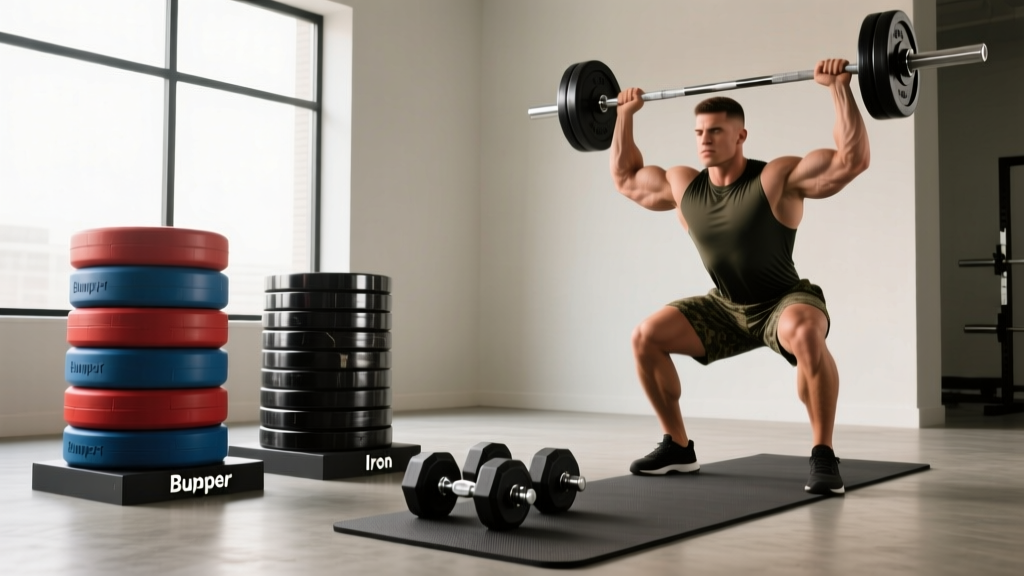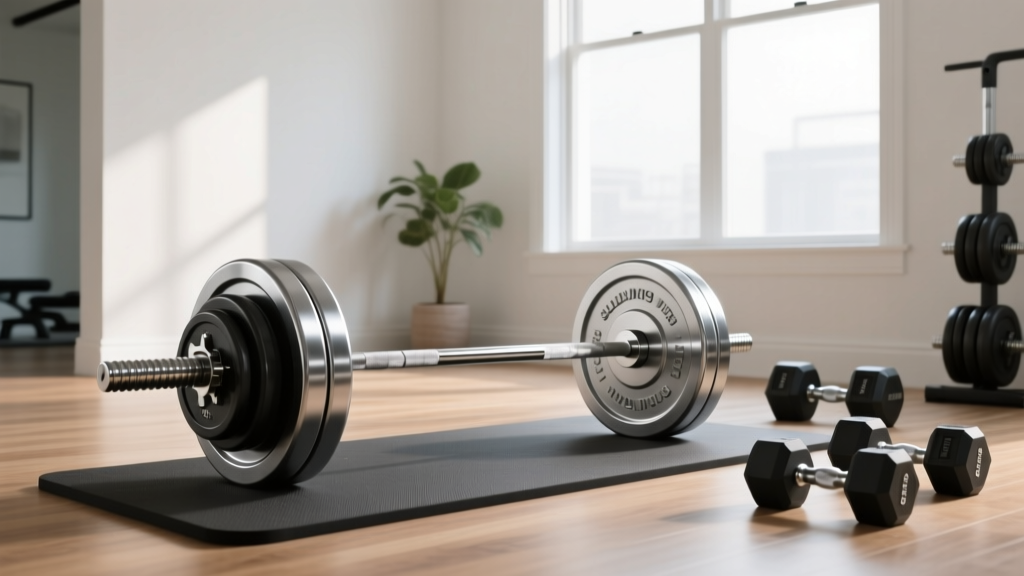
Olympic Barbell Buying Guide & Trapezius Workout with Dumbbells
Master your upper back with our Olympic barbell buying guide on weight and knurling, plus a step-by-step trapezius workout with dumbbells for mass.

Building a dense, resilient upper back requires a two-pronged approach: heavy axial loading to trigger mechanical tension, and targeted isolation to ensure symmetrical muscle fiber recruitment. For beginners stepping into a home gym or commercial weight room, understanding your equipment is just as critical as understanding the biomechanics of the lift. This guide bridges the gap between hardware and programming, starting with a comprehensive Olympic barbell buying guide focused on weight and knurling, before transitioning into a highly effective, step-by-step trapezius workout with dumbbells.
The Foundation: Decoding Olympic Barbell Weight and Knurling
Before you can load up 400 pounds for heavy rack pulls or barbell shrugs, you need a barbell that won't permanently bend under the stress. As of 2026, the market is flooded with sub-par imports, making it vital to understand the metallurgy and machining of a quality Olympic barbell.
Weight and Shaft Diameter: 20kg vs. 15kg
The standard men's Olympic barbell weighs exactly 20kg (44 lbs) and features a 28mm shaft diameter. The women's Olympic barbell weighs 15kg (33 lbs) with a 25mm shaft. For upper back and trap development, the 28mm shaft is generally preferred for heavy shrugs because the thicker diameter provides a more secure grip when your hands are heavily loaded and sweating. However, beginners with smaller hand spans may find the 25mm shaft easier to hold during high-rep dumbbell or barbell shrug variations.
The Geometry of Grip: Knurling Profiles
Knurling is the cross-hatched pattern machined into the steel shaft. It is the single most important factor for heavy pulling movements. According to Rogue Fitness's specifications on volcano knurling patterns, the geometry of the knurl dictates how the bar interacts with your skin:
- Volcano Knurling: The gold standard for multi-purpose bars. The machining leaves a small, sharp rim around the peak of each diamond. It 'bites' the skin for a secure grip without tearing calluses. (e.g., Rogue Ohio Bar, ~$295).
- Mountain Knurling: Sharp, peaked diamonds. Extremely aggressive. Ideal for powerlifting deadlifts but can tear the hands during high-volume shrug sessions.
- Hill Knurling: Rounded, flattened peaks. Common on cheap, big-box store barbells. Avoid these for heavy trap work; the bar will slip the moment you sweat.
Step-by-Step: The Ultimate Trapezius Workout with Dumbbells
While barbells are exceptional for moving maximum loads, they force your arms into a fixed, slightly forward position, which can cause the bar to drag uncomfortably against your thighs during shrugs. Dumbbells allow your arms to hang naturally at your sides, aligning perfectly with the upper trapezius muscle fibers. Based on ExRx.net's biomechanical breakdown of the dumbbell shrug, the neutral grip maximizes scapular elevation while minimizing bicep tendon strain.
Step 1: Heavy Neutral-Grip Dumbbell Shrugs (Upper Traps)
This is your primary mass builder. The goal is to elevate the scapula toward the ears, not to roll the shoulders.
- Setup: Grab a pair of heavy dumbbells (aim for 50-80 lbs per hand for intermediate beginners). Stand tall with a neutral spine.
- Execution: Shrug straight up toward the ceiling. Imagine trying to touch your shoulders to your earlobes.
- Tempo: 1-second concentric (up), 2-second isometric pause at the top, 3-second eccentric (lowering). The eccentric stretch is where the most muscle damage and subsequent growth occurs.
- Volume: 4 sets of 8-10 repetitions. Rest 90 seconds between sets.
Step 2: Dumbbell Farmer's Walks (Isometric Trap Tension)
The traps act as stabilizers to keep your arms from ripping out of their sockets during heavy carries. This builds incredible yoke thickness and core stability.
- Setup: Grab the heaviest dumbbells you can safely hold. Brace your core and pull your shoulder blades slightly down and back (scapular depression).
- Execution: Walk with short, rapid steps. Keep your neck neutral; do not look down at the floor.
- Volume: 3 sets of 40-50 yards. Rest 120 seconds between sets.
Step 3: Chest-Supported Dumbbell Y-Raises (Lower & Mid Traps)
Most beginners overdevelop the upper traps while neglecting the lower and middle fibers, leading to a hunched posture. Y-raises fix this imbalance.
- Setup: Set an incline bench to 45 degrees. Lie face down holding light dumbbells (10-20 lbs).
- Execution: With a slight bend in the elbows, raise the dumbbells up and out at a 45-degree angle, forming a 'Y' shape with your body. Squeeze the shoulder blades together at the top.
- Volume: 3 sets of 12-15 repetitions. Rest 60 seconds.
Equipment Matrix: Barbells vs. Dumbbells for Trap Development
Understanding when to use which implement will optimize your training cycle. Use this comparison matrix to structure your weekly programming.
| Feature | Olympic Barbell Shrugs | Dumbbell Shrugs | Smith Machine Shrugs |
|---|---|---|---|
| Max Load Potential | Very High (400+ lbs) | Moderate (Limited by grip & DB availability) | High (Fixed path) |
| Range of Motion | Restricted (Bar hits thighs) | Unrestricted (Arms at sides) | Restricted (Fixed vertical plane) |
| Grip Demand | Extreme (Requires chalk/straps) | High (Neutral grip is slightly easier) | Moderate (Knurling varies) |
| Best Use Case | Overload & Mechanical Tension | Hypertrophy & Symmetry | Drop sets & Burnouts |
Troubleshooting Grip and Knurl Failure Modes
When executing a trapezius workout with dumbbells or heavy barbell shrugs, your traps will almost always outlast your grip. Here is how to troubleshoot common failure modes:
Failure Mode 1: The 'Slipping' Barbell
The Issue: You are using a bar with 'hill' knurling, and as soon as you sweat, the bar slides down your thighs during the eccentric phase of the shrug.
The Fix: Upgrade to a bar with volcano knurling. If a new bar isn't in the budget, use liquid chalk or magnesium carbonate block chalk. Avoid lifting straps for the first 3-4 weeks of a beginner program to build baseline grip strength in the forearms and brachioradialis.
Failure Mode 2: Dumbbell Forearm Pump-Out
The Issue: During heavy dumbbell farmer's walks, your fingers involuntarily pry open before your traps feel fatigued.
The Fix: Utilize the 'hook grip' on dumbbells if the handle diameter allows, or wrap the dumbbell handles with athletic tape to increase the surface friction. Alternatively, switch to trap-bar (hex bar) carries, which allow for a more natural center of gravity and typically feature superior knurling compared to standard hex dumbbells.
Final Thoughts on Upper Back Programming
Investing in a high-quality Olympic barbell with proper tensile strength and aggressive knurling is a non-negotiable for serious lifters. However, the barbell is only half the equation. By supplementing your heavy axial pulls with a targeted, high-tempo trapezius workout with dumbbells, you ensure complete development of the upper, middle, and lower trap fibers. Stick to the 3-step protocol outlined above, respect the eccentric tempos, and watch your yoke grow.
More gear to consider
All reviews
Dumbbell Glute Trends 2026: Cast Iron vs Competition Kettlebells

Olympic Barbell Knurling Guide & York Dumbbells Setup
Pull Up Alternative with Dumbbells: Neoprene vs. Hex in 2026
8 lbs Dumbbell Value: Rubber Hex vs Urethane Cost Breakdown

Dumbbell Rack Guide: Storage & The Dumbbell Floor Press Muscles Worked