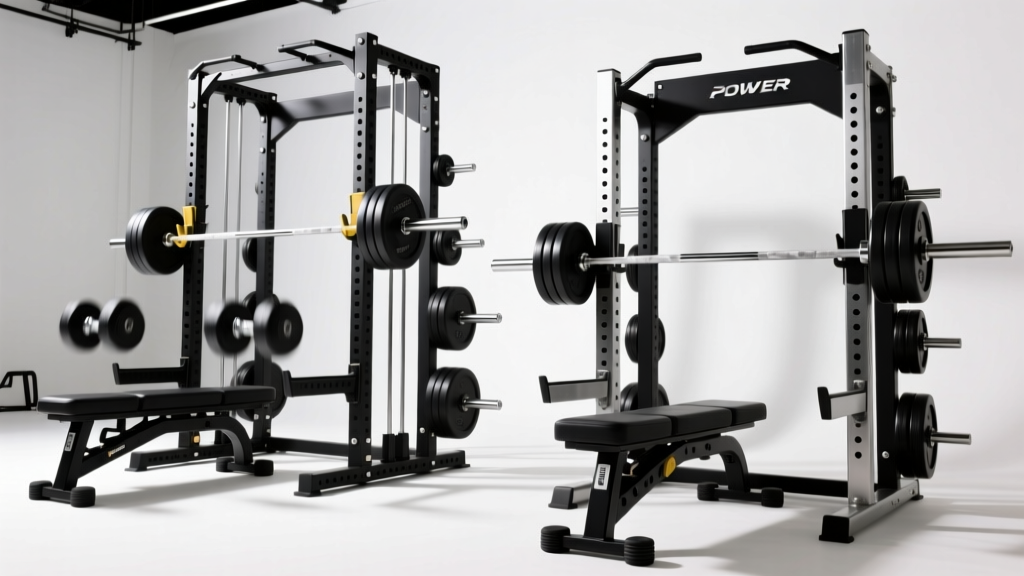
Olympic Barbell Guide & Bent Over Dumbbell Row Muscles Worked
Master your free weight setup with our Olympic barbell buying guide on weight and knurling, plus a breakdown of bent over dumbbell row muscles worked.

The Foundation: Choosing Your First Olympic Barbell
Building a resilient, high-performance home gym in 2026 requires more than just throwing money at the first piece of iron you see. Your free weight equipment dictates your training ceiling, and the centerpiece of any serious setup is the Olympic barbell. Whether you are outfitting a garage gym or upgrading from a starter kit, understanding the nuances of barbell weight, tensile strength, and knurling is non-negotiable. In this guide, we will break down exactly how to select the right barbell for your needs, and then transition into why pairing it with dumbbells for unilateral back work is essential for complete muscular development.
Understanding Barbell Weight, Tolerances, and Tensile Strength
A standard men's Olympic barbell weighs exactly 20kg (44.09 lbs), while a standard women's bar weighs 15kg (33.07 lbs). However, not all 20kg bars are created equal. The defining metric of barbell quality is tensile strength, measured in pounds per square inch (PSI). This number indicates how much stress the steel can handle before permanently bending or snapping.
- Entry-Level (150k - 180k PSI): Typically priced between $120 and $180 in 2026. These bars are prone to permanent deformation if dropped repeatedly with heavy loads (e.g., over 300 lbs).
- Mid-Tier (190k - 205k PSI): The sweet spot for most home gym owners, ranging from $220 to $320. Bars in this category, like the legendary Rogue Ohio Bar, offer exceptional durability and whip for dynamic movements.
- Elite (210k+ PSI): Priced upwards of $400, these are competition-grade bars designed for elite powerlifters and Olympic weightlifters who demand microscopic tolerances and extreme snap.
When shopping, always check the manufacturer's stated weight tolerance. Premium brands guarantee a +/- 1% weight accuracy, meaning a 20kg bar will weigh between 19.8kg and 20.2kg. Cheaper import bars often have a +/- 5% variance, which can skew your progressive overload tracking over time.
Decoding Knurling: The Grip That Makes or Breaks Your Lift
Knurling is the crosshatched pattern machined into the steel shaft of the barbell. It is the only point of contact between you and the weight, making it a critical factor in your buying decision. According to comprehensive breakdowns like BarBend's knurling guide, there are three primary knurl profiles you will encounter:
- Hill Knurling: The peaks of the knurl are rounded off. It feels smooth and is ideal for high-rep conditioning or bare-handed lifting, but it can become slippery during heavy, sweaty deadlifts.
- Volcano Knurling: The most popular pattern for powerbuilding. The peaks are sharp and pointy, creating a highly aggressive grip that bites into your calluses without tearing the skin. This is the gold standard for heavy pulling movements.
- Mountain Knurling: Broader, flatter peaks that provide a wide surface area for grip. Often found on premium weightlifting bars, it offers a secure hold that is less abrasive than the volcano pattern.
2026 Buyer's Tip: The Center Knurl Debate
If you plan on back squatting, look for a bar with a center knurl. This small patch of grip at the exact middle of the bar prevents it from sliding down your back during heavy squats. However, if you primarily do front squats, deadlifts, and presses, a bar without a center knurl will save your shins and chest from unnecessary scraping during the clean or deadlift setup.
Expanding the Arsenal: Why You Need Dumbbells for Back Day
While the Olympic barbell is undisputed for absolute load and bilateral strength, it has a glaring limitation: it locks your wrists and shoulders into a fixed, straight path. This can exacerbate asymmetries and limit the range of motion for pulling movements. This is exactly why a well-rounded 2026 free weights setup must include a pair of adjustable or hex dumbbells to target the back unilaterally.
Biomechanics: Bent Over Dumbbell Row Muscles Worked
Understanding the exact bent over dumbbell row muscles worked is critical for mind-muscle connection and effective programming. When you perform a single-arm or bilateral dumbbell row with a neutral grip, you unlock a deeper stretch and a more natural pulling arc than a barbell allows. Based on kinesiology data from ExRx.net's exercise directory, the primary and secondary movers include:
| Muscle Group | Function in the Row | Dumbbell vs. Barbell Advantage |
|---|---|---|
| Latissimus Dorsi | Shoulder extension and adduction (pulling the arm down and back). | Allows the elbow to travel past the torso for peak contraction. |
| Rhomboids & Mid-Traps | Scapular retraction (squeezing the shoulder blades together). | Unilateral focus prevents the dominant side from overcompensating. |
| Posterior Deltoid | Horizontal abduction of the shoulder joint. | Flaring the elbow slightly targets the rear delt more effectively. |
| Erector Spinae | Isometric stabilization of the spine against shear forces. | Single-arm rows require intense anti-rotation core stability. |
| Biceps Brachii | Elbow flexion during the concentric pulling phase. | Neutral grip heavily recruits the brachioradialis alongside the biceps. |
Step-by-Step Execution Guide: The Perfect Dumbbell Row
Maximizing the bent over dumbbell row muscles worked requires strict form. Ego lifting and momentum are the enemies of back hypertrophy. Follow this step-by-step protocol to ensure optimal mechanical tension on the lats and rhomboids.
Step 1: The Stance and Hinge
Place your left knee and left hand on a flat bench. Plant your right foot firmly on the floor, slightly outside the bench. Hinge at the hips until your torso is nearly parallel to the floor. Your spine must remain in a rigid, neutral position—do not let your lower back round or your chest cave inward.
Step 2: The Eccentric Stretch
Hold a moderately heavy hex or adjustable dumbbell in your right hand. Let the weight pull your right shoulder blade down toward the floor (scapular protraction). This deep stretch at the bottom of the movement is crucial for stretch-mediated hypertrophy in the latissimus dorsi.
Step 3: The Concentric Pull
Initiate the pull by driving your elbow up and back toward your hip pocket, not toward the ceiling. Pulling toward the chest shifts the bias to the upper traps and rear delts; pulling toward the hip isolates the lats. Keep your wrist neutral and avoid curling the weight with your biceps.
Step 4: The Squeeze and Return
At the top of the movement, hold for a one-second isometric pause, actively squeezing your shoulder blade toward your spine. Lower the dumbbell under strict control for a 2-to-3 second eccentric phase back to the fully stretched position.
Common Failure Mode: Rotating the torso to heave the weight up. If your chest is facing the wall rather than the floor at the top of the rep, the weight is too heavy. Drop the load by 15% and focus on pure lat engagement.
Final Verdict: Building Your 2026 Free Weights Arsenal
A complete strength training ecosystem requires both the absolute loading capacity of a high-tensile Olympic barbell and the unilateral, joint-friendly versatility of dumbbells. When investing in a barbell, prioritize a 190k+ PSI tensile strength and a volcano knurl pattern to ensure your grip never fails before your muscles do. Pair this with a heavy set of adjustable dumbbells to execute targeted movements like the bent over row, ensuring symmetrical back development and long-term shoulder health. By understanding the biomechanics and equipment specifications outlined above, you are equipped to build a home gym that will support your progressive overload for decades to come.
More gear to consider
All reviews
EZ Curl vs Straight Bar: Neutral Grip Dumbbell Bench Layouts

Rubber Hex vs Urethane Dumbbells for Lawnmowers (2026)

Hammer Curls vs Dumbbell Curls: Barbell Collar & Clamp Guide
Cast Iron vs Competition Kettlebells, Space Limits & Dumbbell Cleans

EZ Curl vs Straight Bar: Rogue Bar & Dumbbell Care