Best Neoprene Weights for a Dumbbell Routine for Beginners
Compare top neoprene dumbbells for home use. Learn material differences, avoid common failure modes, and build an effective beginner routine.

The Gateway to Home Fitness: Why Neoprene?
When transitioning from bodyweight exercises to weighted resistance, neoprene-coated dumbbells are overwhelmingly the most popular choice for home gyms. Unlike raw cast iron that can rust or urethane that carries a premium price tag, neoprene (synthetic polychloroprene rubber) offers a vibrant, tactile, and floor-friendly middle ground. However, as the home fitness market has saturated in 2026, the quality variance between brands has widened significantly. Selecting the right pair is the foundational step in building a sustainable and effective dumbbell routine for beginners.
Neoprene is not a solid material; it is a liquid-dipped coating applied over a cast-iron or cement-sand core. This manufacturing process dictates the dumbbell's durability, grip texture, and long-term structural integrity. Below, we break down the material science, compare the top models on the market, and provide a concrete framework for your first training split.
Quick Pros & Cons of Neoprene Coatings
- Pros: Excellent grip traction when sweaty, protects hardwood floors from scuffs, color-coded for easy weight identification, generally more affordable than urethane.
- Cons: Susceptible to UV degradation (chalking), seams can split at the handle junction, retains a chemical odor if poorly off-gassed at the factory.
2026 Neoprene Dumbbell Comparison Matrix
Not all neoprene is created equal. The thickness of the dip, the masking of the handle, and the core density vary wildly. Here is how the top contenders for home use stack up this year.
| Brand / Model | Core Material | Handle Masking | Price per lb (2026) | Best Use Case |
|---|---|---|---|---|
| CAP Barbell Hex Neoprene | Solid Cast Iron | Masked (Bare Steel) | $1.60 - $1.85 | Heavy Home Lifting |
| Amazon Basics Hex | Cast Iron | Fully Dipped | $1.75 - $2.10 | Light Aerobics / HIIT |
| Yes4All Color-Coded | Cast Iron | Contoured Neoprene | $2.00 - $2.40 | Small Hands / Rehab |
| Tone Fitness Round | Cement/Sand Mix | Fully Dipped | $1.20 - $1.50 | Budget / Group Fitness |
Edge Cases & Failure Modes: What Brands Don't Tell You
When buying neoprene, you must look past the bright colors and evaluate the manufacturing edge cases that lead to premature failure.
The Handle Masking Dilemma
The most critical differentiator in neoprene dumbbells is how the handle is treated during the liquid dipping process. Premium brands like CAP Barbell mask the handle, meaning they tape it off so only the iron heads are coated. This leaves you with a bare, knurled steel handle that provides a secure grip for heavy pressing movements. Budget brands skip the masking step and dip the entire dumbbell. While a fully coated handle feels soft, neoprene compresses under load, reducing grip security during heavy Romanian Deadlifts or Goblet Squats.
UV Degradation and the 'Chalky' Residue
Polychloroprene is highly sensitive to ultraviolet light and ozone. If you store your dumbbells in a sunroom or near a south-facing window, the UV exposure will break down the chemical bonds in the coating within 12 to 18 months. The failure mode presents as a white, chalky residue that transfers to your hands and hardwood floors. Once this chalking begins, the neoprene will eventually dry-rot and peel away from the cast-iron core in chunks.
Expert Warning: Never clean neoprene dumbbells with bleach-based wipes or ammonia. Harsh alkaline chemicals accelerate the breakdown of the synthetic rubber, causing the seams at the handle junction to split prematurely. Use a mild dish soap and water solution instead.
Structuring Your First Dumbbell Routine for Beginners
Gear is only half the equation. According to the Centers for Disease Control and Prevention (CDC), adults should engage in muscle-strengthening activities of moderate or greater intensity that involve all major muscle groups on 2 or more days a week. When structuring a dumbbell routine for beginners, the tactile feedback and fixed-weight nature of neoprene dumbbells make them ideal for learning movement patterns without the intimidation of a barbell.
Here is a practical, 3-day full-body framework optimized for fixed-weight neoprene sets (typically ranging from 5 lbs to 25 lbs for novices):
- Lower Body Hinge (Romanian Deadlifts): Use your heaviest pair (e.g., 15-25 lbs). Focus on pushing the hips back. 3 sets of 10-12 reps. Why neoprene? The hex shape prevents the weights from rolling away between sets.
- Lower Body Squat (Goblet Squats): Hold a single medium-weight dumbbell (10-15 lbs) vertically against your chest. 3 sets of 8-10 reps. Cue: Keep your elbows tucked to engage the lats.
- Upper Body Push (Floor Press or Overhead Press): Use a lighter pair (8-12 lbs). The floor press limits shoulder extension, making it highly joint-friendly for beginners. 3 sets of 10-15 reps.
- Upper Body Pull (Single-Arm Dumbbell Row): Use your heaviest pair again. Support your non-working hand on a bench or sturdy chair. 3 sets of 8-10 reps per side.
- Accessory Isolation (Lateral Raises): Use your lightest pair (3-8 lbs). The smaller muscle groups of the rotator cuff and lateral deltoids require strict form over heavy load. 2 sets of 15 reps.
As noted by the Mayo Clinic's strength training guidelines, beginners should focus on a weight that tires the muscles after 12 to 15 repetitions. If you can easily exceed 15 reps with perfect form, it is time to invest in the next 5-pound increment up in your neoprene set.
Weight Selection Strategy: Avoiding the 'Middle-Weight' Trap
A common mistake when buying a neoprene set for a home gym is purchasing a uniform 5-pound increment set (e.g., 5, 10, 15, 20 lbs). Because the lower body is significantly stronger than the upper body, beginners quickly outgrow the 15 lb and 20 lb dumbbells for squats and deadlifts, while the 5 lb weights become useless for anything but physical therapy.
The FitGearPulse Buying Formula: Instead of a uniform set, allocate your budget asymmetrically. Buy lighter pairs (5, 8, 10 lbs) for isolation movements, but invest heavily in two pairs of heavier weights (20 lbs and 30 lbs) specifically for lower body compounds. This extends the usable lifespan of your home gym by an average of 6 to 8 months before requiring an equipment upgrade.Storage and Maintenance for Maximum Longevity
To protect your investment and keep your home floors pristine, adhere to these storage protocols:
- Use a Rack: Never leave neoprene dumbbells scattered on the floor. The constant friction against hardwood or laminate will eventually wear a flat spot into the coating. Invest in a tiered A-frame rack with rubber-padded shelves.
- Climate Control: Store your weights in a climate-controlled room. High humidity combined with temperature fluctuations can cause the cast-iron core to expand and contract microscopically, breaking the adhesive bond between the iron and the neoprene coating.
- Post-Workout Wipe: Human sweat is highly acidic and corrosive. Wipe down the handles and heads with a damp microfiber cloth after every session to prevent the degradation of the coating and the rusting of any exposed metal.
Frequently Asked Questions
Are neoprene dumbbells toxic?
High-quality, fully cured neoprene is non-toxic and safe for home use. However, extremely cheap, mass-produced dumbbells may off-gas volatile organic compounds (VOCs) from the solvents used in the dipping process. If your new dumbbells have a sharp, overwhelming chemical odor, leave them in a well-ventilated garage for 72 hours before bringing them into your living space.
Can I drop neoprene dumbbells on the floor?
No. While neoprene protects your floor from minor scuffs and scratches, the coating is relatively thin (usually 2mm to 4mm). Dropping them from shoulder height will compress the coating, causing it to split, and can also crack the cast-iron core inside. For dropping, you must use solid rubber or bumper plates.
Why do my neoprene dumbbells feel slippery when I sweat?
If your dumbbells are fully dipped (meaning the handle is covered in neoprene), the synthetic rubber can become slick when exposed to heavy moisture. This is why we recommend masked-handle dumbbells with bare, knurled steel grips for intense, high-sweat conditioning routines.
More gear to consider
All reviews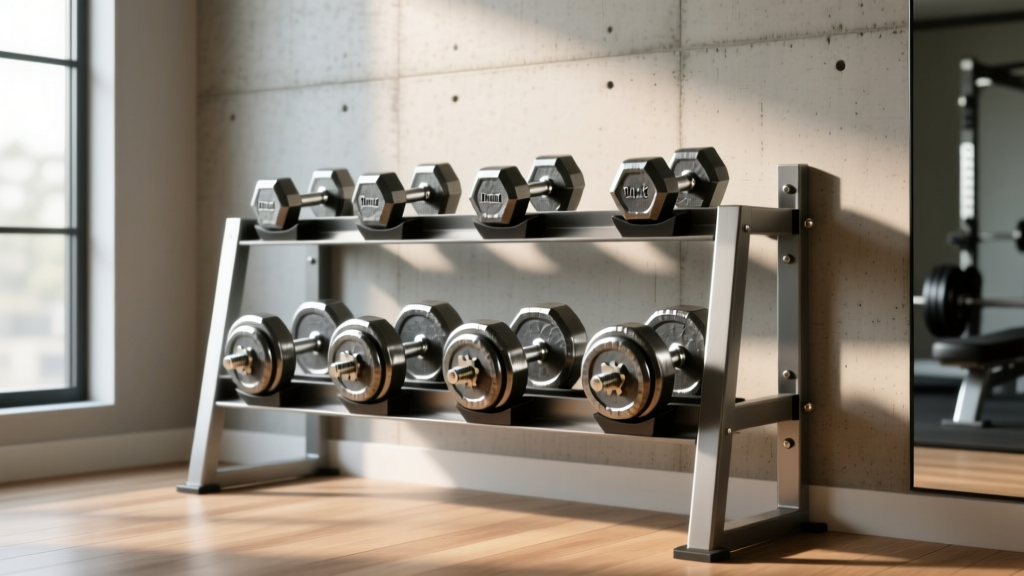
Storing Thomas Inch Dumbbells: Rack & Storage Value Analysis

Bumper vs Iron Plates & Best Upper Body Dumbbell Exercises

EZ vs Straight Bar: Budgeting Full-Body Compound Dumbbell Exercises

Best Loadable Dumbbells CrossFit Athletes Use for Small Spaces
Compact Gym Layout: Kettlebell Buying Guide & Inner Chest Exercises Dumbbells