Beginner Dumbbell Overhead Press Workout Using Neoprene Weights
Master your first dumbbell overhead press workout with neoprene weights. Step-by-step form guide, set/rep schemes, and home gym tips for beginners.

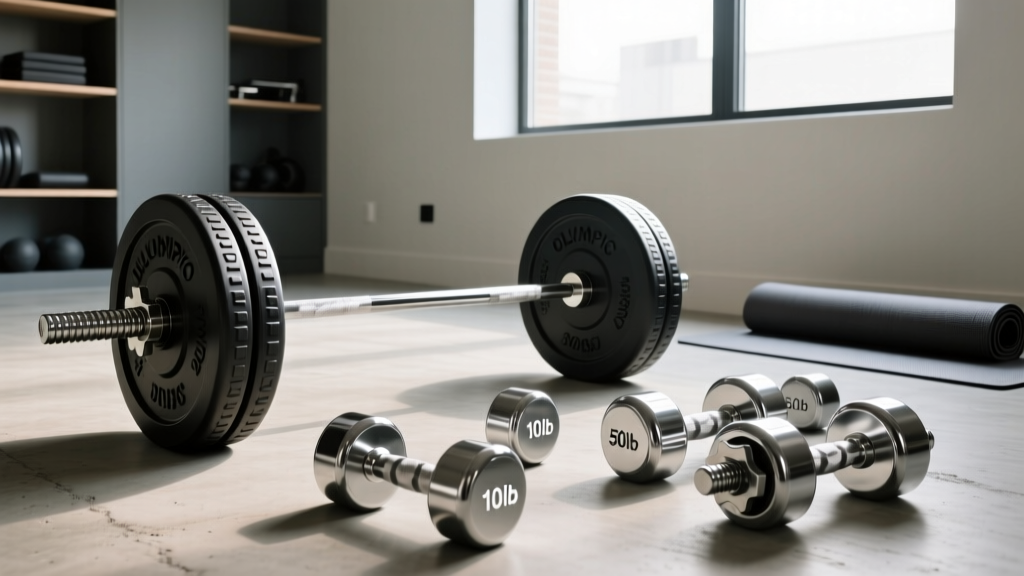
Building a home gym on a budget often leads beginners straight to neoprene-coated dumbbells. They are accessible, relatively inexpensive, and gentle on your living room floor. However, when it comes to executing a proper dumbbell overhead press workout, the unique grip and weight distribution of neoprene dumbbells require specific technical adjustments. This comprehensive, step-by-step guide will teach you how to safely and effectively press neoprene dumbbells overhead, build shoulder strength, and avoid the common pitfalls that lead to injury.
Why Choose Neoprene Dumbbells for Home Use?
Neoprene dumbbells feature a solid cast-iron core encased in a soft, synthetic rubber coating. Brands like Yes4All, Amazon Basics, and CAP Barbell dominate this space. As of 2026, you can expect to pay between $1.50 and $2.50 per pound for neoprene sets, making them one of the most cost-effective entry points into free weights.
The Neoprene Advantage for Beginners
- Floor Protection: The thick coating prevents scuff marks on hardwood and dampens sound when dropped.
- Ergonomic Grips: Most neoprene dumbbells feature a slightly contoured handle that accommodates smaller hands better than thick, straight Olympic-style handles.
- Hexagonal Heads: The flat edges prevent the weights from rolling away between sets, a crucial safety feature for home gyms without dedicated weight racks.
However, neoprene does have a failure mode: the coating can become slick when exposed to heavy sweat, and the maximum weight per dumbbell rarely exceeds 50 pounds. For beginners learning the overhead press, the 10 lb to 25 lb range is the perfect sweet spot for mastering motor patterns before upgrading to bare steel or urethane.
Biomechanics 101: The Scapular Plane
Before picking up the weights, you must understand the path your arms should take. According to the biomechanical data cataloged by ExRx.net, pressing directly out to your sides (the frontal plane) can pinch the supraspinatus tendon against the acromion process of your shoulder blade. This is a primary driver of shoulder impingement.
Instead, your dumbbell overhead press workout should utilize the scapular plane (scaption). This means your elbows should be tucked roughly 30 degrees forward from your torso. This natural alignment respects the anatomy of your shoulder joint, allowing for smoother upward rotation of the scapula and significantly higher force output.
Step-by-Step Execution Guide
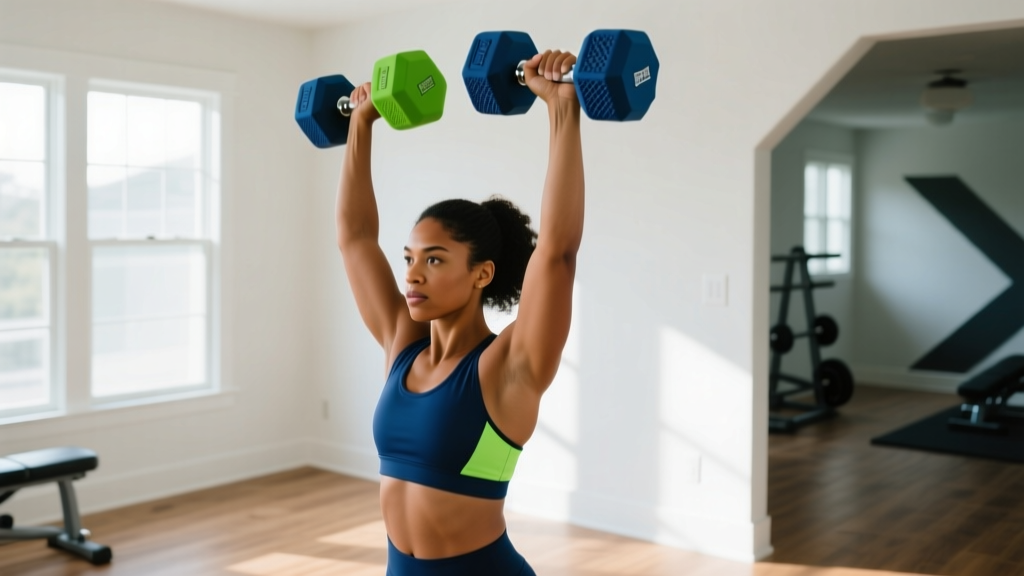
Follow this exact sequence to perform the standing dumbbell overhead press with neoprene weights. Standing is preferred for home use as it integrates core stability without requiring a specialized bench.
- The Base and Brace: Stand with your feet shoulder-width apart. Squeeze your glutes and brace your core as if you are about to be punched in the stomach. This 'stacks' your ribcage directly over your pelvis, preventing your lower back from arching.
- The Rack Position: Clean the dumbbells to your shoulders (or use your thighs to help kick them up). Hold the dumbbells with a neutral grip (palms facing each other) or a slightly pronated grip (palms facing forward at a 45-degree angle). Keep your elbows tucked in that 30-degree scapular plane.
- The Press Path: Exhale forcefully as you drive the weights straight up and slightly back. The dumbbells should travel in a slight arc, finishing directly over your mid-foot, not in front of your face.
- The Lockout: At the top, your biceps should be grazing your ears. Do not hyperextend your elbows or shrug your shoulders up to your ears at the top of the movement. Keep your shoulder blades depressed and stable.
- The Descent: Inhale and lower the weights under control, taking 2 to 3 seconds to return to the rack position. Stop when the dumbbells reach roughly ear-level to maintain constant tension on the deltoids.
Expert Breathing Tip: For heavier sets, use a modified Valsalva maneuver. Take a deep breath into your belly at the rack position, hold it to create intra-abdominal pressure, press through the sticking point, and exhale sharply only as you pass the midpoint of the press.
The 4-Week Beginner Dumbbell Overhead Press Workout
Because neoprene dumbbells are often lighter than commercial gym equipment, this program utilizes a combination of rep progression and tempo manipulation to ensure you reach muscular fatigue. Use a weight that challenges you but allows you to maintain perfect form.
| Week | Sets | Reps | Tempo (Down-Pause-Up) | Rest |
|---|---|---|---|---|
| Week 1 | 3 | 8-10 | 2-0-1 | 90 sec |
| Week 2 | 3 | 10-12 | 2-0-1 | 90 sec |
| Week 3 | 4 | 8-10 | 3-1-X (Explosive) | 120 sec |
| Week 4 | 4 | 10-12 | 3-1-X (Explosive) | 90 sec |
Note: Perform this routine twice a week, leaving at least two days of rest between sessions to allow the anterior deltoids and triceps to recover.
Troubleshooting Common Form Mistakes
Even with light neoprene weights, poor mechanics can lead to joint irritation over time. The Cleveland Clinic notes that repetitive overhead motions with flawed posture are a leading cause of rotator cuff tendinopathy. Watch out for these two critical failure modes:
⚠️ Mistake 1: The 'Rib Flare' (Lower Back Arching)
The Problem: As you press the weight up, your lower back arches excessively, and your ribcage points toward the ceiling. This shifts the load from your shoulders to your lumbar spine.
The Fix: Think about 'pulling your front pockets up to your ribs.' Engage your rectus abdominis and keep your glutes clenched throughout the entire set. If you cannot press the weight without arching, the dumbbells are too heavy.
⚠️ Mistake 2: The 'Chicken Wing' (Elbow Flare)
The Problem: Your elbows point directly out to the sides (90 degrees to your torso) at the bottom of the movement.
The Fix: Actively pull your elbows forward into the scapular plane before you initiate the press. Imagine you are trying to show off the logos on the front of your shirt, rather than hiding them under your armpits.
Complementary Exercises for a Balanced Physique
An overhead press workout should never exist in a vacuum. To maintain healthy shoulder joints and proper posture, you must balance pressing movements with pulling movements. The Mayo Clinic emphasizes the importance of working all major muscle groups symmetrically to prevent imbalances.
After completing your dumbbell overhead press sets, immediately follow up with one of these neoprene dumbbell pulling exercises:
- Single-Arm Dumbbell Rows: 3 sets of 10-12 reps per arm. Supports the latissimus dorsi and rhomboids.
- Dumbbell Rear Delt Flyes: 3 sets of 15 reps. Crucial for the posterior deltoids, which act as the 'brakes' for your overhead press.
- Farmer's Carries: 3 sets of 45 seconds. Builds the grip strength and core stability required to stabilize heavy weights overhead.
When to Upgrade Your Gear
Neoprene dumbbells are an incredible starting point, but they are not a lifetime solution. You should consider upgrading your equipment when you experience any of the following:
- You exceed 25 lbs per hand: Neoprene coatings on heavier dumbbells become excessively bulky, making the grip diameter uncomfortably thick and altering the center of gravity.
- You need micro-loading: Neoprene sets usually jump in 5 lb increments. If you need 2.5 lb jumps to continue progressing, it is time to buy an adjustable dumbbell set (like PowerBlock or Nuobell) or bare cast-iron hex dumbbells.
- The coating degrades: If the neoprene begins to peel, tear, or emit a persistent chemical odor due to UV exposure or sweat breakdown, discard them to avoid skin irritation and slipping hazards.
By mastering your dumbbell overhead press workout with neoprene weights today, you are building the foundational strength, mobility, and neurological coordination required to handle advanced equipment and heavier loads in the future. Focus on the process, respect the scapular plane, and watch your shoulder strength soar.
More gear to consider
All reviews
Budget Breakdown: Loadable Bench Flyes Dumbbells vs. Fixed Sets

Collar Types Compared: Secure Your Incline Dumbbell Bicep Curl Setup

Dumbbell Sumo Deadlift Zones: Rack & Storage Layouts

Dumbbell Curl Weight for Beginners: A Neoprene Home Guide

Beyond a 20-Minute Dumbbell Workout for Beginners: Kettlebell Guide