How to Workout Legs With Dumbbells: Neoprene Setup
Learn how to workout legs with dumbbells using neoprene pairs. This complete setup and installation guide covers racking, flooring, and form.

The Ultimate Home Gym Installation: Leg Day with Neoprene Dumbbells
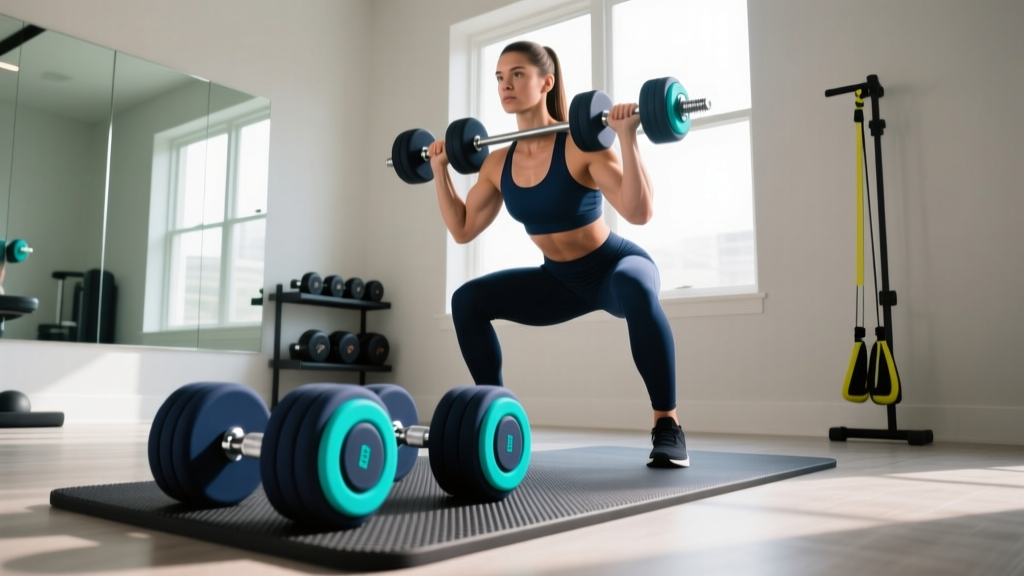
When figuring out how to workout legs with dumbbells, most lifters focus entirely on the exercises and ignore the environment. However, a proper home leg day requires a dedicated physical setup. Neoprene-coated dumbbells are the gold standard for home use in 2026 due to their ergonomic grip, sweat resistance, and floor-friendly exterior. But simply buying them is not enough. To train safely and effectively, you must install the proper flooring, assemble a weight-rated rack, and master the biomechanical setup of each lift.
This complete walkthrough bridges the gap between home gym installation and exercise execution, ensuring your neoprene dumbbell leg workouts are safe, organized, and optimized for hypertrophy.
Phase 1: Flooring Installation and Space Preparation
Leg workouts involve heavy loads and a high risk of dropped weights. While neoprene offers a slight buffer, it will not save your subfloor from a dropped 50-pound dumbbell during a failed Romanian Deadlift.
Step-by-Step Mat Installation
- Measure and Clear: Dedicate a minimum 6x8 foot footprint. Remove all baseboard trim if necessary to allow mats to sit flush against the wall.
- Select the Right Material: Avoid cheap EVA foam puzzle mats. Purchase 3/4-inch thick vulcanized rubber mats (often sold as horse stall mats). A standard 4x6 foot mat costs between $50 and $75 in 2026 and provides the necessary shock absorption.
- Cut and Fit: Use a straight edge and a heavy-duty utility knife with a fresh blade to score the rubber. Snap the mat over a hard edge for a clean break.
- Seam Taping: Use heavy-duty double-sided carpet tape or specialized mat tape underneath the seams to prevent the mats from separating when you step wide for sumo-style dumbbell squats.
Phase 2: Assembling Your Neoprene Dumbbell Rack
Neoprene dumbbells feature a bulky, non-stackable hex head. Tossing them in a corner damages the coating and creates a tripping hazard. You need a dedicated A-Frame or 3-tier horizontal rack.
Rack Assembly and Torque Specifications
Most budget-friendly racks, such as the CAP Barbell or Marcy A-Frame models (priced around $60 to $90), use standard metric hardware. During assembly, do not fully tighten the bolts until the entire frame is pieced together. Once aligned, use a torque wrench to tighten the M10 structural bolts to approximately 30 Nm. This prevents the rack from wobbling when you are racking heavy 40lb or 50lb neoprene dumbbells post-set.
⚠️ Installation Warning: Always store your heaviest neoprene dumbbells on the bottom tier of the rack. Placing 50lb pairs on the top tier raises the center of gravity, creating a severe tipping hazard when pulling weights for heavy leg movements.Phase 3: Selecting the Right Neoprene Weights for Legs
The legs house the largest muscle groups in the body, meaning your upper body strength will likely bottleneck your leg workouts. According to the ExRx kinesiology directory, lower body pushing movements require significantly higher loads than upper body isolation exercises.
Below is a 2026 market breakdown of the neoprene dumbbell weight ranges you need to install in your home gym to properly execute a leg day.
| Exercise | Beginner Pair (lbs) | Intermediate Pair (lbs) | Approx. 2026 Cost (Pair) |
|---|---|---|---|
| Goblet Squats | 20 - 25 | 40 - 50 | $55 - $110 |
| Dumbbell RDLs | 25 - 30 | 50 - 70 | $70 - $140 |
| Bulgarian Split Squats | 15 - 20 | 30 - 40 | $45 - $90 |
| Dumbbell Lunges | 15 - 20 | 30 - 45 | $45 - $100 |
Note: Neoprene dumbbells over 50 lbs per hand become excessively bulky, making the grip the limiting factor. For loads heavier than 50 lbs, consider transitioning to adjustable urethane dumbbells or a barbell setup.
Phase 4: Biomechanical Setup for Core Leg Movements
Now that your physical space is installed, we must address the biomechanical setup. Knowing how to workout legs with dumbbells requires precise joint alignment and grip mechanics, especially when utilizing thick-handled neoprene weights.
1. The Goblet Squat Setup
The Cleveland Clinic notes that proper squat mechanics require a neutral spine and engaged core. The goblet squat is the premier neoprene dumbbell leg exercise.
- The Grip: Hold a single 35lb or 40lb neoprene dumbbell vertically by the top hex head. The textured neoprene coating prevents the weight from slipping against your chest.
- Foot Placement: Position feet shoulder-width apart with a 15-degree outward toe flare.
- The Descent: Keep your elbows tucked inside your knees at the bottom of the movement to force the hips open and maintain an upright torso.
2. The Romanian Deadlift (RDL) Setup
RDLs target the hamstrings and glutes but place high shear stress on the lower back if the setup is flawed.
- The Stance: Hold a pair of 40lb neoprene dumbbells at your sides. Feet should be hip-width apart (narrower than the squat).
- The Hinge: Initiate the movement by pushing your hips backward, as if trying to close a car door with your glutes. The dumbbells should graze your thighs and shins.
- Depth Limit: Stop the descent when your hips stop moving backward, typically just below the knee. Going lower compromises the lumbar spine.
3. The Bulgarian Split Squat Setup
This unilateral movement corrects imbalances and requires immense stability.
- Bench Height: Use a bench or sturdy chair that is 16 to 18 inches high (standard chair height).
- Foot Position: Step your front foot out roughly 2.5 to 3 feet from the bench. When you lower your hips, your front shin should remain mostly vertical.
- Dumbbell Placement: Hold the neoprene dumbbells at your sides with a neutral grip. The wide hex heads of the neoprene weights will rest comfortably against your outer thighs without banging into your knees.
Phase 5: Neoprene Maintenance and Care
To protect your installation investment, you must maintain the neoprene coating. Neoprene (chloroprene rubber) is highly durable but susceptible to specific environmental failure modes.
💡 Pro-Tip: Preventing the 'Chalky' DegradationIf your neoprene dumbbells are stored near a window, prolonged UV exposure will break down the rubber polymers, causing the surface to turn chalky, brittle, and prone to peeling. Always install your dumbbell rack in an interior, climate-controlled room away from direct sunlight. Wipe down the handles with a mild, non-bleach antibacterial wipe after every leg day to remove acidic sweat, which can degrade the adhesive bond between the rubber and the cast-iron core over time.
Frequently Asked Questions
Can I drop neoprene dumbbells on my installed rubber mats?
While 3/4-inch vulcanized rubber mats will protect your concrete or wood subfloor, intentionally dropping dumbbells from shoulder height will eventually crack the cast-iron core inside the neoprene shell. Neoprene is designed for floor-friendly placement and slight bumps, not for high-impact dropping like Olympic bumper plates. Always lower the weights with control, utilizing a 2-second eccentric phase.
How does the ACE Fitness guideline recommend breathing during these setups?
For all leg movements, inhale and brace your core at the top of the movement (the setup phase). Hold this intra-abdominal pressure as you descend into the squat or hinge. Exhale forcefully only as you drive through the sticking point on the concentric (upward) phase of the lift.
Are neoprene dumbbells better than bare metal for home leg workouts?
Yes, for home environments. Bare metal or chrome dumbbells can easily chip hardwood floors, scratch tiles, and become dangerously slippery when your hands sweat during high-rep lunges. Neoprene provides a secure, tactile grip and a protective outer layer that makes home gym installations significantly safer and quieter.
More gear to consider
All reviews
Bumper Plate vs Iron Plate: Moving Beyond 3 Day Split Dumbbells

Space Setup & 20 Minute Dumbbell Workout for Beginners

EZ Curl Bar vs Straight Bar: Do You Need a Dumbbell Curls Machine?
Best Adjustable Dumbbells for Stiff Legged Dumbbell Deadlifts (2026)

Olympic Barbell Buying Guide: Knurling vs Lat Pulldown Smith Machine