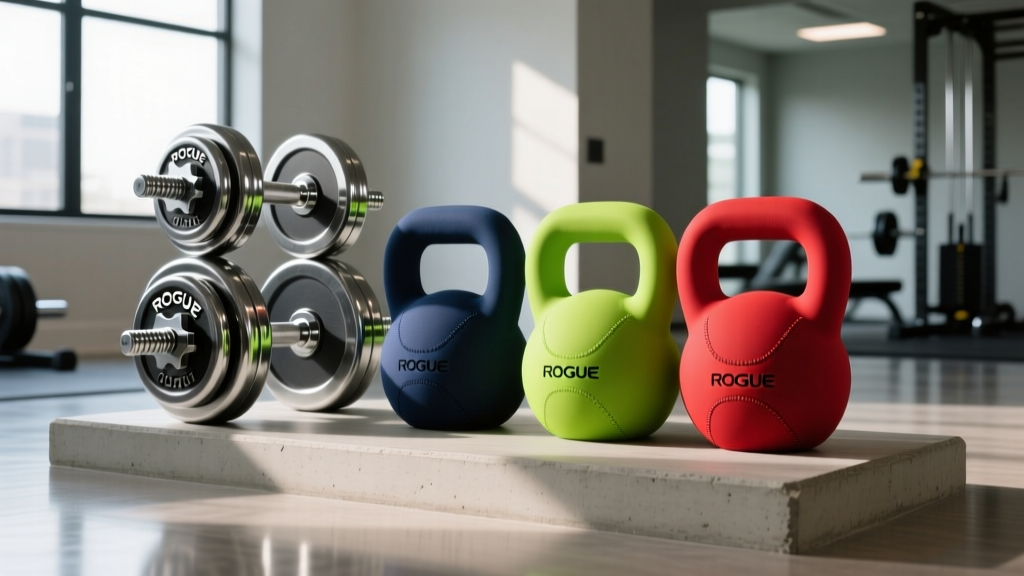
The Long Dumbbell Name Guide: EZ Curl vs Straight Bar Layouts
Discover the true long dumbbell name and compare EZ curl bar vs straight bar dimensions to optimize your compact home gym layout and storage.

Decoding the 'Long Dumbbell Name' for Compact Gyms
When beginners first research equipment for a home gym, they frequently encounter a terminology gap. A common search query that surfaces in fitness forums is the long dumbbell name, as newcomers try to identify the elongated, weighted bars used for two-handed exercises. In industry terms, the 'long dumbbell' is universally known as a barbell. However, as urban apartments and dedicated home gym spaces continue to shrink in 2026, the standard 7-foot Olympic barbell is no longer the default choice for every lifter.
This brings us to a critical space-optimization debate for home gym designers and garage lifters: the EZ curl bar vs. the straight bar. If you are mapping out a 10x10 bedroom gym or a tight single-car garage layout, understanding the exact dimensional footprints, rack clearances, and storage realities of these two bars will dictate how efficiently you can train. Let us break down the spatial and biomechanical trade-offs to help you design the ultimate compact lifting environment.
The Spatial Footprint: Dimensional Realities
Before purchasing equipment, you must measure your available floor width. The physical footprint of your barbell determines not just where you store it, but whether you can safely perform exercises without smashing your drywall or adjacent equipment.
| Feature | Standard Olympic Straight Bar | Olympic EZ Curl Bar |
|---|---|---|
| Total Length | 86.6 inches (2200mm) | 47 to 50 inches (1200-1270mm) |
| Weight | 44 lbs (20 kg) | 15 to 22 lbs (7-10 kg) |
| Shaft Length (Between Sleeves) | 51.5 inches | 24 to 28 inches |
| Minimum Safe Room Width | 11 feet (allows for plate loading) | 6.5 feet (allows for plate loading) |
| Vertical Storage Footprint | Requires 9-inch diameter socket | Requires 6-inch diameter socket |
As the data illustrates, the straight bar demands a massive lateral footprint. If your gym space is less than 10 feet wide, performing standing bicep curls or upright rows with a straight bar will result in the sleeves repeatedly striking your walls or power rack uprights.
Rack Clearance and the '4-Foot Rule'
One of the most overlooked aspects of gym layout design is rack integration. Most standard power racks (such as the widely used 49-inch wide footprint models from Rogue or Rep Fitness) have an inside upright spacing of 43 inches.
Here is where the EZ curl bar becomes a spatial superpower. Because the shaft of a standard EZ bar is roughly 28 inches, it can easily rest on J-cups inside the rack. You can perform rack pulls, inverted rows, or even heavy curl variations without needing extra lateral clearance. Conversely, a 7-foot straight bar must be loaded on the sleeves outside the uprights. This invokes the '4-Foot Rule': you need at least 4 feet of unobstructed clearance on both the left and right sides of your rack just to load plates and perform lifts safely. In a compact layout, sacrificing 8 feet of total lateral width just for barbell clearance is highly inefficient.
Layout Tip: The Fold-Back Rack Advantage
If you are utilizing a wall-mounted fold-back rack to save floor space when not in use, the EZ curl bar is your best companion. When the rack is folded flat against the wall, you lose the ability to use the outer sleeves. An EZ bar allows you to mount J-cups to the exterior of the folded uprights and still have enough shaft length to perform curls and presses safely.
Biomechanics vs. Spatial Efficiency
While the EZ curl bar wins the space optimization battle, we must address the biomechanical trade-offs. According to exercise kinesiologists, the primary difference between the two bars lies in wrist and elbow joint alignment. You can review detailed joint mechanics on ExRx.net's exercise directory, which highlights how grip width and angle alter muscle recruitment.
- The Straight Bar: Forces the wrists into full supination (palms facing completely up). For lifters with limited wrist mobility or a history of medial epicondylitis (golfer's elbow), this fixed, rigid position can cause severe joint strain during heavy eccentric loading.
- The EZ Curl Bar: Features angled grips that place the wrists in a semi-supinated, more natural anatomical position. This reduces torque on the radioulnar joint and allows for heavier isolation work with less connective tissue fatigue.
However, the straight bar remains superior for heavy compound movements. You cannot safely perform back squats, deadlifts, or strict overhead presses with an EZ curl bar due to the lack of a center knurl and the awkward shaft geometry. For a comprehensive breakdown of how these bars affect muscle activation, BarBend's comparison guide offers excellent insights into the EMG differences between the two.
Designing the Compact Storage Layout
In a space-optimized gym, floor space is premium real estate. Leaving a barbell on the ground is a tripping hazard and disrupts the flow of the room. Here is how to integrate these bars into your layout using specific 2026 storage solutions:
1. Vertical Barbell Holders
If you must keep both bars, a vertical holder is mandatory. The Rogue 9-Socket Barbell Holder occupies a mere 12x12 inch square on the floor. Place this in a dead corner of your gym, away from the drop zone of your dumbbells. Store the straight bar in the center for balance, and the EZ bar on the outer edge for quick access during arm-day supersets.
2. Rack-Mounted Horizontal Storage
For ultra-small rooms where floor storage is impossible, utilize rack-mounted barbell hangers. Attach a Titan Fitness Barbell Holder to the rear uprights of your power rack. This utilizes 'dead air space' behind the rack. Note that you can only store a straight bar this way if you have at least 18 inches of clearance between the back of the rack and your wall.
3. Wall-Mounted Hangers for the EZ Bar
Because the EZ bar is short and relatively light (under 25 lbs), it can be mounted directly to drywall or stud-backed walls using simple U-brackets or specialized wall hangers. Mounting the EZ bar horizontally at eye level above your dumbbell rack creates a highly efficient, zero-footprint storage solution that keeps the bar out of the way but instantly accessible.
The Verdict: Equipment Consolidation
If your home gym is under 120 square feet and you are forced to choose only one 'long dumbbell' to maximize your layout, the decision hinges on your training style.
If your programming revolves around powerlifting, heavy Olympic variations, or traditional barbell complexes, the straight bar is non-negotiable, and you must design your room's width around its 86-inch span. However, if your space is severely restricted (such as an apartment bedroom or narrow hallway gym) and your focus is on hypertrophy, bodybuilding, and joint-friendly isolation work, the EZ curl bar is the undisputed champion of spatial efficiency. It fits inside standard racks, requires half the room width, and stores easily on vertical or wall-mounted units, proving that sometimes, decoding the right 'long dumbbell name' is the key to unlocking a perfectly optimized home gym.
More gear to consider
All reviews
Adjustable Dumbbell Review: Setup & Dumbbell Exercises for Biceps
Wide Grip Row Dumbbells vs Barbell: Olympic vs Standard Plates
Dumbbell Workouts for Belly Fat: 2026 Adjustable Gear & Mistakes

Bar Care for Your At Home Workout Plan With Dumbbells: EZ vs Straight

B Stance Dumbbell RDL & Kettlebell Guide: Cast Iron vs Competition