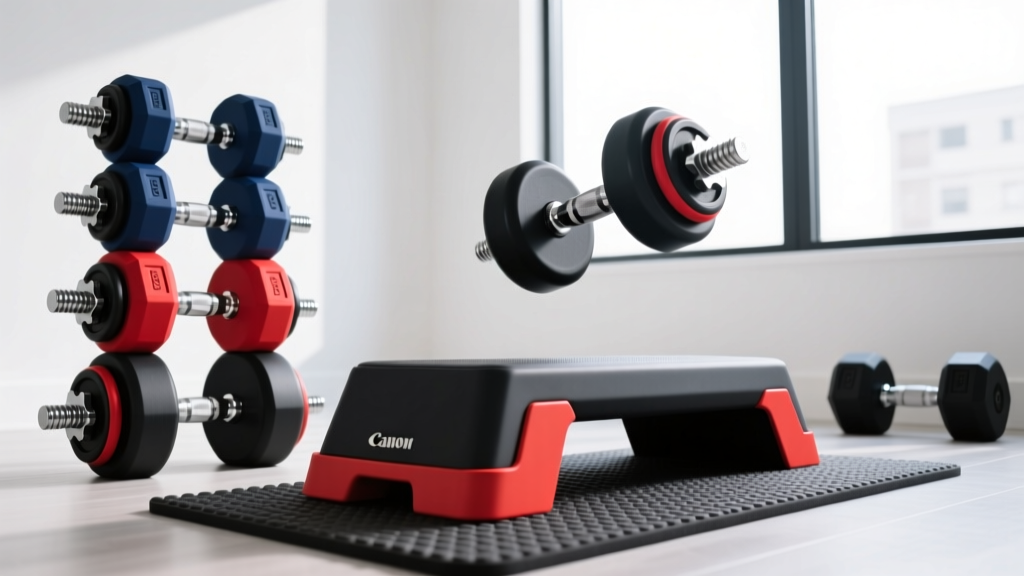
Loadable Dumbbells for Dumbbell Step Ups at Home: 2026 Value Guide
Discover the true cost-per-pound of loadable dumbbells for dumbbell step ups at home. We break down 2026 pricing, sleeve lengths, and locking safety.

The Economics of Unilateral Leg Training
Building a comprehensive home gym for leg day often hits a massive financial wall when it comes to dumbbells. To properly progress through unilateral movements, you need weight increments ranging from 15 lbs to over 60 lbs per hand. Purchasing a full rack of rubber hex dumbbells to cover this spread will easily cost upwards of $1,500 in today's market. This is where the loadable dumbbell with interchangeable plates becomes a financial lifesaver. By purchasing a pair of high-quality loadable handles and a set of cast iron plates, you can achieve the exact same progressive overload for a fraction of the cost.
However, not all loadable handles are created equal, especially when applied to specific, balance-intensive movements. Performing dumbbell step ups at home introduces unique biomechanical and hardware challenges that cheap, generic handles simply cannot handle. In this 2026 value analysis, we break down the true cost-per-pound, sleeve-length limitations, and critical safety failure modes you must consider before buying.
The Biomechanical Demands of the Step-Up
According to exercise biomechanics databases like ExRx.net, the dumbbell step-up is a premier unilateral movement for targeting the quadriceps and glutes while correcting left-to-right strength imbalances. Unlike a goblet squat where the weight is centralized, step-ups require you to hold heavy dumbbells at your sides while balancing on one leg.
This hanging position creates two major hardware requirements for your loadable dumbbells:
- Sleeve Clearance: If the sleeve (the part where the plates slide on) is too long, the outer edge of the loaded dumbbell will physically strike your knee or the wooden step-up box during the concentric driving phase. A sleeve length exceeding 6.5 inches becomes highly problematic for lifters of average height using standard 10 lb plates.
- Grip Fatigue and Knurling: Step-ups are often programmed for higher rep ranges (10-15 reps per leg). Aggressive Olympic-style knurling will tear your calluses, while completely smooth handles will slip when your hands sweat. A moderate, multi-purpose knurl pattern is essential for maintaining a secure grip without relying heavily on chalk.
2026 Market Breakdown: Cost-Per-Pound Analysis
To determine the real value, we must look beyond the sticker price of the handles. The true cost is the combined investment of the handles, the necessary locking collars, and the interchangeable plates. As of 2026, imported cast iron plates have stabilized at approximately $1.30 to $1.60 per pound, while domestic machined steel plates command $3.00+ per pound.
Below is a comparative breakdown of the top loadable handles on the market, factoring in the cost to reach a working weight of 40 lbs per hand (80 lbs of total plates).
| Handle Model | Sleeve Diameter | Sleeve Length | Handle Price (Pair) | Total Cost (w/ 80lbs Iron) |
|---|---|---|---|---|
| Rogue Fitness Standard Loadable | 1 inch | 6.5 inches | $95.00 | ~$215.00 |
| Titan Fitness Olympic Loadable | 2 inch (Olympic) | 7.5 inches | $119.99 | ~$240.00 |
| Yes4All Olympic Loadable | 2 inch (Olympic) | 8.0 inches | $55.00 | ~$175.00 |
Note: Plate costs calculated at an average 2026 market rate of $1.50/lb for standard cast iron. Prices for handles sourced from Rogue Fitness and respective brand catalogs.
Failure Modes: The Step-Down Shockwave
When analyzing budget equipment, we must evaluate how it fails under stress. The most critical failure mode during dumbbell step ups at home is the 'step-down shockwave'.
CRITICAL SAFETY WARNING: Never use threaded spin-lock collars for heavy unilateral leg work. When you step back down to the floor, the eccentric deceleration sends a sharp vertical shockwave up the handle. Over the course of 12 to 15 reps, this vibration will slowly unthread a spin-lock collar. By the final reps, the plates will shift outward, altering the center of gravity and risking a crushed toe if a plate slides off. Always use spring collars (for Olympic sleeves) or snap-ring/star-lock collars (for standard sleeves).The budget-friendly Yes4All handles often ship with basic star-lock nuts. While better than smooth spin-locks, they still require manual tightening with a wrench or heavy hand-torque to survive the impact of stepping down. The Titan and Rogue models accommodate standard barbell spring collars, which clamp down with hundreds of pounds of lateral force, completely eliminating plate shift during high-impact step-downs.
Plate Density: The Hidden Sleeve Limitation
A common mistake home gym owners make is buying loadable Olympic handles and attempting to load them with standard rubber bumper plates. This is a massive error for step-ups due to plate density and sleeve real estate.
The Bumper Plate Problem
Bumper plates are designed to be dropped from overhead, meaning they are thick and low-density. A standard 10 lb bumper plate is roughly 2.5 inches thick. If you are using an Olympic loadable handle with a 7.5-inch sleeve, you can only fit two 10 lb bumper plates per side (20 lbs total) before you run out of room for the collar. Furthermore, the 17.7-inch diameter of the bumper plate will hit the floor or your step-up box long before the plates themselves do, completely ruining your range of motion.
The Machined Steel Solution
For loadable dumbbells, high-density cast iron or machined steel is mandatory. A 10 lb cast iron plate is only about 0.9 inches thick. This allows you to stack up to 60 lbs on a standard 6.5-inch sleeve while leaving adequate room for a secure collar. When budgeting for your interchangeable plates, prioritize diameter and thickness over drop-safety; you should never be dropping dumbbells during a step-up anyway.
Step-by-Step Value Optimization Strategy
To maximize your ROI when outfitting your home gym for leg day, follow this phased purchasing framework:
- Phase 1 (The Foundation): Purchase a pair of 1-inch standard loadable handles (like the Rogue Standard) and 40 lbs of cast iron plates (two 10s, two 5s per side). Total investment: ~$155. This allows you to perform step-ups, lunges, and RDLs with up to 35 lbs per hand.
- Phase 2 (The Progression): As your unilateral strength increases, purchase additional 10 lb and 2.5 lb fractional plates. Fractional plates are vital for step-ups, as jumping from 30 lbs to 40 lbs per hand is a massive 33% increase in load that can lead to patellar tendonitis.
- Phase 3 (The Dual-Use Pivot): The ultimate value of interchangeable plates is their dual-use nature. The exact same $100 worth of cast iron plates you use for your loadable dumbbell step ups can be slid onto a standard 1-inch barbell for deadlifts and hip thrusts, or onto a plate-loaded leg press attachment. Fixed hex dumbbells offer zero crossover value.
Final Verdict: Maximizing Your ROI
If your primary goal is to perform heavy, safe, and progressive dumbbell step ups at home without spending $2,000 on a full dumbbell rack, loadable handles are the undisputed champion of value. However, you must respect the physics of the movement. Avoid ultra-long Olympic sleeves that bang against your knees, ditch the cheap spin-lock collars that vibrate loose, and strictly buy high-density cast iron plates to maximize your sleeve space. By selecting a quality 1-inch standard handle and pairing it with precision iron, you secure a lifetime of progressive leg training for under $250.
More gear to consider
All reviews
Space Design: Dumbbell Push Press Muscles Worked & Rack Storage
What Dumbbell Exercise Is Good for Triceps? Top Moves & Loadable Dumbbell Maintenance

Bumper vs Iron Plate Care for Your Basic Upper Body Dumbbell Workout
Power Rack vs Squat Stand: Best Rig for Your Dumbbell Back Workout

Cast Iron vs Competition Kettlebells: Weekly Dumbbell Workout Care
