Loadable Dumbbell Maintenance: Beyond Nike Strength Dumbbells
Master loadable dumbbell maintenance. Learn how to care for interchangeable plates and handles after upgrading from fixed Nike Strength dumbbells.

Many home gym owners begin their strength journey with fixed, vinyl-coated options like Nike Strength dumbbells. While these are excellent for high-rep metabolic conditioning and circuit training, they typically cap out at 25 or 30 pounds. According to the principles of progressive overload, muscle hypertrophy and strength gains eventually require heavier loads. This inevitably forces the upgrade to a loadable dumbbell with interchangeable plates.
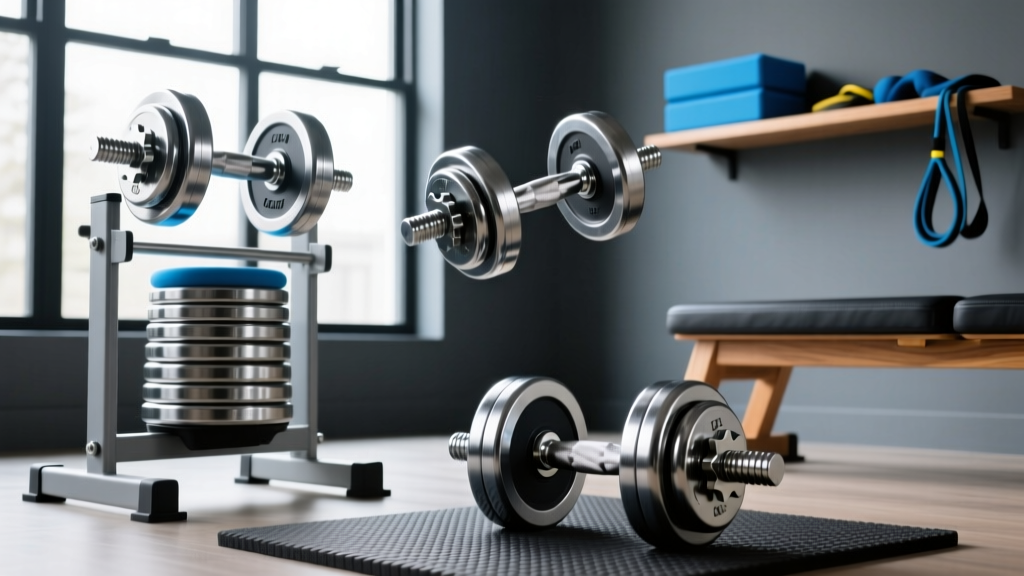
Transitioning from fixed neoprene weights to plate-loaded Olympic handles introduces a new level of mechanical complexity. A loadable dumbbell is essentially a miniature barbell; it features knurled steel handles, precision-machined sleeves, and threaded or clamp-based locking mechanisms. Without a rigorous maintenance protocol, the very features that make loadable dumbbells versatile will become their points of failure. This guide details the exact maintenance care and longevity tips required to protect your investment in interchangeable plate systems.
The Anatomy of Wear: Where Loadable Dumbbells Fail
Unlike fixed dumbbells where the primary maintenance is simply wiping down vinyl or rubber coatings, a loadable dumbbell with interchangeable plates suffers from mechanical friction, environmental oxidation, and impact stress. Understanding the anatomy of the handle is the first step in targeted maintenance.
- The Knurling: The etched grip pattern traps dead skin, chalk, and sebum. Left uncleaned, this organic matter holds moisture against the steel, accelerating rust and dulling the grip.
- The Sleeve and Bushings: The 50mm Olympic sleeves (or 25mm standard sleeves) endure constant friction as cast iron or bumper plates slide on and off. Bare steel sleeves will score and scratch without proper lubrication.
- The Locking Mechanism: Whether you use spin-lock collars (like the Rogue Loadable Dumbbell Handles at $145/pair) or lever-clamp systems (like the Titan Fitness Olympic Handles at $99/pair), the threads and moving parts are highly susceptible to cross-threading and dust accumulation.
The 4-Step Maintenance Protocol
To maintain the structural integrity and performance of your loadable dumbbells, implement this specific 4-step protocol. This routine takes less than 10 minutes per pair but extends the lifespan of the equipment by decades.
1. Knurl Deep Cleaning (Bi-Weekly)
Do not use wire brushes on standard steel or chrome-plated dumbbell handles, as this will strip the protective coating. Instead, use a stiff nylon bristle brush. Apply a few drops of 3-IN-ONE Dry Lube or a dedicated knurl cleaner, scrub in a circular motion to lift chalk and skin cells, and wipe away the residue with a microfiber towel. For a comprehensive breakdown on steel care, refer to the Rogue Fitness Barbell and Dumbbell Care Guide, which outlines the exact brushing techniques for preserving knurl depth.
2. Thread and Collar Lubrication (Monthly)
The threads on a spin-lock loadable dumbbell are its most vulnerable component. If debris enters the threads, forcing the collar on will result in cross-threading, permanently ruining the handle. Once a month, wipe the threads with a dry cloth and apply a light coat of PTFE (Teflon) dry lubricant. PTFE dries completely, leaving a slick surface that repels dust and chalk.
⚠️ CRITICAL WARNING: Never Use Standard WD-40Standard WD-40 is a solvent and water displacer, not a long-term lubricant. It leaves a wet, sticky residue that acts as a magnet for gym chalk, dust, and dead skin. This sludge will quickly jam spin-lock threads and degrade the internal bushings of your loadable dumbbell sleeves. Always use a PTFE or Silicone-based dry lube.
3. Sleeve Inspection and Wiping (Every Session)
Before loading your interchangeable plates, quickly wipe the sleeve with a dry cloth. If you are using bare cast iron plates, inspect the inner hub. Many cheaper iron plates have rough, unfinished inner rings that act like sandpaper against the dumbbell sleeve. If your plates lack urethane or plastic hub liners, lightly coat the dumbbell sleeve with a microscopic layer of mineral oil before sliding the plates on to prevent severe scoring.
4. Plate Calibration and Bumper Care (Quarterly)
Interchangeable plates take the brunt of the impact when set on the floor. Check your bumper plates for 'white stress marks' around the center steel insert, which indicates the insert is separating from the rubber. For steel plates, check for edge rust and apply a light coat of 3-IN-ONE oil to the perimeters to prevent oxidation from spreading to the handle sleeves during storage.
Maintenance Schedule & Cost Breakdown
Consistency is the key to equipment longevity. Below is a structured maintenance matrix designed for home gym owners utilizing loadable dumbbell systems.
| Interval | Maintenance Task | Required Tools / Products | Est. Cost |
|---|---|---|---|
| Every Session | Sleeve wipe-down & visual thread check | Microfiber towel | $5 |
| Bi-Weekly | Knurl deep cleaning | Nylon brush, mild degreaser | $12 |
| Monthly | Thread and collar lubrication | PTFE Dry Lube (e.g., Super Lube) | $8 |
| Quarterly | Plate hub inspection & rust treatment | Wire brush (for plates only), mineral oil | $15 |
| Annually | Full teardown and bushing inspection | Rubber mallet, snap-ring pliers (if applicable) | $25 |
Critical Failure Modes to Avoid
Even with rigorous cleaning, improper handling techniques will destroy a loadable dumbbell. Be mindful of these common edge cases and failure modes:
The 'Drop Test' Disaster
Fixed hex dumbbells are designed to be dropped. Loadable dumbbells are not. When you drop a loadable dumbbell with interchangeable plates onto a hard surface, the kinetic energy transfers directly through the plates into the sleeve. This can bend the handle axis, warp the steel plates, or shatter the internal retaining clips. Always lower loadable dumbbells under control, or ensure you are dropping them onto thick, high-density drop pads specifically rated for Olympic lifting.
Overtightening Spin-Lock Collars
Many lifters use excessive force to tighten spin-lock collars, fearing the plates will rattle or slide. Overtightening stretches the steel threads and deforms the collar's internal nylon or brass friction rings. Tighten the collar until it is hand-tight against the plate, then give it one additional quarter-turn. If the plates rattle, you are missing a friction pad or using warped plates, not lacking torque.
Expert Insight: If you notice a 'wobble' when spinning the sleeve of your loadable dumbbell, the internal bushings have likely worn unevenly due to repetitive loading on one side. According to Eleiko's official equipment care guidelines, rotating the orientation in which you store and handle your free weights can help distribute wear more evenly across the sleeve bushings over time.
Environmental Control and Storage Solutions
The final pillar of loadable dumbbell longevity is environmental control. Steel and iron are highly reactive to ambient humidity. If your garage gym or basement exceeds 60% relative humidity, oxidation will begin on your interchangeable plates and dumbbell sleeves within 48 hours of a sweaty workout.
Actionable Storage Tips:
- Use VCI Emitters: Place Volatile Corrosion Inhibitor (VCI) capsules inside your dumbbell storage rack or plate tree. These capsules emit a microscopic vapor that settles on the steel, neutralizing the electrochemical reactions that cause rust. A single $15 VCI capsule protects a 1-cubic-foot area for up to 24 months.
- Dehumidification: Run a continuous-drain dehumidifier in your workout space, targeting a baseline humidity of 45-50%.
- Off-the-Floor Storage: Never leave loadable dumbbells assembled on the floor. The ambient moisture near the concrete floor is significantly higher than at chest level. Store the handles horizontally on a dedicated rack and keep the interchangeable plates on a vertical A-frame tree to minimize surface contact and promote airflow.
Conclusion: Protecting Your Progressive Overload
Upgrading from basic fixed weights to a loadable dumbbell with interchangeable plates is a major milestone in your home gym's evolution. It unlocks limitless progressive overload and mimics the biomechanics of competitive barbell lifting. However, this versatility demands respect. By abandoning the 'wipe-and-forget' mentality of your old Nike Strength dumbbells and adopting a targeted mechanical maintenance routine, you ensure your loadable handles and plates remain precise, safe, and rust-free for a lifetime of heavy lifting.
More gear to consider
All reviews
2026 Loadable Dumbbell Trends: The Standing Dumbbell Lateral Raise
Olympic vs Standard Plates Setup for Your Dumbbell Weekly Routine

Clean and Press Dumbbells & Kettlebells: Cast Iron vs Competition Care

Bumper vs Iron Plates: Market Trends & Weight Dumbbells for Women

What Size Dumbbells Should I Get? Loadable Handles & Care Guide