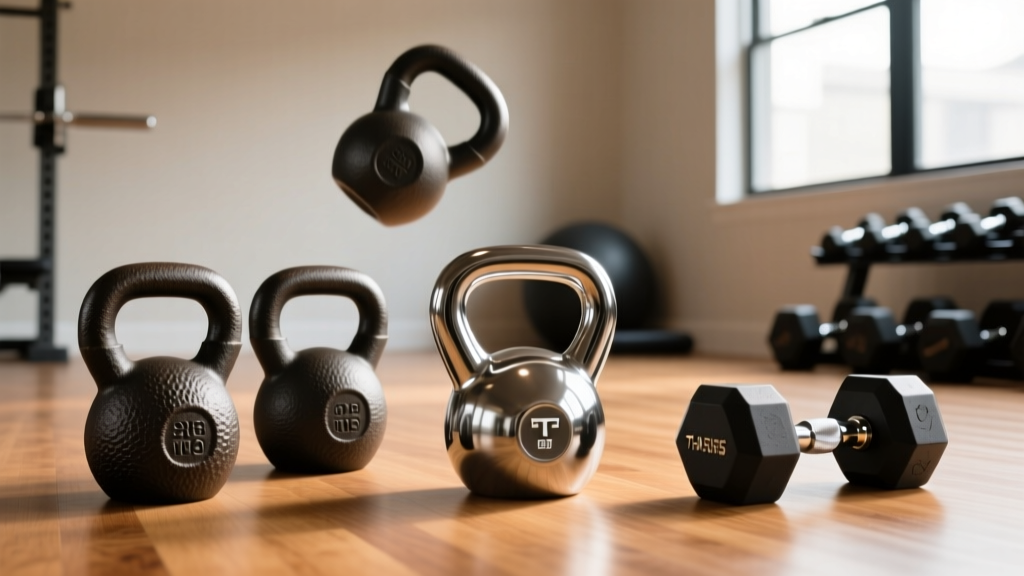
Kettlebell Value Guide: Cast Iron vs Competition & Dumbbell T Raises
Analyze 2026 kettlebell pricing: cast iron vs competition value, cost-per-rep metrics, and budget allocation for isolation moves like dumbbell t raises.

The 2026 Home Gym Dilemma: Cast Iron vs. Competition Kettlebells
Building a value-optimized free weight arsenal requires more than just buying the cheapest iron you can find on clearance. As we navigate the fitness equipment market in 2026, freight stabilization has slightly eased prices, but the raw material costs for high-grade steel and cast iron remain high. For home gym owners and garage athletes, the most common point of friction is the kettlebell buying guide: specifically, the choice between standard cast iron kettlebells and premium competition-grade kettlebells.
At first glance, a competition kettlebell costing upwards of $200 for a 24kg (53lb) bell seems like an egregious markup compared to a $75 cast iron alternative of the exact same weight. However, true value analysis requires looking beyond the initial price tag. We must evaluate the Cost-Per-Rep (CPR), biomechanical suitability, and longevity. Furthermore, smart budget allocation means recognizing what a kettlebell cannot do, and redirecting funds toward specialized tools for isolation movements—like investing in light hex dumbbells for strict dumbbell t raises to target the rear deltoids.
Manufacturing and Spec Matrix: Where Does the Money Go?
To understand the price disparity, you have to understand the manufacturing process. Standard cast iron kettlebells are typically gravity-cast in sand molds. This process is inexpensive but results in wider tolerances, meaning the handle diameter, horn thickness, and base flatness can vary wildly from a 12kg bell to a 32kg bell. Competition kettlebells, on the other hand, are single-cast from high-grade steel or forged, and machined to exacting international standards.
| Specification | Standard Cast Iron | Competition Grade | Value Impact |
|---|---|---|---|
| Material | Cast Iron (Sand Mold) | Single-Cast Steel / Forged | Steel resists chipping and micro-fractures over thousands of drops. |
| Handle Diameter | Varies (30mm - 38mm) | Strict 33mm (or 35mm for heavy) | Consistent 33mm prevents grip fatigue and torn calluses during high-rep snatches. |
| Bell Dimensions | Scales with weight | Uniform across all weights | Uniform size ensures the bell rests on the forearm in the rack position identically, regardless of weight. |
| Base Flatness | Often rounded/uneven | Machined perfectly flat | Flat bases are mandatory for safe renegade rows and deficit push-ups. |
| Avg Price (24kg) | $75 - $110 | $175 - $225 | Competition bells cost ~2.2x more upfront but offer vastly superior ergonomics. |
According to extensive equipment testing documented in BarBend's comprehensive kettlebell buying guide, the handle geometry of a competition bell is arguably the single most important factor for intermediate to advanced lifters. If you are performing high-volume ballistic work, a thick, poorly finished cast iron handle will destroy your hands, effectively ruining your training consistency and negating any initial budget savings.
Budget Breakdown: The 'Cost-Per-Rep' Framework
When allocating your 2026 fitness budget, apply the Cost-Per-Rep framework. Kettlebells are predominantly used for high-repetition, dynamic, and ballistic movements (swings, cleans, snatches, and long-cycle jerk). Because the repetition count is so high, the ergonomic flaws of cheap cast iron are magnified.
The 80/20 Rule of Kettlebell Budgeting: Spend 80% of your free-weight budget on the primary bell you will use for ballistic and rack-position work (usually 16kg to 24kg for men, 12kg to 16kg for women). Opt for competition or premium powder-coated steel here. Save the remaining 20% for accessory tools that cover the biomechanical gaps kettlebells leave behind.
If you buy a $60 Yes4All cast iron 24kg bell, you might save $120 upfront compared to a Kettlebell Kings competition bell. But if that rough handle causes a torn callus that sidelines your grip for a week, or if the uneven base causes a wrist sprain during a renegade row, the 'value' of that savings evaporates instantly.
The Isolation Gap: Why You Need Dumbbells for Rear Delts
This brings us to a critical flaw in the 'kettlebell-only' home gym mentality. Kettlebells are the undisputed kings of the posterior chain, hip hinges, and offset unilateral loading. However, their center of mass and handle geometry make them remarkably inefficient for strict, isolated scapular retraction and horizontal abduction.
Many budget-conscious lifters try to use their single 16kg competition kettlebell for rear deltoid isolation by attempting one-arm bent-over rows or awkward horizontal swings. This is a biomechanical mismatch. The rear deltoids and mid-traps require strict, controlled horizontal abduction with a neutral center of gravity. This is exactly why allocating a small portion of your budget to a pair of light hex or neoprene dumbbells specifically for dumbbell t raises is a superior value proposition.
As outlined in the biomechanics databases like ExRx's exercise directory for posterior deltoid movements, the lying or chest-supported T-raise requires the lifter to move the weight directly away from the midline of the body in a strict 'T' pattern. Attempting this with a kettlebell forces the wrist into awkward extension due to the offset horn, shifting the tension away from the rear delt and onto the forearm and wrist extensors.
Strategic Budget Allocation Example
- Option A (The Mistake): Buying a light 8kg (18lb) Competition Kettlebell for isolation presses and rear delt work. Cost: ~$95. Result: Awkward grip, poor isolation, wasted funds.
- Option B (The Value Play): Buying a pair of 10lb or 15lb hex dumbbells to perform chest-supported dumbbell t raises and lateral raises. Cost: ~$35 - $45. Result: Perfect biomechanical alignment, maximum rear delt hypertrophy, and $50 saved to put toward your primary heavy kettlebell.
2026 Market Pricing & Brand Value Analysis
To build your arsenal, you need to know who offers the best value in the current market. Here is a breakdown of the top tiers for both cast iron and competition styles.
1. The Premium Tier: Rogue Fitness & Kettlebell Kings
Rogue's Competition Kettlebells remain the gold standard for serious athletes, priced at roughly $4.50 to $5.00 per pound. A 24kg bell will set you back around $215. The value here lies in the 33mm machined steel handle and the color-coded, chip-resistant finish. For cast iron, Rogue's standard bells hover around $1.80/lb. They feature a powder-coated finish that is vastly superior to bare iron, justifying the slight premium over budget brands.
2. The Mid-Tier Value: Onnit & Rep Fitness
Rep Fitness has aggressively captured the mid-tier market. Their cast iron kettlebells feature a flat base and a 35mm handle with a light powder coat, usually pricing out around $1.40/lb. They are an exceptional value for lifters who primarily do grinds (presses, squats) rather than high-rep snatches, as the slightly thicker handle is less noticeable during slow-tension movements.
3. The Budget Tier: Yes4All & CAP Barbell
If you are strictly on a budget and need heavy iron for swings and goblet squats, Yes4All offers cast iron bells for as low as $1.10/lb during seasonal sales. The value is undeniable for raw load, but you must be prepared to sand down rough handle seams yourself and accept a rounded base that makes floor-based exercises unsafe.
The Final Verdict: Building Your Value-Optimized Arsenal
True value in the free weights category is not about finding the lowest price per pound of iron; it is about matching the tool's engineering to the biomechanical demands of the exercise.
For your primary ballistic movements, snatches, and rack-position work, the data overwhelmingly supports investing in a single-cast steel competition kettlebell. The uniform dimensions and strict 33mm handle will protect your hands and allow for seamless technical progression. However, recognize the limitations of the kettlebell for strict isolation work. Do not waste your hard-earned budget on ultra-light competition kettlebells for accessory work. Instead, pivot to traditional dumbbells for movements that demand a centered center of mass, utilizing light hex dumbbells for dumbbell t raises, lateral raises, and tricep extensions. By blending the ballistic superiority of competition steel with the isolation precision of budget-friendly dumbbells, you create a 2026 home gym setup that maximizes both your physical results and your financial efficiency.
More gear to consider
All reviews
Olympic Barbell Buying Guide: Weight, Knurling & the Dumbbells Candy Color Trend

Power Rack vs Squat Rack: Hitting Dumbbell Bench Press Standards

Power Rack vs Squat Rack vs Squat Stand for Free Dumbbells

Kettlebell Guide: Cast Iron vs Competition & How to Hold a Dumbbell Correctly
Neoprene Dumbbells for Home Use: Mastering the Standing Fly Exercise
