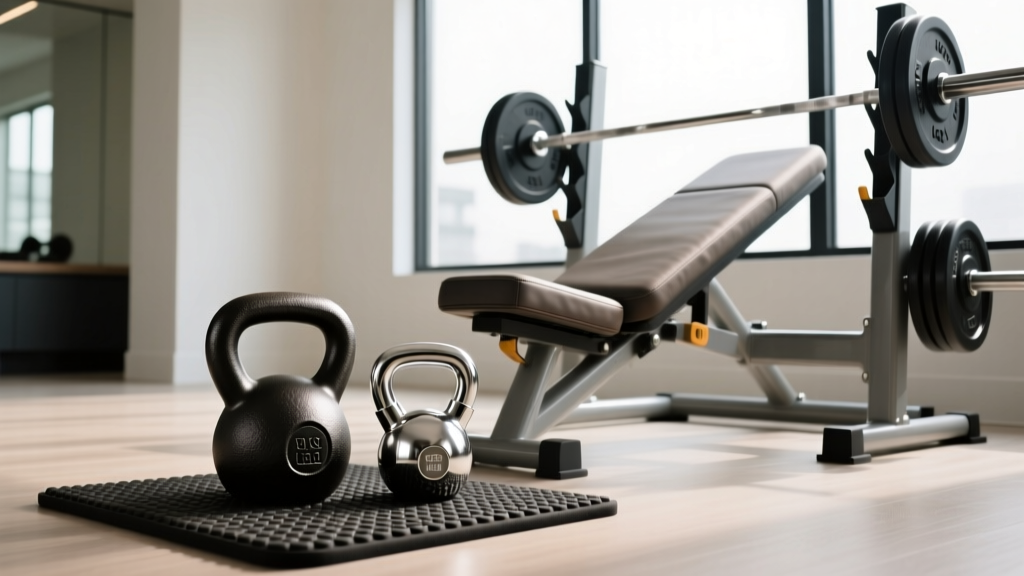
Kettlebell Guide & Chest Supported Incline Dumbbell Row Setups
Compare cast iron vs competition kettlebells for your 2026 gym, plus how to pair them with a chest supported incline dumbbell row bench setup.

The 2026 Kettlebell Market: Cast Iron vs. Competition
As home and garage gym builds continue to evolve in 2026, the free weights market has seen a distinct bifurcation in kettlebell design. Lifters are no longer just grabbing the cheapest black iron bell they can find; they are making calculated decisions based on biomechanics, sport-specificity, and space efficiency. Whether you are training for Girevoy sport, Strongman, or general hypertrophy, understanding the nuanced differences between cast iron and competition kettlebells is critical for your programming and wallet.
Furthermore, a well-rounded free weight arsenal requires balancing explosive posterior chain work with isolated, spine-sparing upper back exercises. This is why elite strength coaches are increasingly pairing heavy kettlebell cycles with a chest supported incline dumbbell row setup to manage lower back fatigue while maximizing latissimus dorsi and rhomboid hypertrophy.
Cast Iron Kettlebells: The Traditionalist’s Choice
Cast iron kettlebells are manufactured by pouring molten iron into sand molds. The resulting product is a solid, dense piece of metal where the physical dimensions scale linearly with the weight. A 16kg cast iron bell will be noticeably smaller than a 32kg bell.
Key Characteristics & 2026 Market Pricing
- Handle Geometry: Most premium cast iron bells (like the Rogue Cast Iron series or Kettlebell Kings Cerakote) feature a handle diameter between 32mm and 35mm. This thicker grip is highly advantageous for grip strength development and mimics the handles of thick-bar dumbbells.
- Coatings: In 2026, bare iron is largely reserved for budget tiers. The market standard is now powder coating or Cerakote, which prevents oxidation and provides a tactile, chalk-friendly surface. Expect to pay between $2.00 and $3.50 per pound for premium coated cast iron.
- The Horn Window: The space between the handle and the bell (the window) varies by weight. This can make certain two-handed movements, like the double kettlebell front squat, slightly awkward with larger bells due to the wider horn profile.
Competition Kettlebells: Precision for the Technical Lifter
Competition kettlebells are constructed from a hollow steel shell. Regardless of whether you are holding an 8kg or a 48kg bell, the physical dimensions remain exactly the same: a 28mm handle diameter, a 210mm overall height, and a 35mm base width. According to the BarBend equipment testing team, this uniformity is non-negotiable for athletes competing in Kettlebell Sport (Girevoy), where muscle memory and consistent rack positions dictate performance.
Why Choose Competition Bells?
- Consistent Biomechanics: Because the size never changes, your rack position, clean trajectory, and snatch lockout remain identical across all weights. You never have to adjust your form to accommodate a larger bell.
- Handle Diameter (28mm): The thinner, wider handle window allows the bell to sit comfortably in the palm during the rack position, reducing forearm fatigue during high-rep endurance sets.
- Color Coding: Competition bells follow international color standards (e.g., Yellow for 16kg, Blue for 20kg, Red for 24kg), making weight identification instant in a busy gym environment.
However, the hollow steel construction requires internal ballast (often steel shot or machined blocks) for lighter weights, which can occasionally rattle if the internal welding fails. Furthermore, global steel tariffs in 2025 and 2026 have pushed competition kettlebell prices to a premium, often ranging from $3.50 to $5.00+ per pound.
Specification & Pricing Matrix
| Feature | Premium Cast Iron | Competition Steel |
|---|---|---|
| Material | Solid Cast Iron | Hollow Steel Shell |
| Handle Diameter | 32mm - 35mm | 28mm (Standardized) |
| Dimensions | Scales with Weight | Uniform (210mm x 210mm) |
| Best For | Grinds, Grip Work, Strongman | Ballistics, Kettlebell Sport |
| Avg. Cost (2026) | $2.20 - $3.50 / lb | $3.80 - $5.50 / lb |
Bridging the Gap: Why Kettlebell Athletes Need a Chest Supported Incline Dumbbell Row
While kettlebell swings, snatches, and cleans are unparalleled for posterior chain power and cardiovascular conditioning, they impose massive shear forces on the lumbar spine. A study published in the National Center for Biotechnology Information (NCBI) highlights the significant erector spinae activation and lumbar compression inherent in high-velocity kettlebell ballistics.
To build a thick, resilient upper back without adding more lower back fatigue, strength coaches prescribe the chest supported incline dumbbell row. By removing the axial loading and lower back stabilization requirements, you can safely isolate the lats, rhomboids, and rear delts to failure.
Biomechanical Callout: When performing a chest supported incline dumbbell row, set your adjustable bench to a 30-to-45-degree angle. Angles steeper than 45 degrees begin to shift the bias away from the mid-back and onto the upper traps, while angles below 30 degrees can cause shoulder impingement at the top of the concentric phase. Keep your sternum firmly glued to the pad to prevent cheating via spinal extension.Top Bench Pairings for the Chest Supported Incline Dumbbell Row
To execute this movement safely with heavy dumbbells, you need a bench with a robust ladder adjustment system and a high-density pad that won't compress and cause you to slip. Here are the top 2026 recommendations:
- Rep Fitness AB-3100 2.0 ($329): Features a 7-position ladder and a zero-gap seat design. The 3-inch thick pad provides the exact density needed to brace against during heavy incline rows without bottoming out.
- Rogue Adjustable Bench 3.0 ($495): Built with 11-gauge steel and a RogueThane coating. The knurled adjustment knobs allow for rapid angle changes, making it easy to superset flat dumbbell presses directly into a chest supported incline dumbbell row.
Final Verdict: Building Your Free Weight Arsenal
Your equipment purchases should reflect your specific training adaptations. If your goal is raw grip strength, heavy grinds, and general fitness, a set of powder-coated cast iron kettlebells offers the best ROI. If you are chasing the 10-minute long cycle jerk or require absolute dimensional consistency, invest in competition steel.
Regardless of your kettlebell choice, safeguarding your lower back is paramount for long-term longevity. Integrating a chest supported incline dumbbell row into your weekly split ensures that your upper back pulling volume remains high, while your lumbar spine recovers from the demands of heavy swings and snatches. According to the American Council on Exercise (ACE), supported rowing variations are among the safest and most effective methods for correcting postural imbalances caused by modern sedentary lifestyles and heavy anterior-chain loading.
Frequently Asked Questions
Can I use competition kettlebells for heavy grinds like the Turkish Get-Up?
Yes, but the 28mm handle can feel thin and slippery during heavy overhead lockouts, and the wide base of the bell can feel cumbersome against the forearm in the rack position compared to a cast iron bell. For heavy TGU work, cast iron is generally preferred.
What dumbbells pair best with a chest supported row setup?
Adjustable dumbbells (like Nuobell or PowerBlock Pro series) are highly recommended for home gyms. Because the chest supported incline dumbbell row requires strict, controlled eccentrics, the compact profile of adjustable dumbbells prevents the bulky heads of traditional hex dumbbells from colliding with the bench pad at the bottom of the movement.
How often should I perform chest supported rows if I swing kettlebells 3x a week?
Aim for 3 to 4 sets of 8-12 repetitions, twice a week. Schedule your chest supported incline dumbbell row sessions on the same days as your kettlebell ballistics to consolidate your posterior chain and pulling volume, allowing for complete central nervous system recovery on your off days.
More gear to consider
All reviews
Barbell Collar & Clamp Comparison for One Arm Dumbbell Exercises

Front Raise with Dumbbells: Form Mistakes & Neoprene Gear Fixes
Olympic vs Standard Plates & B Stance RDL with Dumbbells
Loadable Dumbbells for Dumbbell Reverse Wrist Curls: Budget Guide
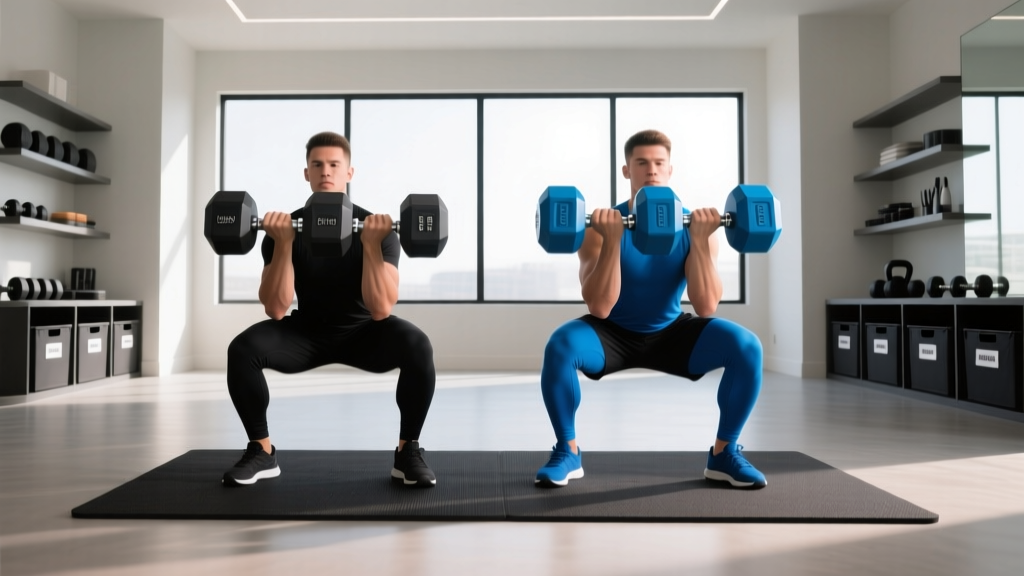
Optimizing Space for Double Dumbbell Squats: Rubber vs Urethane
