Beyond Chest and Shoulder Exercises with Dumbbells: Kettlebell Guide
Compare cast iron vs competition kettlebells to elevate your upper-body training beyond standard chest and shoulder exercises with dumbbells.

The Foundation: Why Move Past Dumbbells?
For years, the gold standard for upper-body hypertrophy and strength has been rooted in traditional chest and shoulder exercises with dumbbells. Movements like the flat dumbbell bench press, incline flyes, and seated Arnold presses are undeniable builders of muscle mass. They allow for a deep stretch, independent limb work, and a natural pressing arc. However, as we move through 2026, more home gym owners and strength athletes are recognizing the limitations of symmetrical, balanced loads. Dumbbells sit perfectly in the palm, requiring minimal grip adaptation once the weight is hoisted into position.
Enter the kettlebell. Transitioning from dumbbells to kettlebells introduces an offset center of mass that demands intense rotator cuff stabilization, core integration, and grip endurance. According to Harvard Health Publishing, incorporating varied resistance profiles is crucial for long-term joint health and bone density, as the body adapts to novel stressors. But before you add a bell to your cart to supplement your pressing routine, you must navigate the most critical crossroads in free weight purchasing: Cast Iron vs. Competition Kettlebells. This guide breaks down the exact specifications, real-world failure modes, and top 2026 picks to help you make an informed investment.
The Core Debate: Cast Iron vs. Competition Kettlebells
The kettlebell market is broadly divided into two distinct categories, each engineered for entirely different training methodologies. Understanding the physical differences is paramount before spending your hard-earned money.
Cast Iron Kettlebells: The Traditionalist's Choice
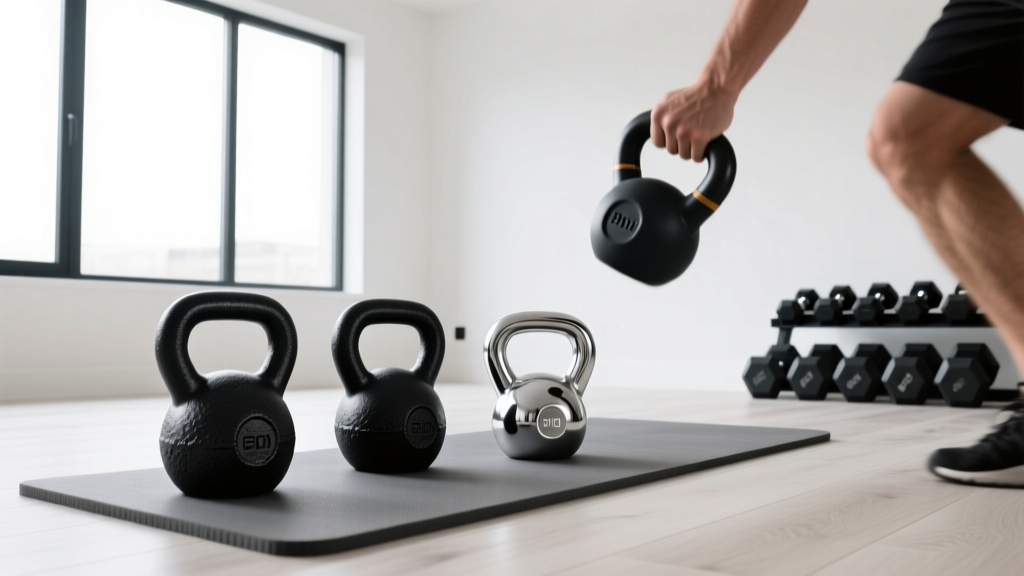
Cast iron bells are molded as a single piece of iron (or steel). Their defining characteristic is that their dimensions scale with their weight. A 12kg cast iron bell will be noticeably smaller than a 32kg bell, with variations in handle thickness, bell window size, and overall height. They are typically finished with powder coat, e-coat, or enamel. Cast iron bells excel in heavy grinds (squats, strict presses), two-handed swings, and general fitness routines where the exact handle diameter is less critical than raw durability and cost-effectiveness.
Competition Kettlebells: The Precision Instrument
Originally forged for Girevoy Sport (kettlebell sport), competition bells are made of steel and feature uniform dimensions regardless of weight. Whether you are holding an 8kg or a 32kg competition bell, the handle diameter is strictly 35mm, the height is 210mm, and the width is 280mm. The weight difference is achieved by altering the internal cavity size and using different steel densities or internal ball bearings. They are color-coded by weight (e.g., yellow for 16kg, green for 24kg). Competition bells are essential for high-rep ballistics, snatches, jerks, and athletes who require consistent muscle memory across all weight jumps.
Hands-On Review: Top 2026 Kettlebell Picks
After testing dozens of models in our facility over the past six months, we have identified the standout performers in both categories that justify their price tags.
Top Cast Iron Pick: Rogue E-Coat Kettlebell (16kg)
Price: ~$45.00 (approx. $2.81/lb)
Handle Diameter: ~33mm (varies slightly by weight)
Finish: E-Coat (Electro-deposition)
The Rogue E-Coat remains the benchmark for premium cast iron bells. Unlike cheap powder-coat bells that can feel like sandpaper and tear up your calluses during high-rep cleans, the e-coat finish is incredibly smooth while retaining enough 'tooth' for a secure grip without excessive chalk. The 16kg model features a perfectly machined flat base, ensuring it won't wobble during renegade rows or deficit push-ups. Edge Case Warning: The handle window on the heavier Rogue bells (24kg+) is massive, but on the 16kg, users with thicker wrists may experience slight forearm bruising during heavy double cleans until they adapt their racking technique.
Top Competition Pick: Rep Fitness Competition Kettlebell (16kg)
Price: ~$55.00 (approx. $3.43/lb)
Handle Diameter: 35mm (Strict)
Finish: Color-coded steel with clear-coat handle
Rep Fitness has dominated the competition bell space by offering elite tolerances at a mid-tier price point. The 16kg (Yellow) model features a flawless 35mm handle that is polished smooth to prevent friction burns during snatches. The 'window' (the gap between the handle and the bell) is generously sized, allowing the hand to slip through effortlessly when transitioning from the rack position to the overhead lockout. StrongFirst emphasizes the importance of a clean, unobstructed pressing path, and the Rep bell's geometry facilitates a perfect vertical stack of the wrist, elbow, and shoulder.
Biomechanical Shift: Pressing Mechanics Compared
When you decide to upgrade your routine beyond standard chest and shoulder exercises with dumbbells, you must adjust your pressing mechanics. The offset load of a kettlebell changes the leverage profile entirely.
| Feature | Hex Dumbbell | Cast Iron Kettlebell | Competition Kettlebell |
|---|---|---|---|
| Center of Mass | Centered in palm | Offset (Below handle) | Offset (Below handle) |
| Rack Position | Rests on chest/shoulder | Rests on forearm/chest | Rests in V of forearm/bicep |
| Grip Width | Fixed by DB length | Variable (Single/Double) | Variable (Single/Double) |
| Pressing Path | Natural arc | Strict vertical stack | Strict vertical stack |
| Primary Stressor | Pectorals / Anterior Delt | Core / Rotator Cuff / Triceps | Core / Rotator Cuff / Triceps |
Unlike a dumbbell bench press where the weight is supported by the bench and your skeletal structure, a kettlebell floor press or strict overhead press requires you to stabilize a weight that actively wants to pull your wrist into extension. This builds immense connective tissue strength in the forearm and shoulder girdle.
Real-World Failure Modes and Maintenance
As equipment reviewers, we don't just look at how a product performs on day one; we look at how it survives year three. Here are the actual failure modes you need to watch for:
- E-Coat Micro-Chipping: While e-coat is rust-resistant, dropping a cast iron bell on bare concrete will cause the coating to micro-chip. Once the raw iron is exposed, humidity will cause surface rust within 48 hours. Fix: Keep a wire brush and rust-inhibiting clear coat pen in your gym kit.
- Competition Bell Paint Flaking: Cheaper competition bells use thick enamel paint that flakes off the main body when bumped against other bells. This doesn't affect performance, but it creates a mess on your gym floor. Rep Fitness and Kettlebell Kings use higher-grade automotive-style paints that resist chipping far better than budget Amazon brands.
- Handle Pitting: If you train in a non-climate-controlled garage gym, sweat and humidity will cause the polished handles of competition bells to pit and corrode. Fix: Wipe down handles with a microfiber cloth and a light application of 3-in-One oil or mineral oil weekly.
Expert Tip: Never use chalk on a polished competition kettlebell handle unless absolutely necessary. The chalk acts as an abrasive paste during high-rep snatches, accelerating skin tearing and degrading the smooth steel finish over time.
Expert Decision Matrix: Which Bell Belongs in Your Rack?
The 2026 Buying Framework
Use this framework to finalize your purchase based on your specific training goals:
- Choose Cast Iron if: Your training focuses on heavy grinds (goblet squats, strict presses), two-handed swings, and general hypertrophy. You prefer a more aggressive handle texture for grip security and want the most cost-effective price per pound.
- Choose Competition if: You practice kettlebell sport, perform high-rep snatches and jerks, require uniform dimensions across all weights for consistent muscle memory, or have smaller hands that benefit from a strict 35mm handle and a larger bell window for painless cleans.
Final Thoughts on Upper Body Programming
Moving beyond traditional chest and shoulder exercises with dumbbells doesn't mean abandoning them; it means expanding your arsenal. Dumbbells remain superior for pure, isolated pectoral overload. However, integrating the correct kettlebell into your routine bridges the gap between raw strength and functional, athletic stability. Whether you opt for the rugged, no-nonsense durability of a Rogue E-Coat cast iron bell or the precision-engineered consistency of a Rep Fitness competition bell, understanding the biomechanics and maintenance requirements will ensure your equipment outlasts your fitness journey. Train smart, respect the offset load, and watch your shoulder resilience reach new heights.
More gear to consider
All reviews
Power Walking With Dumbbells to Lifting: Olympic vs Standard Plates

Safe Storage for Back Arm Exercises with Dumbbells: Rack Care
Best Loadable Dumbbells for the Incline Dumbbell Pullover (2026)

Redefining the Definition of Dumbbell: Nuobell vs PowerBlock (2026)
Loadable Dumbbells for Rear Dumbbell Flys: Value Breakdown
