Cast Iron vs Competition Kettlebell Guide & Dumbbell Exercises with One Dumbbell
Compare cast iron vs competition kettlebells for longevity. Includes maintenance care, rust prevention, and dumbbell exercises with one dumbbell.

Building a resilient, lifetime-grade home gym in 2026 requires looking past the initial price tag and evaluating the metallurgy, finish, and long-term maintenance demands of your free weights. When outfitting your space for ballistic and unilateral training, the debate between cast iron and competition kettlebells is a foundational decision. Equally important is understanding how to maintain these tools—and the complementary gear you use for dumbbell exercises with one dumbbell—to ensure they survive decades of high-volume use.
The Great Debate: Cast Iron vs. Competition Kettlebells
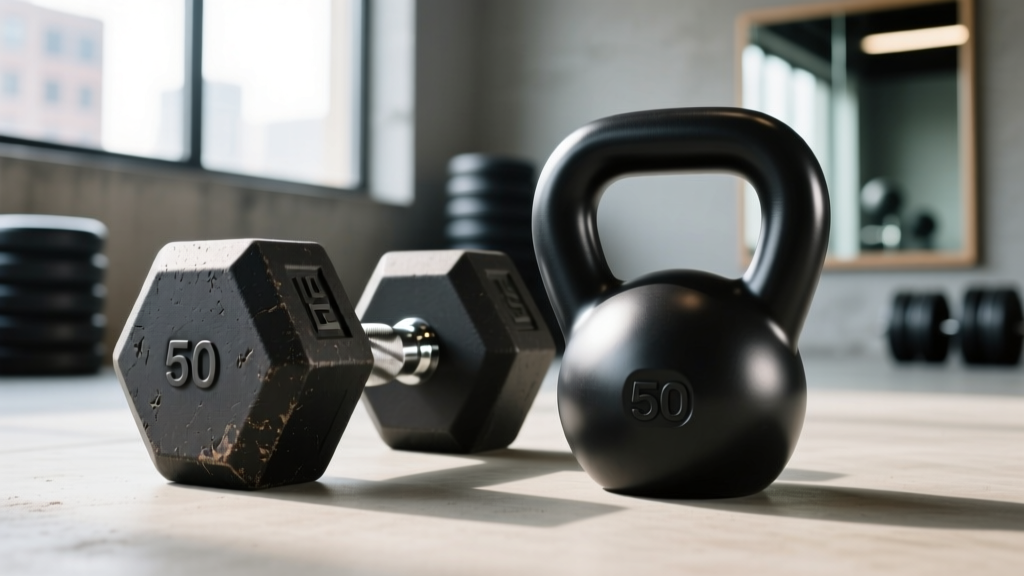
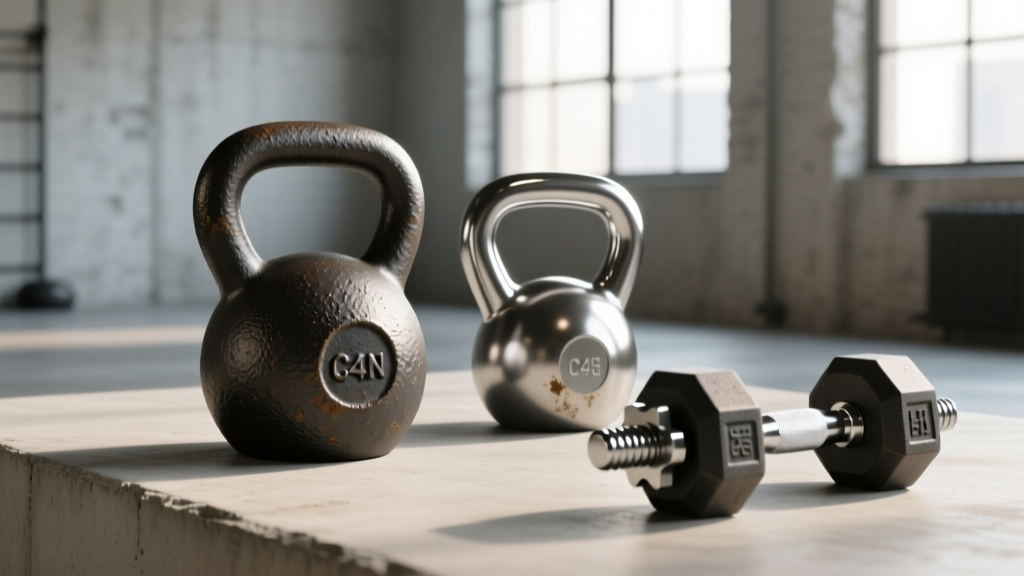
The choice between cast iron and competition steel kettlebells dictates not only your training feel but also your ongoing maintenance routine. Cast iron bells, like the Rogue Cast Iron Kettlebells, are gravity-cast and feature dimensions that scale with weight. A 16kg bell has a noticeably smaller profile and thinner handle than a 32kg bell. Competition kettlebells, such as the Kettlebell Kings Competition Line, are machined from steel and maintain identical external dimensions (210mm height, 280mm width, 28mm handle diameter) regardless of weight, utilizing internal steel shot or ball bearings to adjust the mass.
| Feature | Cast Iron (e.g., Rogue, Rep Fitness) | Competition (e.g., Eleiko, KB Kings) |
|---|---|---|
| Handle Diameter | Variable (32mm to 35mm+) | Uniform 28mm |
| Bell Dimensions | Scales with weight | Uniform across all weights |
| Primary Finish | Powder Coat / E-Coat | Automotive Paint / Raw Steel Handle |
| Avg. Cost per Pound | $1.50 - $2.50 | $3.50 - $5.00 |
| Maintenance Focus | Rust prevention, coating preservation | Paint chip repair, handle oxidation |
Longevity Protocols: Maintaining Cast Iron Kettlebells
Cast iron is highly susceptible to oxidation, especially when exposed to the chlorides present in human sweat. The longevity of a cast iron bell depends entirely on the integrity of its protective coating.
Preserving Powder Coat and E-Coat Finishes
Powder coating provides a robust barrier against moisture, but it is not invincible. Dropping a 24kg bell on a concrete floor can micro-fracture the coating, exposing the raw iron beneath. Expert Warning: Never use a stainless steel wire brush to clean the handle or knurling of a powder-coated kettlebell. Steel bristles will strip the coating and embed microscopic steel particles that will flash-rust within 48 hours. Always use a brass or nylon brush. To maintain the coating, wipe the bell down with a microfiber towel after every session. Once a month, apply a light coat of mineral oil or 3-in-One Multi-Purpose Oil to displace ambient moisture. Let it sit for 10 minutes, then buff it dry to prevent a tacky grip surface.
Bare Steel and Rust Remediation
If you purchase bare cast iron or if your coated bell chips, rust remediation is mandatory. Use a brass wire brush to aggressively remove surface oxidation. For deep pitting, apply a naval jelly (phosphoric acid) rust converter for 15 minutes, wipe clean, and seal the exposed iron with a cold-bluing solution or a dedicated metal primer followed by a matte black enamel touch-up.
Competition Kettlebell Care: Paint and Polish
Competition bells present a different set of longevity challenges. The bell itself is painted to denote weight class (e.g., yellow for 16kg, green for 24kg), while the handle is typically left as raw, polished steel to maximize grip security during high-rep snatches and cleans.
Managing Raw Steel Handle Oxidation
The raw steel handle of a competition bell will oxidize rapidly if neglected. According to BarBend's comprehensive maintenance guides, chalk accumulation traps moisture against the steel, accelerating corrosion. After training, use a stiff nylon brush to clear chalk from the handle's micro-texture. Follow this by wiping the handle with a rag lightly dampened with rubbing alcohol to strip skin oils, then apply a single drop of camellia oil or 3-in-One oil, buffing it out until the handle feels completely dry but looks slightly darkened.
Automotive Paint Touch-Ups
When the painted body of a competition bell chips from rack impacts, the exposed steel core can rust. Keep a kit of color-matched automotive touch-up paint (available at any auto parts store) in your gym. Lightly sand the chip with 800-grit sandpaper, apply a drop of paint with a toothpick, and let it cure for 24 hours before use.
Expanding Unilateral Capacity: Dumbbell Exercises with One Dumbbell
While kettlebells are unparalleled for ballistic hinge movements, a complete strength program requires strict, asymmetric loading. Performing dumbbell exercises with one dumbbell bridges the gap between kettlebell ballistics and traditional hypertrophy work. Unilateral dumbbell training forces the contralateral core musculature to resist rotational forces, improving spinal stability and addressing left-to-right strength imbalances.
Top Unilateral Movements for the Home Gym
- Single-Arm Dumbbell Push Press: Generates explosive overhead power while demanding intense oblique engagement to prevent lateral spinal flexion.
- Suitcase Deadlift: An anti-lateral flexion exercise that heavily targets the quadratus lumborum (QL) and grip strength, complementing the posterior chain focus of KB swings.
- Offset Bulgarian Split Squat: Holding a single heavy dumbbell on the same side as the working leg increases the stability demand on the hip abductors and adductors.
- Single-Arm Dumbbell Snatch: A viable alternative to the KB snatch that alters the center of mass, requiring a slightly different pull path and wrist stabilization.
Gear Care for Single-Dumbbell Training
The single dumbbell you rely on for these high-torque movements requires its own longevity protocol. If you are using urethane-coated hex dumbbells, be aware that prolonged exposure to UV light and ozone will cause the urethane to degrade, chalk, and eventually split. Store your dumbbells indoors, away from direct sunlight. If you are using an adjustable dumbbell (like the Nuobell or PowerBlock), the maintenance shifts to mechanical integrity. Every 90 days, inspect the selector pin or dial mechanism for metal shavings. Use compressed air to blow out the internal tracks, and apply a dry PTFE (Teflon) lubricant to the moving parts. Avoid wet oils like WD-40, which attract dust and create an abrasive paste that will eventually jam the adjustment mechanism.
The 2026 Home Gym Maintenance Schedule
To systematize the longevity of your free weights, implement this rotational maintenance schedule:
Weekly (Post-Training)
- Brush chalk from competition KB handles and DB knurling with a nylon brush.
- Wipe down all handles with a microfiber cloth to remove sweat chlorides.
Monthly (Deep Care)
- Apply 3-in-One oil to cast iron KBs and competition steel handles; buff completely dry.
- Inspect adjustable dumbbell mechanisms and clear debris with compressed air.
- Check rubber/urethane DBs for edge tearing or UV degradation.
Annually (Restoration)
- Touch up chipped paint on competition bells with automotive enamel.
- Use a brass brush and naval jelly to treat any micro-rust spots on cast iron bells.
- Tighten all hex bolts on dumbbell storage racks and KB cradles.
Final Thoughts on Gear Investment
Whether you are selecting the uniform 28mm handle of a competition bell for high-rep sport training, the variable geometry of cast iron for general strength, or a precision-machined dumbbell for unilateral isolation, the initial purchase is only the beginning. True equipment longevity is achieved through an understanding of metallurgy, proactive oxidation management, and consistent mechanical care. By integrating these maintenance protocols alongside your training programming, your free weights will easily outlast your fitness journey, becoming heirloom-grade tools rather than disposable commodities.
More gear to consider
All reviews
Dumbbell Workouts for Men: Cast Iron vs Competition Kettlebell ROI
EZ Curl Bar vs Straight Bar & Dumbbell Lateral Step Up 2026 Trends

Plate Dumbbell Longevity: Rack Storage & Maintenance Guide

Adjustable Dumbbell Review: Setup & Dumbbell Exercises for Biceps
2026 Adjustable Dumbbell Review: Which Dumbbell Bumpers Survive?