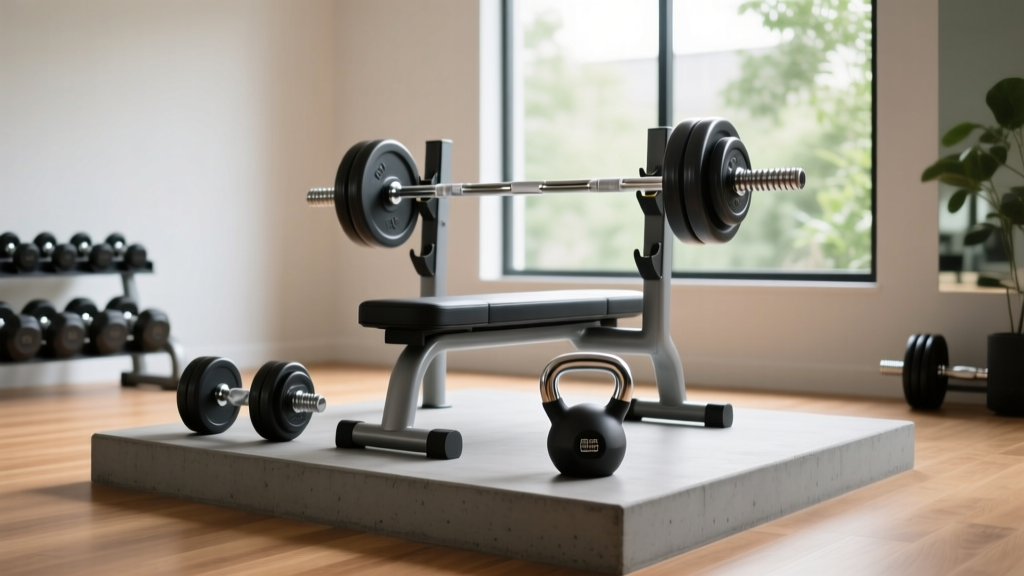
Free Weights Longevity: Is Dumbbell Bench Press Better Than Barbell? & Kettlebell Care
Explore if dumbbell bench press is better than barbell for joint longevity, plus our 2026 maintenance guide comparing cast iron vs competition kettlebells.

The Intersection of Lifter Longevity and Gear Maintenance
When outfitting a home gym in 2026, smart lifters think beyond the initial price tag. True value in free weights is measured by two distinct types of longevity: the lifespan of your joints and the lifespan of your equipment. At FitGearPulse, we believe that a comprehensive maintenance strategy must address both biomechanical wear-and-tear on the human body and the physical degradation of cast iron, steel, and rubber. In this guide, we tackle a highly debated biomechanical question before diving deep into our specialized maintenance protocols for one of the most versatile tools in the gym: the kettlebell.
Is Dumbbell Bench Press Better Than Barbell for Joint Health?
A frequent question we receive from lifters focusing on long-term fitness is: is dumbbell bench press better than barbell training? When evaluating joint longevity, the answer heavily favors dumbbells for the majority of aging lifters. The barbell bench press locks your wrists, elbows, and shoulders into a fixed, rigid path. Over years of heavy loading, this fixed trajectory can exacerbate anterior shoulder capsule strain and lead to impingement. According to the American Academy of Orthopaedic Surgeons (AAOS), repetitive overhead and pressing motions with restricted scapular movement are primary catalysts for rotator cuff tendinitis and impingement syndromes.
Dumbbells, conversely, allow for natural pronation and supination of the wrists, as well as a neutral grip option that opens the subacromial space, drastically reducing impingement risks. Furthermore, dumbbells permit a deeper stretch at the bottom of the movement and allow the lifter to adjust the pressing angle to accommodate individual thoracic spine mobility.
Equipment Wear: Barbells vs. Dumbbells
From a gear maintenance perspective, the two tools age very differently. A high-quality Olympic barbell (like the Rogue Ohio Power Bar) requires periodic bushing lubrication and knurling brushing to remove dead skin and chalk, but it will easily outlive the lifter. Dumbbells—particularly rubber or urethane hex dumbbells—face different failure modes. The handles can wear smooth if repeatedly dropped on hard surfaces, and the rubber heads are susceptible to UV degradation and ozone cracking over a 5-to-10-year period if stored in unclimate-controlled garages.
FitGearPulse Pro Tip: If you prioritize joint longevity and opt for dumbbells, invest in urethane-coated options rather than standard rubber. Urethane resists UV degradation, does not off-gas unpleasant odors, and maintains its structural integrity significantly longer in fluctuating temperatures.Kettlebell Buying Guide: Cast Iron vs. Competition (Maintenance Focus)
Transitioning from the bench to the floor, kettlebells remain a cornerstone of functional fitness. However, not all kettlebells are forged equally. When purchasing kettlebells, you are primarily choosing between Cast Iron and Competition styles. While most buying guides focus solely on handle width and bell dimensions, a 2026 perspective demands a closer look at how these materials age, chip, rust, and require maintenance.
Cast Iron Kettlebell Care: Preventing Rust and Coating Failure
Cast iron kettlebells, such as the Rogue Fitness Powder Coat Kettlebells, are typically molded from a single piece of iron and finished with a protective coating. In 2026, powder coating is the industry standard for premium cast iron bells, offering an aggressive grip that absorbs chalk beautifully. However, this finish is also the bell's primary point of failure.
Common Failure Modes for Cast Iron
- Base Chipping: The flat base of a cast iron bell takes the brunt of the impact when set down on concrete or rubber mats. Over time, the powder coat on the bottom edge chips away, exposing bare iron.
- Oxidation (Rust): Once bare iron is exposed to ambient humidity, surface rust can begin forming within 48 hours. If left untreated, this rust will creep under the surrounding powder coat, causing it to flake off in large sheets.
- Handle Smoothing: While the bell is powder-coated, heavy high-rep snatches can eventually polish the handle smooth, reducing grip security.
The Cast Iron Maintenance Protocol
To maximize the lifespan of your cast iron kettlebells, implement the following care routine:
- Inspect the Base Monthly: Run your thumb along the bottom edge. If you feel bare metal or see orange discoloration, immediate action is required.
- Brush, Don't Sand: Use a brass wire brush (never steel, as steel bristles can embed in the iron and create new rust nodes) to gently scrub away surface oxidation.
- Seal the Iron: Apply a micro-thin layer of Boeshield T-9 or 3-IN-ONE Silicone Spray to the exposed base. Wipe away excess to prevent a slippery residue from transferring to your hands or floors.
Competition Kettlebell Maintenance: Steel Care and Paint Preservation
Competition kettlebells, like those produced by Kettlebell Kings, are engineered for uniformity. Whether you are lifting a 12kg or a 32kg bell, the physical dimensions, handle diameter (typically 33mm), and window size remain identical. These are constructed from high-grade steel rather than cast iron, and the bell is color-coded with paint according to IWF standards.
Common Failure Modes for Competition Bells
- Paint Chipping on the Bell: Because the steel body is painted rather than powder-coated, dropping competition bells on hard surfaces will cause the color-coded paint to chip and dent. This is purely cosmetic but can lead to minor surface rust if the steel is not treated.
- Handle Slickness: Competition handles are polished bare steel. With heavy use and the accumulation of skin oils and sweat, the steel can become dangerously slick, losing its ability to hold chalk.
The Competition Maintenance Protocol
Maintaining competition bells is less about preventing deep structural rust and more about preserving the tactile feel of the handle and the aesthetics of the bell.
- Handle Degreasing: Once a month, wipe the handle down with isopropyl alcohol (70% or higher) to strip accumulated sebum and embedded chalk.
- Re-Porosity Scuffing: If the handle feels like glass, lightly scuff it with a green Scotch-Brite pad. Do not use sandpaper, which will remove too much material and alter the 33mm diameter specification.
- Cosmetic Touch-Ups: For chipped paint on the bell, use a small bottle of Rust-Oleum enamel paint matched to the IWF color code (e.g., Yellow for 16kg, Green for 24kg) to dab the exposed steel, preventing flash rust.
Durability & Maintenance Matrix
Use the table below to determine which kettlebell style aligns with your maintenance tolerance and training environment.
| Feature | Cast Iron (e.g., Rogue Powder Coat) | Competition (e.g., Kettlebell Kings) |
|---|---|---|
| Core Material | Cast Iron | Hollow / Solid Steel |
| Finish Type | Matte Powder Coat | Polished Steel Handle / Painted Bell |
| Primary Failure Mode | Powder coat chipping at the base; deep rust | Paint chipping on bell; handle becoming slick |
| Handle Maintenance | Wire brushing to maintain chalk grip | Alcohol wiping & Scotch-Brite scuffing |
| Outdoor/Garage Suitability | Moderate (High rust risk if coating fails) | High (Steel resists deep pitting better) |
| Approx. Price (24kg in 2026) | $115 - $135 | $185 - $215 |
The 15-Minute Monthly Free Weights Maintenance Routine
To ensure your entire free weight arsenal survives decades of use, dedicate 15 minutes on the first Sunday of every month to the following checklist:
- Barbells (3 mins): Brush the knurling with a nylon-bristle brush to remove dead skin. Apply 2 drops of 3-IN-ONE oil to the bushings/bearings and spin the sleeves to distribute.
- Dumbbells (4 mins): Wipe down rubber/urethane heads with a damp microfiber cloth and a mild dish soap solution to remove acidic sweat that accelerates material breakdown. Check handle bolts for looseness.
- Kettlebells (5 mins): Inspect cast iron bases for rust and treat with brass brushing and silicone spray. Wipe competition handles with isopropyl alcohol.
- Weight Plates (3 mins): Inspect the center hubs of bumper plates. If the steel inserts are showing surface rust, apply a quick dab of grease to prevent them from seizing onto the barbell sleeves.
FAQ: Maximizing Free Weight Lifespan
Can I use WD-40 to clean my kettlebells and barbells?
Standard WD-40 is a solvent and water displacer, not a long-term lubricant or rust preventer. While it will clean chalk and grime off a barbell sleeve, it will strip away essential bearing grease and leave the metal unprotected. Always opt for specialized lubricants like Boeshield T-9, 3-IN-ONE, or dedicated barbell oils for long-term gear health.
Does the type of flooring affect kettlebell longevity?
Absolutely. Dropping cast iron or competition kettlebells directly onto concrete will rapidly destroy base coatings and dent steel. Investing in high-density EVA foam mats or specialized drop pads (at least 3/4-inch thick) will extend the life of your kettlebell finishes by years, keeping the powder coat and IWF paint intact.
Is it worth buying used kettlebells?
Used competition kettlebells are generally a safe buy, as steel is highly durable and handle slickness can be easily remedied with a Scotch-Brite pad. Used cast iron kettlebells, however, carry a higher risk. If the previous owner allowed deep pitting rust to form under the powder coat, the structural integrity of the handle attachment point could be compromised. Always inspect used cast iron bells for deep, flaking rust around the handle horns before purchasing.
More gear to consider
All reviews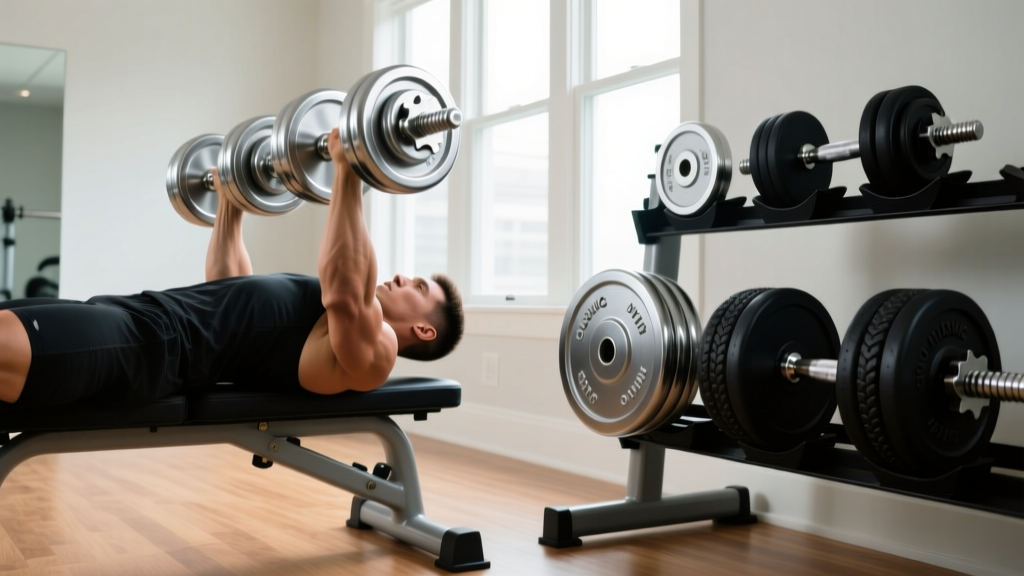
Olympic vs Standard Plates: Guide to Back Extensions with Dumbbells

Budget Loadable Dumbbells & The Alternating Dumbbell Biceps Curl
Beyond 6 lbs Dumbbells: Barbell Collar & Clamp Comparison
How to Use Dumbbells Effectively: Loadable Dumbbell Maintenance
Adjustable Dumbbell Review: One Arm Dumbbell Row Bench Supported 2026
