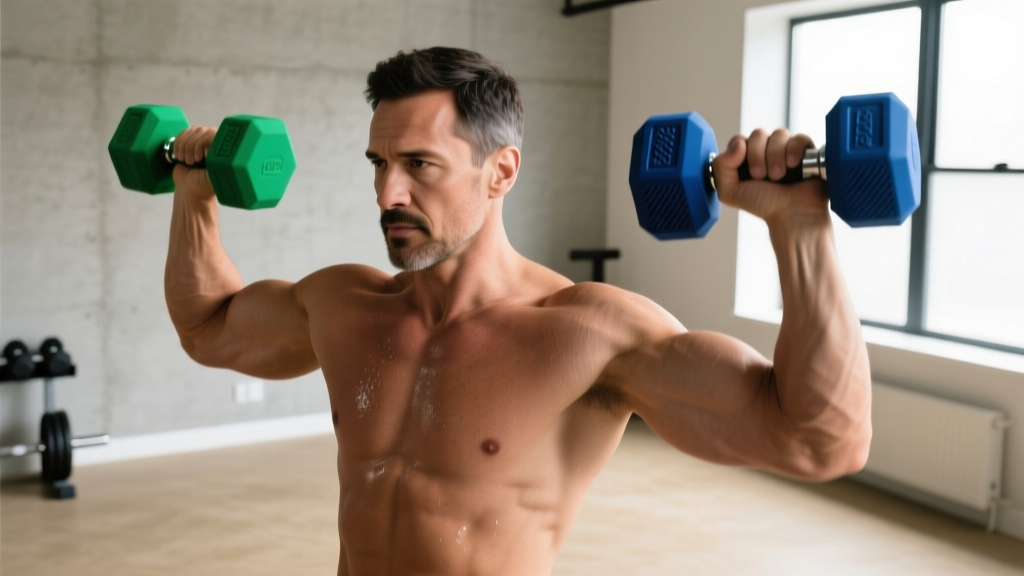
Space-Saving Incline Dumbbell Hex Press: Rubber vs Urethane Hex Bells
Optimize your home gym layout for the incline dumbbell hex press. Compare rubber vs urethane hex dumbbells for space efficiency, rack footprint, and cost.

Designing a high-performance home gym in 2026 often means battling strict spatial constraints. When your layout must accommodate specialized hypertrophy movements like the incline dumbbell hex press, every square inch of your equipment footprint matters. This compound movement—targeting the upper pectorals and triceps by pressing hex dumbbells together at a 30 to 45-degree incline—requires specific bench clearances and dumbbell rack accessibility.
But the real spatial bottleneck isn't just the bench; it is the dumbbell rack itself. For compact gym layouts, the choice between rubber hex dumbbells and urethane hex dumbbells dictates your storage footprint, rack tier requirements, and overall layout efficiency. Below, we break down the exact spatial, financial, and biomechanical differences between these two materials to help you optimize your free weight zone.
The Spatial Demands of the Incline Dumbbell Hex Press
Before evaluating the dumbbells, we must define the spatial envelope required for the movement. According to biomechanical analyses of dumbbell pressing mechanics published in the National Center for Biotechnology Information (NCBI), the incline press requires significant lateral elbow clearance and vertical bar path travel.
However, the hex press variation alters this spatial requirement. Because the dumbbells are pressed together (touching head-to-head) throughout the concentric and eccentric phases, lateral elbow flare is minimized. This makes it an excellent movement for narrow rooms or gyms where a standard incline press might cause your elbows to strike nearby walls or power rack uprights.
Layout Clearance Checklist
- Bench Footprint: Standard adjustable bench requires a 48" x 24" floor space.
- Lateral Clearance: Minimum 12" on each side of the bench for elbow tuck and weight loading.
- Vertical Clearance: 36" above the bench seat to accommodate full arm extension with 50lb+ dumbbells.
- Rack Proximity: Dumbbell rack should be placed parallel to the bench, exactly 24" away, allowing the user to kick the weights up without shifting their base.
Material Density: Why Urethane Shrinks Your Rack Footprint
The most critical factor in space optimization is material density. Urethane is significantly denser than standard rubber. This physical property means that a 50lb urethane hex dumbbell has a noticeably smaller head profile than a 50lb rubber hex dumbbell.
When outfitting a 3-tier horizontal dumbbell rack in a micro-gym, this density difference dictates how many weight increments you can store. Rubber hex bells often require a 5-tier rack or an extended 3-tier rack to accommodate heavier weights (60lbs+), whereas urethane bells can fit a complete 5lb to 50lb set on a standard 36-inch wide 3-tier rack.
Head Width Comparison: Rubber vs. Urethane
| Weight | Rubber Hex Head Width (Approx) | Urethane Hex Head Width (Approx) | Space Saved per Pair |
|---|---|---|---|
| 30 lbs | 5.8 inches | 5.1 inches | 1.4 inches |
| 50 lbs | 7.2 inches | 6.0 inches | 2.4 inches |
| 70 lbs | 8.9 inches | 7.3 inches | 3.2 inches |
As the weight increases, the spatial advantage of urethane compounds. For the incline dumbbell hex press, where users frequently work in the 40lb to 70lb range for hypertrophy, urethane allows you to keep your heaviest working sets on the most accessible top tier of your rack.
Rack Configurations for Micro-Gyms
Choosing between rubber and urethane directly influences the type of storage solution you can deploy in a tight layout. Here is how the two materials interact with standard rack configurations:
- The 3-Tier Horizontal Rack (Best for Urethane): A standard 36" wide, 3-tier rack holds up to 10 pairs of dumbbells. If you choose urethane, you can comfortably store a 5lb-50lb set (10 pairs). If you choose rubber, the wider heads of the 40lb, 45lb, and 50lb bells will overhang the edges, creating a tripping hazard in narrow walkways.
- The A-Frame 5-Tier Rack (Required for Heavy Rubber): If you prefer the lower cost of rubber hex bells and need weights up to 60lbs for your incline hex presses, you must upgrade to a 5-tier A-frame. While A-frames have a smaller linear wall footprint (about 24" wide), they protrude further into the room (approx. 28" deep) and block vertical sightlines, making small rooms feel more claustrophobic.
- Wall-Mounted Saddle Racks: For ultra-compact spaces, wall-mounted racks are ideal. Urethane's denser profile places less torque on the wall anchors compared to the wider, more leveraged rubber hex bells, making urethane the safer choice for drywall or stud-mounted storage.
Durability in High-Traffic, Low-Clearance Zones
In a space-optimized gym, equipment is stored closer together, and dumbbells are more frequently bumped against racks, benches, and walls during the setup for the incline dumbbell hex press.
"Rubber hex dumbbells are notorious for chipping at the edges when dropped on hard surfaces or slammed against metal rack uprights. Over time, this degradation creates uneven surfaces that can damage flooring and compromise the hex shape, causing them to roll unpredictably when set on the floor between sets."
Urethane, by contrast, is highly resistant to abrasion and impact. In a tight layout where you might be resting your dumbbells on the floor inches away from your adjustable bench, urethane's structural integrity ensures the hex shape remains perfectly flat, preventing accidental rolling and protecting your limited floor space from scuff marks.
Furthermore, rubber dumbbells often off-gas a strong chemical odor, which is highly problematic in small, poorly ventilated rooms (like converted bedrooms or basement micro-gyms). Urethane is virtually odorless, preserving the air quality of your compact training environment.
The 2026 Cost-to-Space Ratio Breakdown
Space optimization always comes with a financial premium. When planning your layout, you must weigh the upfront cost of urethane against the spatial savings it provides.
- Rubber Hex Dumbbells: Typically priced between $1.50 and $2.20 per pound. A 5-50lb set (500 lbs total) will cost roughly $750 to $1,100. However, you may need to spend an additional $150-$250 on a larger 5-tier rack to accommodate the wider heads.
- Urethane Hex Dumbbells: Priced between $3.00 and $4.50 per pound. The same 5-50lb set will cost between $1,500 and $2,250. The premium pays for the density, allowing you to use a standard, lower-profile 3-tier rack.
If your primary constraint is physical square footage, the higher cost of urethane is justified by the ability to use smaller, less intrusive storage solutions. If your space is moderately constrained but you have a strict budget, rubber hex bells are viable provided you map out the exact overhang dimensions on your chosen rack before purchasing.
Final Verdict for Compact Gym Layouts
Executing the incline dumbbell hex press with perfect form requires a clear, uncluttered environment. While rubber hex dumbbells offer an accessible entry point for budget-conscious lifters, their larger physical footprint, susceptibility to edge-chipping, and off-gassing make them suboptimal for highly optimized, small-scale layouts.
For the ultimate space-saving configuration in 2026, urethane hex dumbbells are the superior choice. Their higher density allows for complete weight sets on compact 3-tier racks, their impact resistance survives the tight clearances of micro-gyms, and their odorless nature keeps small rooms breathable. When designing your layout, prioritize the spatial efficiency of urethane to ensure your incline hex press—and every other movement in your arsenal—has the room it needs to be performed safely and effectively.
More gear to consider
All reviews
Securing Dumbbell and Barbell Exercises: Collar Setup Guide

Gear for the Best Dumbbell Workouts Arms: Rubber vs Urethane

Olympic Barbell Guide: Knurling & Single-Leg Dumbbell Deadlift

EZ Curl vs Straight Bar: How Heavy Are the Dumbbells You Lift? (Season 2)

Best Neoprene Dumbbells for the 45 Degree Dumbbell Press (2026)