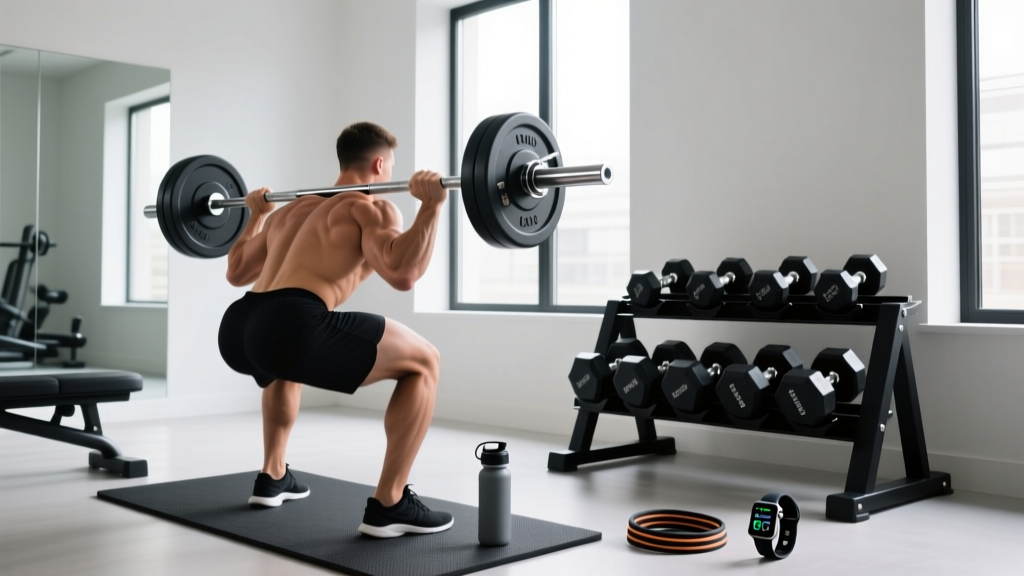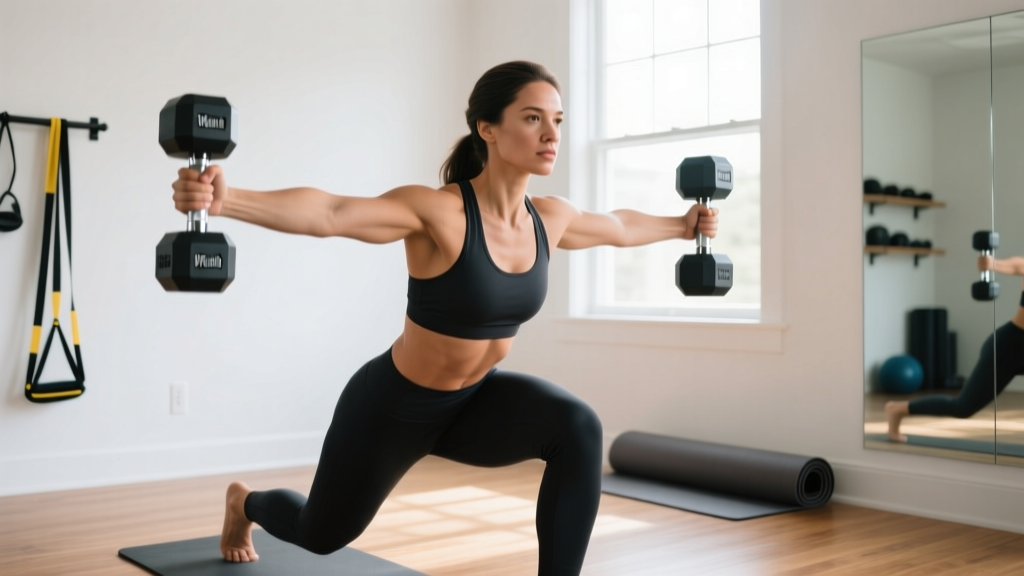
Mastering the Hip Hinge With Dumbbells: Step-by-Step Guide & Adjustable Set Reviews
Learn how to master the hip hinge with dumbbells using our step-by-step beginner guide, plus compare the best adjustable dumbbells for hinge movements.

The Ultimate Beginner's Guide to the Hip Hinge With Dumbbells
If you are building a home gym or just starting your fitness journey, mastering the hip hinge is non-negotiable. The hip hinge is the foundational movement pattern for your entire posterior chain—targeting the hamstrings, glutes, and lower back erectors. When executed correctly, it bulletproofs your lower back against injury and builds explosive athletic power. When paired with the right equipment, specifically a high-quality adjustable dumbbell set, you can progressively overload this movement without turning your spare room into a cluttered iron warehouse.
In this comprehensive 2026 guide, we will break down the exact biomechanics of the hip hinge, provide a step-by-step tutorial for executing the movement safely, and critically review the top adjustable dumbbells on the market specifically through the lens of hinge-training ergonomics, grip fatigue, and durability.
Understanding the Biomechanics: Hinge vs. Squat
Before picking up the weights, we must distinguish the hip hinge from the squat. According to biomechanics research published in the Journal of Sports Science and Medicine, the hip hinge is characterized by maximal forward displacement of the torso with minimal knee flexion. In contrast, a squat features maximal knee flexion with a relatively upright torso.
When you perform a hip hinge with dumbbells—most commonly via the Romanian Deadlift (RDL) or the Dumbbell Swing—the primary movers are the hip extensors (gluteus maximus and hamstrings). The ExRx database classifies the dumbbell Romanian deadlift as a staple isolation-to-compound bridge exercise, crucial for developing the eccentric strength of the hamstrings.
💡 Pro Tip: The Wall Tap DrillStand about one foot away from a wall, facing away from it. Push your hips backward until your glutes tap the wall. This teaches your brain to initiate the movement from the hips, not the knees. Step an inch further away each rep until you reach your full range of motion.
Step-by-Step: Executing the Hip Hinge With Dumbbells
Follow this exact sequence to build a safe, powerful hinge pattern. We recommend starting with a lightweight set of adjustable dumbbells (10–15 lbs per hand) until the motor pattern is ingrained.
- The Setup (Stance and Grip): Stand with your feet hip-width apart. Hold the dumbbells in front of your thighs with a neutral (pronated) grip. Engage your lats by imagining you are squeezing oranges in your armpits. This stabilizes the shoulder girdle.
- The Descent (Eccentric Phase): Unlock your knees slightly (about a 15-degree bend), but do not squat. Push your hips straight back toward the wall behind you. The dumbbells should glide down the front of your thighs and over your kneecaps. Keep your cervical spine neutral—look at the floor about six feet ahead of you.
- The Stretch (Bottom Position): Stop the descent the moment you feel a deep stretch in your hamstrings. For most beginners, this is just below the kneecap. If your lower back begins to round (spinal flexion), you have gone too far.
- The Lockout (Concentric Phase): Drive your feet through the floor and thrust your hips forward to stand up. Squeeze your glutes hard at the top. Do not hyperextend your lower back; simply return to a neutral standing posture.
During high-rep hinge variations like dumbbell swings, forearm fatigue often precedes hamstring fatigue. If your grip fails, you may compensate by rounding your upper back to keep the weights elevated. Always stop your set when your grip begins to slip, or utilize lifting straps for hypertrophy-focused RDL sets.
Why Your Choice of Adjustable Dumbbell Matters for Hinge Training
Not all adjustable dumbbells are created equal, especially when subjected to the unique demands of the hip hinge. When performing RDLs or swings, the dumbbell rests against or moves dynamically past the thighs. Bulky end-caps can bruise your legs, while overly thick handles will cause premature grip failure. Furthermore, the internal weight-shifting mechanisms of certain adjustable dumbbells can feel unbalanced during the rapid deceleration phase of a swing.
Below, we compare the top three adjustable dumbbells of 2026 specifically for posterior chain training.
1. Nuobell 80 (Best Ergonomics for Hinge Movements)
The Nuobell 80 utilizes a twist-handle mechanism that perfectly mimics the feel, knurling, and dimensions of a traditional commercial-grade hex dumbbell. With a standard 1.2-inch handle diameter and a usable grip length of 6.5 inches, it is the superior choice for RDLs and swings. The weight shifts seamlessly to the ends, providing perfect balance during the eccentric lowering phase of the hinge.
- Pros: Authentic grip feel; compact profile won't bruise thighs; 5 lb micro-increments ideal for beginner hinge progression.
- Cons: Highly fragile. If you fail a rep and drop the Nuobell from the top of a swing, the internal plastic pin mechanism will shatter.
- 2026 Price: ~$429 / pair
2. PowerBlock Elite USA (Best Durability, Awkward Profile)
PowerBlock's cage design is virtually indestructible, making it a safe bet if you tend to drop weights when your grip fails on heavy RDLs. However, the blocky, square cage restricts your grip width and can feel cumbersome when trying to keep the dumbbell tight to your thighs during the hinge descent. The welded steel handle is also slightly thicker than standard, which may tax beginner forearms.
- Pros: Extreme drop durability; compact footprint; highly reliable internal pin.
- Cons: Cage design interferes with thigh-gliding during RDLs; wrist straps can get caught in the cage gaps.
- 2026 Price: ~$399 / pair
3. Bowflex SelectTech 552 (Budget Entry, High Bulk)
The Bowflex 552 remains a popular entry-level option, but it is the least ideal for dynamic hinge movements. The handle is a thick 1.5 inches, and the overall length of the dumbbell (due to the dial housings on both ends) is over 15 inches. During a dumbbell swing, this excessive length can cause the ends to clip your inner thighs or knees.
- Pros: Accessible pricing; dial system is intuitive for quick weight changes between squats and hinges.
- Cons: Bulky handle causes early grip fatigue; excessive length interferes with dynamic hinge clearance; dials jam if not set down perfectly flat.
- 2026 Price: ~$349 / pair
2026 Adjustable Dumbbell Comparison Matrix for Hinge Training
| Feature | Nuobell 80 | PowerBlock Elite | Bowflex 552 |
|---|---|---|---|
| Handle Diameter | 1.2 inches (Optimal) | 1.3 inches (Slightly Thick) | 1.5 inches (Fat Grip) |
| Thigh Clearance | Excellent (Hex Profile) | Poor (Cage Interference) | Fair (Long End-Caps) |
| Drop Durability | Very Low (Fragile Pins) | Very High (Steel Cage) | Low (Dial Jamming) |
| Weight Increments | 5 lbs | 2.5 lbs (with add-on) | 2.5 - 5 lbs |
| Best For... | Strict RDLs & Form Work | Heavy, High-Fatigue Sets | General Full-Body Circuits |
Programming Your First Hinge Routine
Once you have selected your equipment and mastered the wall-tap drill, it is time to program the movement into your weekly split. For beginners, the hip hinge should be trained 2 times per week, prioritizing eccentric control over absolute load.
The Beginner Hinge Protocol
- Exercise: Dumbbell Romanian Deadlift (RDL)
- Tempo: 3-1-1 (3 seconds lowering, 1 second pause at the stretch, 1 second explosive lockout)
- Sets: 3
- Reps: 8–10 (Stop 2 reps shy of failure to maintain perfect spinal neutrality)
- Rest: 90–120 seconds between sets
"The goal of the beginner hip hinge is not to touch the dumbbells to the floor. The goal is to push the hips as far back as possible while maintaining a rigid, neutral spine. Range of motion is dictated by hamstring flexibility, not by gravity."
Troubleshooting Common Edge Cases and Mistakes
Even with the best adjustable dumbbells and a meticulous step-by-step guide, beginners often encounter specific failure modes. Here is how to troubleshoot them:
1. The 'Squat-Hinge' Hybrid
The Problem: As you lower the weights, your knees bend excessively, and your torso stays upright. You are squatting the weight, shifting the load from the hamstrings to the quadriceps.
The Fix: Place a light resistance band around your hips and anchor it to a sturdy power rack or heavy table behind you. The band will actively pull your hips backward, forcing you into the correct hinge groove.
2. Lumbar Rounding at the Bottom
The Problem: You push your hips back, but to get the dumbbells lower, you round your lower back. This places dangerous shear forces on the lumbar discs.
The Fix: Elevate your starting position. Stand on a low aerobic step or weight plates, and only lower the dumbbells to the bottom of your kneecaps. Alternatively, use the micro-loading feature on your adjustable dumbbells to drop the weight by 10 lbs and re-establish core bracing via the Valsalva maneuver.
3. Dumbbell Drift
The Problem: The dumbbells drift forward away from your legs during the descent. This increases the moment arm on your lower back, multiplying the torque and risking injury.
The Fix: Engage your lats before you move. Think about 'shaving your legs' with the dumbbells as you lower them. If you are using the Bowflex 552s, be aware that the bulky end-caps might force you to widen your stance slightly to prevent the weights from clanking together.
Final Verdict: Equipping Your Hinge
Mastering the hip hinge with dumbbells is one of the highest-ROI investments you can make for your long-term health, posture, and athletic performance. By focusing on the biomechanical cues of pushing the hips back and maintaining a neutral spine, you will build a resilient posterior chain. When selecting your adjustable dumbbells for this specific movement pattern, prioritize handle ergonomics and thigh clearance over maximum weight capacity. For most beginners, a set of Nuobells or a well-maintained pair of PowerBlocks will provide the exact tactile feedback needed to groove the hip hinge pattern safely and effectively in your home gym.
More gear to consider
All reviews
EZ vs Straight Bar: Single Arm Dumbbell Pullover Market Trends 2026
Cast Iron vs Competition Kettlebells: Dumbbell Squat to Shoulder Press

Rubber Hex vs Urethane Dumbbells for Dumbbell Bicep Curl to Press
Beginner Guide to Dumbbell Scoops Using Neoprene Weights

Bumper vs Iron Plates: Optimizing the Dumbbell RFE Split Squat