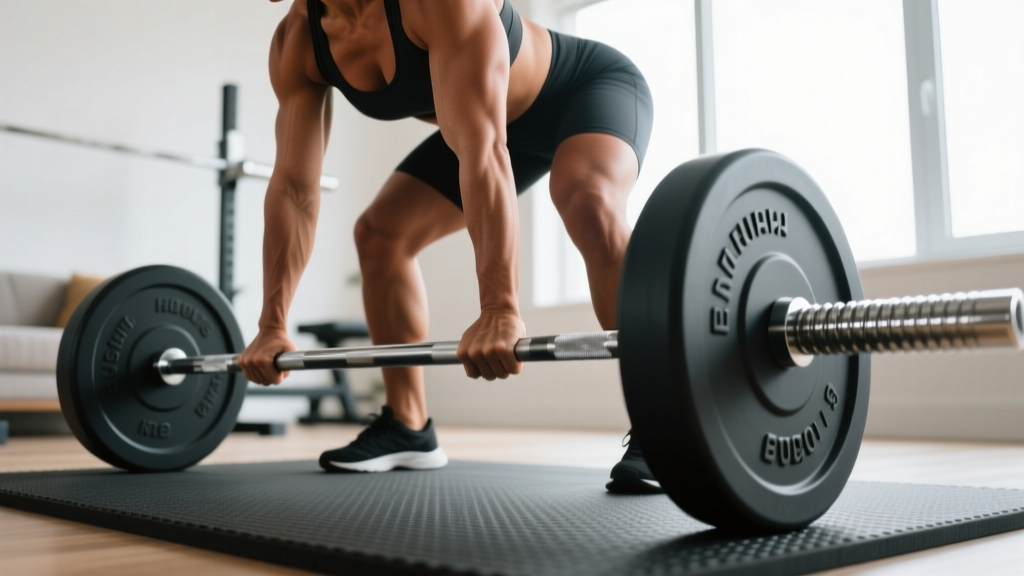
Flat Dumbbell Press Technique & Barbell Weight Knurling Guide
Transition from the flat dumbbell press technique to barbells. Our beginner guide covers Olympic barbell weight, knurling types, and top picks.

Bridging the Gap: From Dumbbells to the Olympic Barbell
Mastering the flat dumbbell press technique is a rite of passage for any beginner. It teaches vital unilateral stabilization, corrects muscle imbalances, and builds a deep mind-muscle connection in the pectorals. However, as your pressing strength grows, you will inevitably hit a ceiling where stabilizing heavy dumbbells becomes the limiting factor rather than your actual chest strength. This is the exact moment you must transition to an Olympic barbell.
Moving from dumbbells to a barbell requires a fundamental shift in how you interact with your equipment. While the flat dumbbell press technique relies on the ergonomic, neutral grip of a dumbbell handle, barbell pressing demands a rigid, chalk-ready grip on a steel shaft. To make this transition safely and effectively, you need a comprehensive Olympic barbell buying guide focused on the two most critical factors: weight standards and knurling patterns.
Step 1: Demystifying Olympic Barbell Weight Standards
Unlike the fixed-weight dumbbells lining the walls of your local gym, Olympic barbells are modular. However, the bars themselves adhere to strict international weight and dimensional standards. Understanding these is your first step in building a home gym or selecting the right bar at your commercial facility.
- Men's Olympic Bar (20kg / 44 lbs): The gold standard for most lifters. It features a 28mm to 29mm shaft diameter and 2-inch (50mm) sleeves. The 29mm diameter is common in powerlifting bars for bench press stability, while 28mm is standard for Olympic weightlifting.
- Women's Olympic Bar (15kg / 33 lbs): Features a thinner 25mm shaft diameter, which is crucial for lifters with smaller hands to achieve a secure hook grip. The sleeves are also slightly shorter, but the distance between the inner collars remains the same to fit standard power racks.
- Technique Bars (10kg / 22 lbs or 5kg / 11 lbs): Ideal for absolute beginners or youth athletes. These bars maintain the standard 2-inch sleeve diameter so they can hold real bumper plates, but the lighter overall weight allows you to focus purely on form without the 44lb baseline of a standard bar.
Step 2: Decoding Knurling Patterns and Grip Mechanics
Knurling is the cross-hatched pattern etched into the steel shaft of the barbell. It is the single most important point of contact between you and the weight. According to BarBend's comprehensive knurling guide, the depth, sharpness, and geometry of this pattern dictate how well you can control heavy loads, especially when sweat and chalk enter the equation.
The Three Primary Knurl Profiles
- Hill Knurling: Found on cheap, big-box store barbells. The peaks of the knurl are rounded off. Failure Mode: Under heavy loads, your hands will slip, forcing you to squeeze the bar excessively, which saps energy from your actual pressing muscles.
- Mountain Knurling: Sharp, prominent peaks that dig deeply into the calluses. Excellent for deadlifts, but can tear up your hands during high-volume pressing or front squats.
- Volcano Knurling: The premium standard for multi-purpose bars. The peaks are slightly flattened, but the deep 'craters' provide immense surface area for grip without tearing the skin. This is the ideal profile for lifters moving from the smooth handles of dumbbells to a barbell.
Step 3: Dumbbell vs. Barbell Pressing Mechanics
How does your hard-earned flat dumbbell press technique translate to the barbell? The table below breaks down the mechanical differences you must account for when buying and using your new barbell.
| Feature | Flat Dumbbell Press | Barbell Bench Press |
|---|---|---|
| Grip Width | Fixed by dumbbell handle; highly variable. | Adjustable; use the IPF or IWF knurl rings as tactile guides for symmetry. |
| Stabilization | High unilateral demand; requires intense rotator cuff engagement. | Bilateral locking; allows for heavier absolute loads but requires lat drive. |
| Wrist Position | Naturally neutral; lower joint stress. | Extended; requires aggressive knurling to prevent the bar from rolling up the palm. |
Step 4: Top Olympic Barbell Picks for Beginners
Based on current 2026 market pricing, tensile strength ratings, and knurl quality, here are the top barbells for lifters upgrading their pressing game.
1. Rogue Ohio Bar (Black Zinc) - Approx. $295
The undisputed king of multi-purpose bars. It features a 190,000 PSI tensile strength shaft (meaning it will not permanently bend under normal use) and Rogue's signature volcano knurling. The 28.5mm shaft diameter is the perfect middle ground—thin enough for a secure hook grip, but thick enough to provide a stable platform for heavy bench pressing. It includes dual knurl marks (both IWF and IPF spacing), making it easy to replicate the exact grip width you used during your dumbbell days.
2. Rep Fitness Colorado Bar - Approx. $219
An incredible budget-friendly alternative that does not compromise on grip. The Colorado bar features a unique composite bushing system that provides a smooth spin for Olympic lifts but remains stable enough for pressing. The knurling is slightly more aggressive than the Ohio Bar, leaning closer to a mountain profile, which is excellent if you have naturally slippery hands or prefer lifting without chalk.
3. Eleiko Sport Training Bar - Approx. $850+
If budget is not a concern and you want the absolute best, premium barbell manufacturers like Eleiko offer Swedish steel with a proprietary 'mountain' knurl that is famously refined. It grips like sandpaper but feels smooth to the touch. This is a lifetime investment piece for serious home gyms.
Step 5: Maintaining Your Barbell's Knurling
Dead skin, chalk, and humidity are the enemies of barbell knurling. If the grooves fill with debris, your expensive volcano knurl will effectively become a slick 'hill' knurl, compromising your bench press safety.
The Weekly Maintenance Routine:
- Brush: Use a stiff brass wire brush (never steel, which will strip the zinc or cerakote finish) and scrub the knurling in a circular motion for 60 seconds.
- Wipe: Use a microfiber cloth to remove the dislodged chalk and skin dust.
- Oil (Monthly): Apply a light coat of 3-in-One oil or mineral oil to the shaft and sleeves to prevent oxidation and rust, especially if you live in a humid climate or an un-garage gym.
Frequently Asked Questions
Do I need a center knurl for bench pressing?
No. Center knurling is designed to grip the back of your shirt during barbell back squats. For bench pressing and overhead pressing, a center knurl can actually scrape your chest and collarbone. Most modern multi-purpose bars feature a smooth center ring or a very passive center knurl, which is ideal for pressing movements.
How does barbell whip affect my bench press?
'Whip' refers to the elastic bounce of the barbell at the bottom of a lift. While weightlifters want high whip to help them jerk heavy weights overhead, bench pressers want a stiff bar. A 29mm powerlifting bar will have almost zero whip, providing a stable, predictable platform off the chest, unlike a whippy 28mm weightlifting bar which can throw off your pressing groove.
Can I use my Olympic barbell for dumbbell exercises?
While you cannot replicate the exact flat dumbbell press technique with a barbell, you can use the barbell for floor presses, close-grip presses, and JM presses to target the triceps and lockout strength, which will directly carry over to your heavy dumbbell pressing.
More gear to consider
All reviews
Olympic Barbell Weight, Knurling & Dumbbell Pec Fly Bench Setup
Train Your Core with Dumbbells: Adjustable Reviews & Form Mistakes
Kettlebell Guide: Cast Iron vs Competition & One-Arm Dumbbell Rows

Triangle Dumbbell vs Loadable Plates: 2026 Budget Guide

Cast Iron vs Competition Kettlebells: Beyond the Crystal Dumbbell
