
EZ Bar vs Straight Bar: Budget & Cross Bench Dumbbell Pullover
Compare EZ curl bar vs straight bar costs and biomechanics, plus budget tips for mastering the cross bench dumbbell pullover in your home gym.

The Upper-Body Equipment Dilemma: Optimizing Your Home Gym Budget
Building a comprehensive upper-body station requires navigating a minefield of equipment choices, balancing biomechanical efficiency against hard financial constraints. For home gym owners, the debate between investing in an EZ curl bar versus a traditional straight barbell is a classic crossroads. However, the true test of a well-rounded equipment budget isn't just about arm day—it is about how your purchases support complex, multi-joint movements like the cross bench dumbbell pullover.
In this 2026 value analysis, we break down the exact costs, joint-health implications, and versatility metrics of EZ versus straight bars. More importantly, we analyze where these bars fall short and how to properly budget for the specific bench and dumbbell setups required to execute the cross bench dumbbell pullover safely and effectively.
Biomechanics and Joint Health: The Hidden Cost of Straight Bars
When evaluating the budget of free weights, the "cost" of physical therapy must be factored into the equation. A standard Olympic straight bar forces the wrists into full supination (palms facing completely up). For individuals with limited radioulnar mobility or a history of medial epicondylitis (golfer's elbow), this forced anatomical position creates excessive valgus stress at the elbow and compressive torque at the wrist during heavy curls or skull crushers.
According to kinesiology principles outlined by the Exercise Prescription on the Internet (EXRX) database, the semi-pronated grip of an EZ bar significantly reduces the torque placed on the distal radioulnar joint during heavy flexion, allowing for greater load tolerance over time without connective tissue degradation.
An EZ curl bar introduces a 15 to 30-degree semi-pronated angle. This subtle shift aligns the humerus, radius, and ulna more naturally, allowing lifters to push closer to muscular failure on bicep curls and tricep extensions without joint pain acting as the limiting factor. From a longevity standpoint, the EZ bar is an insurance policy for your elbows.
2026 Price & Spec Matrix: EZ vs. Straight Barbell
Let's look at the actual financial outlay required for high-quality, Olympic-sleeve bars in the current market. We are comparing mid-tier to premium options that offer reliable knurling and proper sleeve tolerances for standard bumper and iron plates.
| Equipment Model | 2026 Avg. Price | Shaft Diameter | Weight Capacity | Best Application |
|---|---|---|---|---|
| Rogue 28MM EZ Curl Bar | $225.00 | 28mm | 600+ lbs | Heavy Biceps/Triceps Isolation |
| Titan Fitness EZ Curl Bar | $149.99 | 28.5mm | 500 lbs | Budget-Conscious Arm Days |
| Rogue Ohio Bar (Straight) | $210.00 | 28.5mm | 190,000 PSI | Compound Lifts & Versatility |
| Rep Fitness AB-3100 Bench | $399.00 | N/A | 1,000 lbs | Cross Bench Pullover Support |
The Cross Bench Dumbbell Pullover: Where Barbells Fall Short
While the EZ and straight bars dominate arm and shoulder work, they are remarkably inefficient for one of the most effective torso-expanding exercises in existence: the cross bench dumbbell pullover.
Why You Cannot Substitute a Barbell Here
Many lifters attempt to mimic the pullover using a straight bar or EZ bar while lying longitudinally on a bench. This is a biomechanical failure. When you lower a straight bar behind your head, the barbell physically strikes the bench pad before your latissimus dorsi and serratus anterior reach maximum elongation. The range of motion (ROM) is artificially truncated by up to 30%.
The cross bench dumbbell pullover solves this. By lying perpendicularly (crossways) across a flat bench with only your upper back and shoulders supported, your hips drop toward the floor. This creates a full-body arch and removes the bench from the barbell's path. Holding a single heavy dumbbell (or a pair) allows the weight to travel in a deep, unobstructed arc behind your head, maximizing the eccentric stretch on the lats and ribcage.
Budgeting for the Pullover Setup
To execute the cross bench dumbbell pullover safely, you need two specific pieces of equipment that dictate your budget allocation:
- The Bench: You need a bench with a firm, non-slip pad and a sturdy, wide-gauge steel frame. The Rep Fitness AB-3100 ($399) is ideal because its 3x3 inch uprights and minimal backpad gap provide a stable surface for perpendicular lying without the bench tipping.
- The Dumbbells: A traditional fixed-weight dumbbell set is a massive space and financial drain. Investing in a pair of Nuobell 552 Adjustable Dumbbells (approximately $399 per pair in 2026) allows you to micro-load the pullover from 30 lbs up to 55 lbs per hand, accommodating the extreme strength curve differences between the stretched and contracted positions of the latissimus dorsi.
Real-World Failure Modes & Edge Cases
When shopping on a budget, beware of these common equipment failure modes that ruin the value proposition of your purchase:
- Standard vs. Olympic Sleeves: Never buy a "standard" 1-inch hole EZ bar to save $40. The 1-inch plates are inaccurate, the sleeves bend under loads exceeding 80 lbs, and they cannot be used with the Olympic plates you will eventually need for a straight barbell. Always buy Olympic (2-inch) sleeves.
- Aggressive Knurling on EZ Bars: Budget EZ bars often feature shallow, poorly machined knurling that becomes slick when you sweat during high-rep tricep extensions. Look for bars that specify "volcano" or "medium-depth" knurl patterns to ensure grip security without tearing your calluses.
- Bench Tipping on Cross Pullovers: If you buy a cheap, lightweight bench (under 40 lbs total weight), dropping your hips off the side for a cross bench dumbbell pullover will shift the center of gravity and tip the bench backward. Always verify the bench's deadweight and base footprint width before buying.
The $800 Upper-Body Allocation Framework
If you have exactly $800 to build an upper-body arm and torso station in 2026, here is the optimal budget breakdown to maximize both joint health and exercise variety:
📊 The Optimized Budget Breakdown:- $150.00: Titan Fitness Olympic EZ Curl Bar (Saves money on the isolation tool while maintaining Olympic sleeve compatibility).
- $400.00: Nuobell 552 Adjustable Dumbbells (Used for the cross bench dumbbell pullover, unilateral rows, and lateral raises).
- $250.00: A heavy-duty, flat/incline utility bench with a wide base (e.g., a used or on-sale Rep AB-3100 or Titan Fitness adjustable bench) to safely support perpendicular cross-bench movements.
Note: This framework intentionally delays the purchase of a dedicated straight barbell, prioritizing the adjustable dumbbells and EZ bar to cover 90% of upper-body hypertrophy needs, including the critical cross bench dumbbell pullover, until the budget can be expanded.
Final Verdict
The choice between an EZ curl bar and a straight bar is not mutually exclusive, but it is entirely dependent on your current inventory and joint health. The straight bar remains the undisputed king of compound versatility, while the EZ bar is a non-negotiable investment for pain-free arm isolation. However, neither barbell can replicate the deep, unobstructed lat and serratus stretch provided by the cross bench dumbbell pullover. By understanding the biomechanical limitations of barbells and allocating your budget toward high-quality adjustable dumbbells and a stable, heavy-duty bench, you ensure your home gym supports both heavy compound loading and deep, tissue-stretching hypertrophy work.
For more information on proper exercise form and joint mechanics, refer to the National Strength and Conditioning Association (NSCA) guidelines on resistance training program design, and always prioritize equipment specifications that match your long-term strength goals over short-term budget savings.
More gear to consider
All reviews
EZ vs Straight Bar: 2026 Trends & The Dumbbell Deadlift Exercise
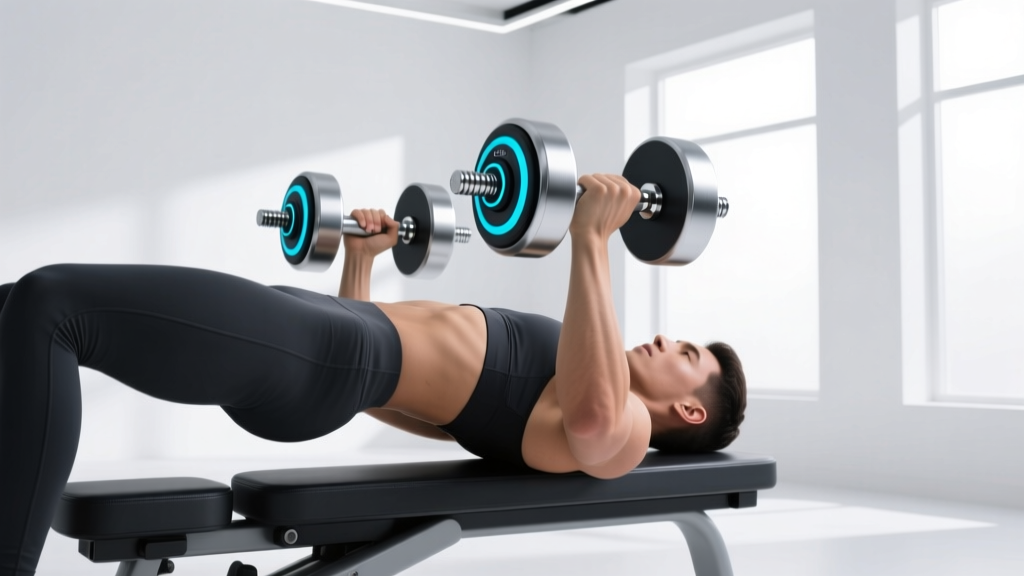
Fix Your Dumbbell Bridge: 2026 Adjustable Dumbbell Guide
Cast Iron vs Competition Kettlebells: Dumbbell Overhead Triceps Zones
Rubber Hex vs Urethane: Are Dumbbell Pullovers Effective?

Olympic vs Standard Plates for Overhead Dumbbell Triceps Extensions
