EZ vs Straight Bar Care & Dumbbell Clean and Press Muscles Worked
Compare EZ vs straight bar maintenance, longevity tips, and how they complement the dumbbell clean and press muscles worked for total upper-body development.

The Upper-Body Arsenal: Isolation Tools vs. Compound Powerhouses
Building a comprehensive home gym in 2026 requires more than just accumulating iron; it demands an understanding of biomechanics and rigorous equipment maintenance. When designing an upper-body hypertrophy and strength program, lifters frequently debate the merits of the EZ curl bar versus the straight barbell for arm isolation. However, true functional strength and mass are built by contrasting these isolation tools with heavy, full-body compound movements.
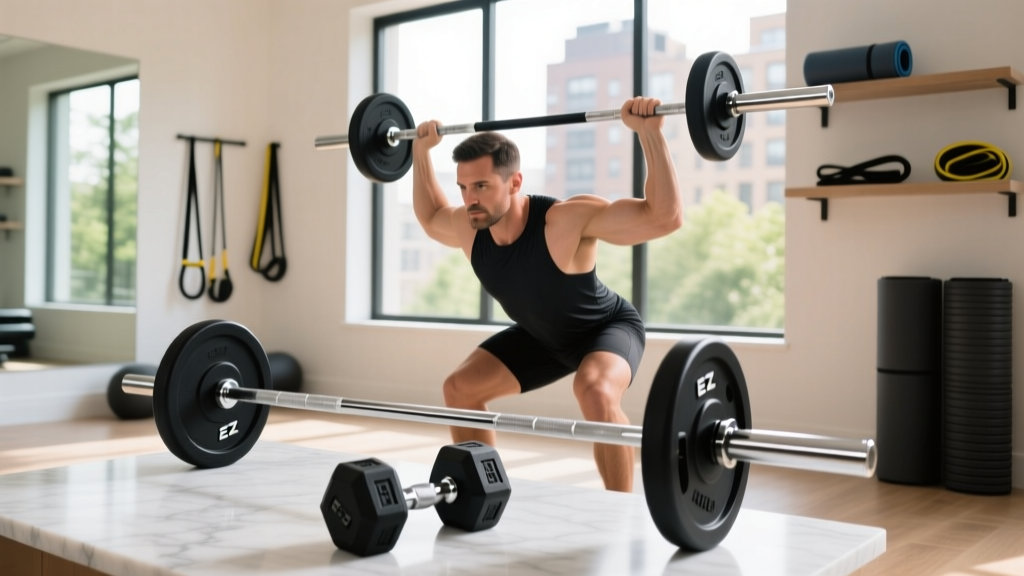
While barbell curls target specific regions of the biceps and forearms, analyzing the dumbbell clean and press muscles worked reveals a vast kinetic chain. According to biomechanical databases like ExRx.net, the dumbbell clean and press engages the anterior deltoids, upper trapezius, triceps brachii, core stabilizers, and even the glutes during the initial hip drive. To support this diverse training ecosystem, your free weights must be meticulously maintained. A seized EZ bar sleeve or a rusted straight bar knurling pattern can ruin your workout and compromise your grip security during heavy cleans.
Biomechanics and Equipment Stress: EZ vs. Straight Bar
Before diving into maintenance, it is crucial to understand how the physical design of these bars dictates their wear and tear over time.
The Straight Barbell: Maximum Load, Maximum Torque
A standard 45lb (20kg) Olympic straight barbell forces the lifter into full supination during curls. This places peak tension on the long head of the biceps and the brachialis. Because straight bars are designed to hold massive loads (often exceeding 300lbs in the hands of advanced lifters), they are constructed from high-tensile spring steel (190,000 to 215,000 PSI). The primary stress points are the inner sleeve shoulders and the bushing/bearing assemblies, which endure high rotational torque during Olympic lifts like the clean and press.
The EZ Curl Bar: Ergonomic Angles and Structural Vulnerabilities
The EZ curl bar features a cambered shaft that allows for semi-supinated or neutral grips, reducing valgus stress on the wrists and elbows. As noted by ACE Fitness, this ergonomic shift slightly biases the short head of the biceps and the brachioradialis. However, the bent shaft creates uneven stress distribution. Most EZ bars weigh between 25lbs and 35lbs and utilize shorter, lighter sleeves. Because they are rarely dropped from overhead, manufacturers often use cheaper brass bushings and lower-grade steel (around 130,000 PSI), making them highly susceptible to permanent bending if improperly stored or overloaded.
💡 The Dumbbell Alternative
If wrist pain persists despite using an EZ bar, consider transitioning to heavy adjustable dumbbells for your isolation work. The independent rotation of dumbbells allows for a natural wrist path while still providing the progressive overload necessary to complement the heavy compound stimuli of the clean and press.
Comparative Lifespan and Failure Matrix
Different free weights degrade in unique ways based on their geometry and moving parts. Below is a structural comparison of failure points and maintenance requirements for the core pieces of an upper-body home gym.
| Equipment Type | Primary Failure Point | Maintenance Interval | Est. Home Gym Lifespan |
|---|---|---|---|
| Olympic Straight Bar | Sleeve bearings/bushings seizing | Every 3-6 months | 15-20+ years |
| EZ Curl Bar | Shaft bending / Collar loosening | Monthly visual inspection | 5-10 years |
| Adjustable Dumbbells | Internal selector pins / Plastic trays | Weekly dusting, no oil | 5-8 years |
The 2026 Home Gym Maintenance Protocol
Proper care extends the life of your investment and ensures your grip doesn't fail during a heavy set. According to equipment maintenance guidelines outlined by BarBend, neglecting barbell hygiene leads to chalk buildup, which traps moisture and accelerates oxidation.
Step 1: Knurling Deep Clean (Weekly)
The knurling on a straight bar is linear, making it relatively easy to clean with a stiff nylon brush. However, the multi-angled, cambered knurling of an EZ bar requires a different approach.
- For Straight Bars: Apply a few drops of 3-IN-ONE multi-purpose oil to a nylon brush and scrub in a linear, back-and-forth motion along the shaft.
- For EZ Bars: Use a circular brushing motion to ensure the bristles penetrate the angled peaks and valleys of the cambered knurl. Wipe away the displaced chalk and oil with a microfiber cloth.
Warning: Never use wire brushes on chrome or zinc-coated bars, as this will strip the protective layer and invite immediate rusting.
Step 2: Sleeve and Bushing Lubrication (Bi-Annually)
While the dumbbell clean and press muscles worked rely heavily on shoulder stability, the exercise itself requires the dumbbells or barbell sleeves to rotate freely to prevent elbow torsion.
- Stand the barbell vertically against a wall.
- Apply 2-3 drops of synthetic bearing oil (like Super Lube) or a specialized barbell sleeve lubricant into the gap between the shaft and the sleeve.
- Rotate the sleeve manually for 60 seconds to work the lubricant into the internal bushings.
- Wipe away excess oil to prevent dust attraction.
⚠️ Critical Maintenance Warning
Never use standard WD-40 on your barbell sleeves or adjustable dumbbell mechanisms. WD-40 is a solvent and degreaser, not a long-term lubricant. It will strip existing factory grease from your bushings and attract abrasive chalk dust, permanently ruining the sleeve rotation.
Step 3: Storage and Oxidation Control
Humidity is the enemy of free weights. If you live in a coastal area or a region with high humidity, store your EZ and straight bars horizontally on a proper rack, not leaning against a concrete wall. Concrete sweats and transfers moisture directly to the steel. For adjustable dumbbells used in your clean and press variations, keep them in their cradles and avoid leaving them on damp rubber flooring.
Programming Synergy: Combining Isolation and Compound
Understanding equipment care allows you to confidently program heavy, demanding sessions without fear of gear failure. A highly effective 2026 upper-body push/pull split leverages the unique properties of these tools:
Day 1: Heavy Compound Focus
Dumbbell Clean and Press (4 sets of 6-8 reps) - Capitalizes on full-body stabilization.
Straight Barbell Curls (3 sets of 8-10 reps) - Overloads the brachialis and long head.Day 2: Hypertrophy and Joint Care
Seated Dumbbell Shoulder Press (4 sets of 10-12 reps)
EZ Bar Reverse Curls (3 sets of 12-15 reps) - Targets the brachioradialis while sparing the wrists.
Frequently Asked Questions
Can I use my straight bar for Olympic lifts if I only have an EZ bar for curls?
Yes, but ensure your straight bar has rotating sleeves with high-quality bushings or needle bearings. Deadlifting or strictly curling with a bar does not require sleeve rotation, but performing cleans (even from the hang) requires the sleeves to spin to save your wrists and elbows.
Why does my EZ bar feel "loose" on the collars?
Many budget EZ bars use hex-nut collars rather than snap-ring or bolted collars found on Olympic straight bars. Over time, the vibration from dropping weights (which you should avoid with EZ bars) or the torque of heavy curls can loosen these nuts. Use a standard wrench to tighten them monthly.
Do adjustable dumbbells require oiling for the clean and press?
No. Modern adjustable dumbbells (like Nuobell or PowerBlock) utilize precise mechanical selector pins or magnetic locking systems. Introducing oil to these mechanisms will cause dust to clump, jamming the weight plates. Simply wipe the handles with a damp cloth and dry them immediately after use.
More gear to consider
All reviews
Top Neoprene Dumbbells for a Home Traps Workout With Dumbbells
Best Adjustable Dumbbells for Dumbbell Chest Exercises (2026)
Adjustable Dumbbell Setup: Hamstring Curls at Home with Dumbbells
Barbell Collar Types: Securing the Dumbbell Crunch Press

Cast Iron vs Competition Kettlebell & Dumbbell Chest Press Weight Care