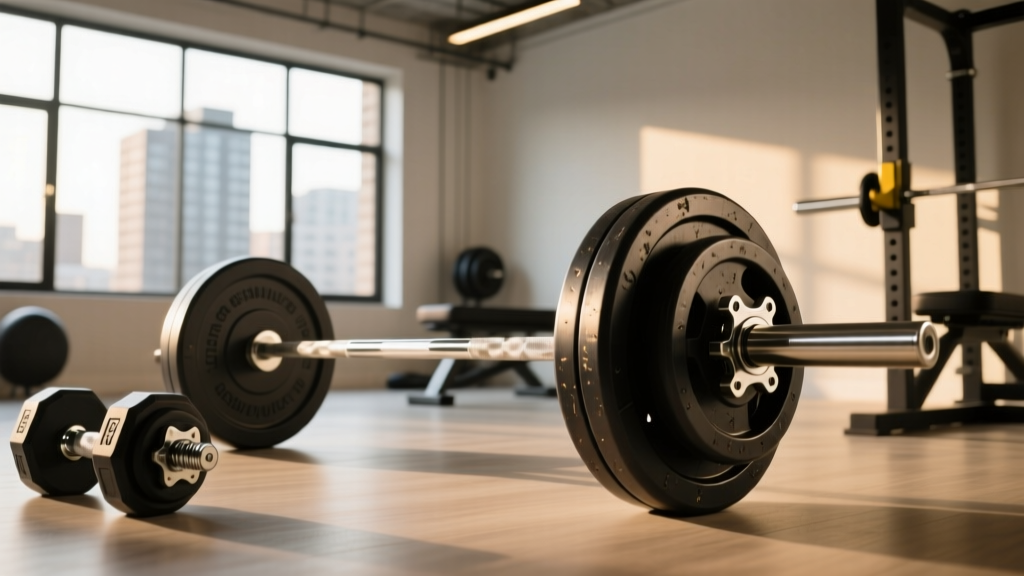
EZ Curl Bar vs Straight Bar & Plank Dumbbell Pass
Compare the EZ curl bar vs straight bar for bicep growth, and learn why pairing arm isolation with the plank dumbbell pass builds elite core stability.

The Biomechanical Divide: Wrist Angles and Bicep Heads
When building an elite arm and core training arsenal in 2026, the debate between the EZ curl bar vs straight bar remains a cornerstone of hypertrophy programming. But true functional strength requires more than just isolated elbow flexion. As a strength coach and gear reviewer, I have spent the last decade testing how isolation tools interact with full-body stabilizers. Today, we are breaking down the exact biomechanics of curl bars, reviewing the top models on the market, and explaining why I universally program the plank dumbbell pass as a finisher to bridge the gap between mirror-muscle isolation and athletic core stability.
According to kinesiology data from ExRx.net, the biceps brachii functions primarily as an elbow flexor and forearm supinator. The straight bar forces the wrists into full supination (palms facing directly up), which maximizes the recruitment of the short head of the bicep. However, this position also places significant valgus stress on the medial epicondyle of the elbow and the carpal joints. The EZ curl bar, with its 30-to-45-degree angled bends, allows for a semi-pronated grip, shifting a fraction of the load to the brachialis and brachioradialis while drastically reducing wrist strain.
Hands-On Gear Review: Top Bars for 2026
Not all bars are created equal. The tensile strength, knurl pattern, and sleeve construction dictate how the bar feels during high-rep hypertrophy sets.
Rogue Fitness Olympic Curl Bar (The Premium Pick)
Retailing at around $225, the Rogue Curl Bar is the gold standard for commercial and serious home gyms. It features a 35mm shaft diameter, which is slightly thicker than standard Olympic bars, providing a meatier grip that increases forearm activation. The bar utilizes high-quality bronze bushings in the sleeves, ensuring smooth rotation during strict curls without the erratic "whip" found in cheaper bars. The knurling is aggressive enough to hold chalked hands during heavy 8-rep max sets, but not so sharp that it tears your calluses.
Titan Fitness 4ft Straight Olympic Bar (The Mass Builder)
For lifters who prefer the strict supination of a straight bar but want to avoid the 45-pound starting weight and 7-foot length of a standard power bar, the Titan Fitness 4ft Straight Curl Bar (approx. $89) is an exceptional budget-friendly option. Weighing in at 18 lbs, it allows for precise micro-loading. The 50mm sleeves accommodate standard Olympic plates, and the rigid shaft ensures zero energy leak during heavy eccentric negatives.
Comparison Matrix: Isolation Tools
| Feature | Premium EZ Curl Bar | 4ft Straight Bar | Hex Dumbbells (For Pass) |
|---|---|---|---|
| Primary Target | Brachialis / Long Head | Short Head / Peak | Core / Grip / Shoulders |
| Wrist Stress | Low (Semi-pronated) | High (Fully supinated) | Neutral (Wrist stacked) |
| Avg. Price (2026) | $180 - $250 | $75 - $120 | $2.50 - $4.00 / lb |
| Best For | Lifters with wrist/elbow pain | Strict mass-building phases | Anti-rotation & stability |
Functional Integration: The Plank Dumbbell Pass
Why pair a bicep-focused barbell review with a core exercise? Because isolated arm training often neglects the anterior core and anti-rotational stabilizers required for real-world strength. After heavily taxing the elbow flexors and grip with barbell curls, the central nervous system is primed for functional stabilization. This is where the plank dumbbell pass (also known as the plank drag or pull-through) becomes an indispensable tool in my programming.
Research highlighted by Stronger By Science emphasizes that grip strength and core rigidity are the limiting factors in transferring isolated muscle mass into functional athletic output. The plank dumbbell pass forces the transverse abdominis and obliques to resist rotation while the lats and grip muscles manage a shifting load.
⚠️ Gear Warning: Never Use Round DumbbellsWhen executing the plank dumbbell pass, you must use urethane or rubber hex dumbbells (like the Fringe Sport Hex series or Rogue Urethane). If you use round-headed dumbbells, the weight will roll unpredictably across the floor as you pass it, potentially causing severe shoulder impingement, facial injuries, or wrist sprains. The flat edges of hex dumbbells provide a dead-stop, allowing for safe, controlled drags.
Execution and Edge Cases
- The Setup: Assume a standard push-up plank position with your feet slightly wider than shoulder-width to create a stable base. Place a 20 lb to 35 lb hex dumbbell on the floor just outside your right hand.
- The Drag: Reach under your torso with your left hand, grab the dumbbell, and drag it across the floor to the left side of your body.
- The Anti-Rotation Cue: The most common failure mode is allowing the hips to sway or pike upward to accommodate the weight. Imagine balancing a glass of water on your lumbar spine. Your hips must remain entirely square to the floor.
- The Return: Reach under with your right hand and drag the dumbbell back to the starting position. That constitutes one repetition.
The 2026 Arm & Core Superset Protocol
To maximize time efficiency and leverage post-activation potentiation, I use the following superset structure with my advanced clients. This protocol pairs the mechanical tension of the straight/EZ bar with the metabolic core demand of the plank dumbbell pass.
- A1. EZ Curl Bar Strict Curls: 4 sets x 8-10 reps (Focus on a 3-second eccentric lowering phase. Use the 30-degree grip angle to spare the wrists).
- A2. Plank Dumbbell Pass: 4 sets x 12-16 total drags (Use a moderate weight; the goal is core anti-rotation, not max shoulder loading).
- B1. 4ft Straight Bar Reverse Curls: 3 sets x 12-15 reps (Targets the brachioradialis and builds the forearm extensors).
- B2. Weighted Plank Hold: 3 sets x 45 seconds (A 25lb plate resting on the mid-back to finish the anterior core).
According to core stabilization guidelines from the Mayo Clinic, anti-rotational exercises like the plank drag are vastly superior to traditional crunches for protecting the lumbar spine while building athletic rigidity. By placing this movement immediately after heavy bicep isolation, you force the fatigued grip and forearm muscles to stabilize the core, mimicking the demands of grappling, contact sports, and heavy odd-object carries.
Frequently Asked Questions
Can I use a standard 7ft Olympic barbell for straight bar curls?
Yes, but it is highly impractical for most home gyms. A 7ft barbell weighs 45 lbs before you add plates, which is too heavy for strict bicep isolation for most natural lifters. Furthermore, the bar will physically hit your torso during the concentric phase unless you have exceptionally long arms. A dedicated 4ft straight curl bar or an EZ curl bar is a vastly superior investment for hypertrophy.
What weight should I use for the plank dumbbell pass?
Start exceptionally light—around 15 to 20 pounds. The limiting factor in this exercise is not your shoulder strength, but your core's ability to resist rotational torque. If your hips are rocking side-to-side, the weight is too heavy. Progress to 35-40 lb hex dumbbells only once you can maintain perfect spinal alignment for 20 continuous drags.
Which is better for avoiding elbow tendonitis: EZ bar or straight bar?
The EZ curl bar is universally recommended for lifters suffering from medial epicondylitis (golfer's elbow) or wrist carpal tunnel issues. The semi-pronated grip aligns the radius and ulna bones in a more natural, stress-free position, allowing you to continue training the elbow flexors without exacerbating connective tissue inflammation.
More gear to consider
All reviews
Incline Dumbbell Row Muscles Worked: Home Setup & Neoprene Guide

Master the Dumbbell Bench Press with Neoprene Home Weights
Shoulder Press with Dumbbells Stalled? Cast Iron vs Competition
2026 Market Trends: Bumper vs Iron Plates & Lats With Dumbbells
Barbell Collars Compared: Securing Squats & Dumbbell Floor Press