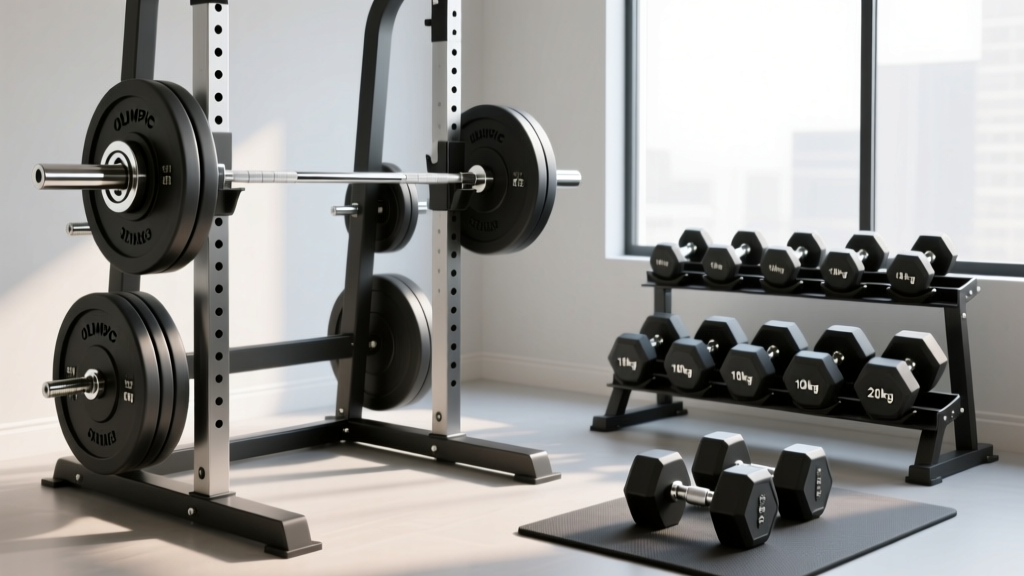
How to Get Bigger Arms with Dumbbells vs. Olympic Barbells
Learn how to get bigger arms with dumbbells vs. Olympic barbells. Our 2026 guide breaks down barbell weight, shaft diameter, and knurling for arm growth.

When lifters first search for how to get bigger arms with dumbbells, they are usually met with endless lists of isolation exercises: hammer curls, tricep kickbacks, and lateral raises. Dumbbells are phenomenal for fixing muscular imbalances and achieving a deep stretch. However, as you advance past the intermediate stage, you will inevitably hit a hypertrophy plateau. The solution? Transitioning to heavy, progressive overload using an Olympic barbell.
While the search intent behind dumbbell arm training is valid, serious mass builders know that close-grip bench presses, heavy barbell curls, and skull crushers require the stability and micro-loading capabilities of a high-quality barbell. But not all barbells are created equal. If you are buying an Olympic barbell specifically to maximize arm and upper-body hypertrophy, you must understand the intricate details of barbell weight, shaft diameter, and knurling patterns. This in-depth 2026 buying guide will bridge the gap between dumbbell isolation and barbell mass-building.
The Dumbbell Plateau: Why You Need an Olympic Barbell
Dumbbells typically increase in 5-pound increments. When you are trying to add mass to your biceps and triceps, a 5-pound jump per hand (10 pounds total) is a massive leap that often compromises form and shifts the tension away from the target muscle. An Olympic barbell allows for micro-loading. Using fractional plates (0.5 lb or 1 lb), you can progressively overload your strict barbell curls by just 1 pound a week, ensuring continuous mechanical tension without breaking down your biomechanics.
'Hypertrophy is driven by mechanical tension and progressive overload. While dumbbells offer a great range of motion, the barbell remains the undisputed king of absolute load management for upper-body pressing and curling movements.' — Stronger By Science
Decoding Olympic Barbell Weights and Dimensions
When shopping for a barbell to complement your arm training, the overall weight and shaft dimensions dictate how the bar feels in your hands during supination (curls) and pronation (tricep extensions).
Standard 20kg vs. 15kg Bars
A standard men's Olympic barbell weighs exactly 20kg (44 lbs) and is 2.2 meters long. A women's Olympic barbell weighs 15kg (33 lbs) and is slightly shorter at 2.01 meters. For arm training, the 15kg bar is often preferred by lifters with smaller hands or those who want to start their strict curls with a lower baseline weight, allowing for more precise micro-loading on the sleeves.
Shaft Diameter: The Grip Factor
The diameter of the barbell shaft is arguably the most critical spec for arm training. If the bar is too thick, your forearms will fatigue before your biceps do during heavy curls.
- 28mm: Standard for Olympic weightlifting. Excellent for smaller hands and provides a slight 'whip' that some lifters enjoy during dynamic movements.
- 28.5mm: The gold standard for multi-purpose and powerlifting bars. It offers a rigid, stable feel that is perfect for heavy close-grip bench presses and strict barbell curls.
- 29mm - 32mm: Found on specialized deadlift or squat bars. Avoid these for arm training, as the thick shaft will severely limit your grip strength during isolation exercises.
Knurling: The Secret to Heavy Arm Training
Knurling is the cross-hatched pattern machined into the steel shaft to provide grip. When you are sweating through a heavy set of skull crushers or barbell curls, a poor knurl will cause the bar to slip, forcing you to squeeze harder and prematurely fatiguing your forearms. According to comprehensive equipment reviews by BarBend, understanding knurl geometry is essential for matching a bar to your specific training style.
Knurl Geometries: Volcano, Mountain, and Hill
Expert Callout: The Volcano KnurlIf your primary goal is heavy arm hypertrophy without tearing your calluses, look for a Volcano knurl (popularized by Rogue Fitness). Unlike a 'Mountain' knurl which comes to a sharp, aggressive point, a Volcano knurl features a rimmed crater design. It provides maximum surface area for grip traction without acting like a cheese grater on your palms during high-rep tricep extensions.
Aggressiveness and Finish
The aggressiveness of the knurl is heavily influenced by the bar's finish. A Hard Chrome or Stainless Steel finish leaves the knurl sharp and aggressive, ideal for heavy, low-rep strength work. Conversely, a Cerakote or Black Zinc finish slightly fills in the knurl valleys, resulting in a smoother, more moderate feel that is much better for high-volume arm days where skin tearing is a risk.
Do You Need a Center Knurl?
For dedicated arm and upper-body training, skip the center knurl. A center knurl is designed to grip the back of your shirt during heavy back squats. When performing close-grip bench presses or front-rack holds for tricep work, an aggressive center knurl will scrape and irritate your sternum and collarbone.
2026 Comparison Matrix: Top Barbells for Arm Hypertrophy
Below is a comparison of the top Olympic barbells on the market in 2026, evaluated specifically for their suitability for heavy arm and upper-body accessory work.
| Barbell Model | Weight / Shaft | Knurl Type & Finish | Tensile Strength | Est. Price (2026) |
|---|---|---|---|---|
| Rogue Ohio Bar | 20kg / 28.5mm | Volcano (Moderate) / Cerakote or Stainless | 190,000 PSI | $225 - $295 |
| REP Fitness Colorado Bar | 20kg / 28.5mm | Volcano (Medium) / Hard Chrome or Cerakote | 190,000 PSI | $189 - $229 |
| Kabuki Strength New Gen | 20kg / 28.5mm | Custom Volcano (Aggressive) / Black Cerakote | 200,000+ PSI | $349 - $399 |
| Eleiko Olympic WL Bar | 20kg / 28.0mm | Mountain (Light/Moderate) / Hard Chrome | 215,000 PSI | $900 - $1,100 |
Step-by-Step: Transitioning Your Arm Routine
Now that you have selected the proper barbell, how do you integrate it into a routine previously built around the question of how to get bigger arms with dumbbells? Follow this progressive framework:
- Phase 1: Neurological Adaptation (Weeks 1-3)
Replace your heaviest dumbbell pressing movement with the Close-Grip Barbell Bench Press. Keep your hands shoulder-width apart (not touching) to maximize tricep activation while protecting the wrists. Use the 28.5mm shaft to build grip endurance. - Phase 2: Mechanical Tension (Weeks 4-7)
Introduce the Strict Barbell Curl. Eliminate all hip hinge and momentum. The rigid nature of the barbell forces both biceps to work in perfect unison. Utilize fractional plates to add just 0.5 lbs to the bar each week. - Phase 3: Eccentric Overload (Weeks 8-10)
Use the barbell for Weighted Eccentric Skull Crushers. Load the bar 10% heavier than your 10-rep max. Use a spotter to help you lift the weight, then lower it to your forehead over a strict 4-second count. The knurling will keep the bar secure in your grip even as your triceps fail.
Final Verdict: Beyond the Dumbbell Rack
Knowing how to get bigger arms with dumbbells is an essential chapter in every lifter's journey, but it is not the entire book. To build truly dense, thick arms that push past genetic plateaus, the absolute load and micro-loading precision of an Olympic barbell are mandatory. By prioritizing a 28mm to 28.5mm shaft diameter, selecting a Volcano or moderate knurl pattern, and opting for a durable finish like Cerakote or Stainless Steel, you will equip yourself with a tool that transforms your arm training from a high-rep endurance test into a pure, mass-building mechanical overload. Invest in the right steel, respect the progressive overload, and watch your arms grow.
More gear to consider
All reviews
2026 Trend: Loadable Dumbbells for an Athlean X Dumbbell Workout
Dumbbell Training Program Stalled? Olympic vs Standard Plate Fixes

Dumbbell Skull Crusher Exercise: Rubber Hex vs Urethane Budget Guide

Barbell Collars Compared: Heavy Squats vs Split Squat with Dumbbell

Rubber Hex vs Urethane Dumbbells: Layout and Dumbbell Recall Risks