
Dumbbells Bench & Rack Budget: Bumper vs Iron Plate Value
Analyze the true cost of bumper vs iron plates for your home gym. Learn how to balance your weight budget alongside a premium dumbbells bench setup.

The Home Gym Budget Bottleneck in 2026
Outfitting a home gym requires ruthless financial prioritization. When planning your floor layout and equipment roster, the adjustable dumbbells bench station often competes directly for budget space with your barbell plate selection. In 2026, with steel tariffs and rubber supply chain fluctuations stabilizing but remaining elevated, the cost-per-pound of weight plates dictates the ceiling of your entire setup.
The most common dilemma for intermediate lifters is choosing between traditional cast iron plates and modern bumper plates. This decision is not just about aesthetics or noise reduction; it fundamentally alters your budget allocation strategy. Do you spend top dollar on virgin rubber bumpers, or do you buy barebones iron and funnel the savings into a high-end adjustable dumbbells bench and premium hex dumbbell set? This guide breaks down the exact material costs, failure modes, and strategic budget frameworks to help you maximize your equipment ROI.
Cast Iron Plates: The Baseline Cost-Per-Pound
Cast iron remains the undisputed king of budget-friendly loading. Manufactured through a simple sand-casting process, iron plates offer the highest density and lowest cost-per-pound on the market. However, evaluating their true value requires looking beyond the initial purchase price.
Real-World Pricing and Market Options
As of early 2026, you can expect to pay between $1.20 and $1.80 per pound for standard cast iron plates. Generic imports found on Amazon or Walmart often hover at the $1.20 mark, but they suffer from severe weight calibration variances (sometimes off by 3-5%). Premium domestic or high-tier imported options, such as the Rogue Cast Iron Plates or Titan Fitness Machined Iron, cost closer to $1.75/lb but offer machine-faced flatness and accurate calibration within 1%.
Failure Modes and Edge Cases
- Oxidation and Rust: Uncoated or poorly painted iron will oxidize rapidly in non-climate-controlled garages. Restoring rusted plates requires a wire-wheel attachment on an angle grinder and a fresh coat of Rust-Oleum, adding 2-3 hours of maintenance labor per 100 lbs of plates.
- Acoustic and Structural Impact: Dropping cast iron on a standard concrete garage floor generates acoustic spikes exceeding 100 decibels. Over time, the sheer kinetic energy of dropped iron will spall concrete and crack floor tiles.
- Caliper Thickness: Iron plates are incredibly dense. You can easily fit 500+ lbs on a standard Olympic barbell sleeve, making them ideal for powerlifters who need massive absolute loads without running out of sleeve real estate.
Bumper Plates: Paying for Protection and Performance
Bumper plates were engineered for Olympic weightlifting, designed to be dropped from overhead without destroying the barbell, the floor, or the plate itself. According to comprehensive equipment analyses by Garage Gym Reviews, the bumper plate market has segmented into three distinct tiers, each with a vastly different value proposition.
Material Breakdown: Crumb vs. Virgin Rubber
Crumb Rubber Bumpers: Made from recycled tires compressed with a polyurethane binder, crumb bumpers (like the REP Fitness Crumb Bumpers) are the budget entry point for rubber, costing roughly $2.00 to $2.50 per pound. They are incredibly durable and deaden sound exceptionally well. However, their failure mode is edge-chipping if dropped repeatedly on rough concrete, and they emit a distinct tire-rubber odor that can take months to off-gas in an enclosed space.
Virgin Rubber Bumpers: Manufactured from new, unrecycled rubber, these plates (such as the Fringe Sport Black Bumpers) offer a cleaner finish, minimal odor, and a slightly more 'lively' bounce. They typically cost $3.50 to $4.50 per pound. The primary edge case to watch for is the 'hook' failure, where the metal center insert separates from the rubber webbing after thousands of drops.
Warning: The IWF Diameter StandardWhen buying bumpers for floor presses or deficit work off a bench, ensure the plates meet the International Weightlifting Federation (IWF) standard of exactly 450mm (17.7 inches) in diameter. Many cheap 10lb and 15lb bumpers are manufactured with a smaller diameter to save material costs. If you load these smaller plates alongside standard 45lb bumpers, the smaller plates will never touch the ground, transferring 100% of the dropping force to the larger plates and bending your barbell sleeve.
2026 Plate Pricing & Durability Matrix
To visualize the budget breakdown, refer to the matrix below. Data reflects average direct-to-consumer pricing for a standard 230 lb plate package (two 45s, two 25s, two 10s, two 5s).
| Plate Category | Avg Cost / lb | Total Cost (230 lbs) | Drop Tolerance | Best Use Case |
|---|---|---|---|---|
| Basic Cast Iron | $1.30 | $299 | Zero (Do Not Drop) | Strict Powerlifting, Hypertrophy |
| Machined Iron | $1.75 | $402 | Very Low | Heavy Bench, Squat, Deadlift |
| Crumb Rubber Bumper | $2.25 | $517 | High (Dead Bounce) | CrossFit, Garage Gyms |
| Virgin Rubber Bumper | $4.20 | $966 | Very High | Olympic Weightlifting |
The Dumbbells Bench Dilemma: Where Should Your Money Go?
This is where strategic budget allocation separates novice buyers from seasoned home gym builders. Your training modality should dictate whether you overspend on plates or overspend on your isolation equipment. According to programming insights featured on BarBend, matching your equipment to your actual movement patterns prevents severe buyer's remorse.
Scenario A: The Hypertrophy & Bodybuilding Focus
If 70% of your training involves an adjustable dumbbells bench for incline presses, chest flyes, single-arm rows, and seated shoulder work, your barbell is mostly used for controlled, non-dropping movements like heavy bench presses and squats.
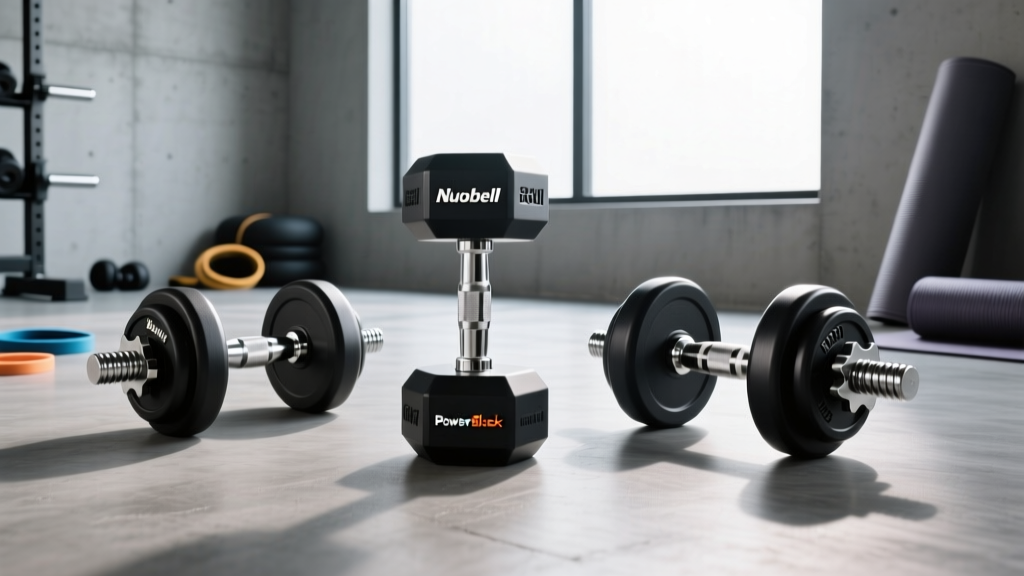
The Budget Play: Buy basic cast iron plates ($300 for 230 lbs). Take the $600+ you saved by avoiding bumpers and invest it into a premium adjustable dumbbells bench ecosystem. Purchase a set of Nuobell adjustable dumbbells (up to 80 lbs) and pair them with a commercial-grade adjustable bench like the Rogue AB-3. This gives you a massive range of motion and isolation options without compromising your heavy barbell loading.Scenario B: The Functional Fitness & WOD Athlete
If your programming includes high-rep Olympic lifts, touch-and-go deadlifts, and barbell cycling, dropping the bar is a mandatory part of your training. In this scenario, the dumbbells bench is a secondary tool used only for occasional accessory work like step-ups or floor-press variations.
The Budget Play: Spend the premium on Crumb Rubber Bumpers ($517 for 230 lbs) to protect your floors and equipment during high-fatigue drops. Save money on the bench by purchasing a basic, heavy-duty flat utility bench (around $120-$150) rather than an expensive adjustable model, as your dumbbell work will be minimal and mostly flat-based.Hidden Costs: Flooring, Sleeves, and Maintenance
When calculating the true value of your plate selection, you must factor in the peripheral costs that each material demands.
- Subfloor Reinforcement: If you choose cast iron, you must invest in heavy-duty horse stall mats (minimum 3/4-inch thick vulcanized rubber) layered over plywood to prevent concrete spalling. This adds roughly $150-$200 to your initial setup cost. Bumper plates can often be used safely on a single layer of standard rubber flooring.
- Barbell Sleeve Length: Bumper plates are significantly thicker than iron. A standard 45lb iron plate is roughly 1.3 inches thick, while a 45lb competition bumper can be up to 3.5 inches thick. If you are loading 300+ lbs using thick crumb bumpers, you may max out the 16.3-inch sleeve length of a standard Olympic barbell, forcing you to upgrade to a specialized deadlift bar with longer sleeves.
- UV and Ozone Degradation: If your home gym is a garage with large windows or open doors, UV exposure will dry out and crack virgin rubber bumpers over a 3-to-5-year span. Iron plates are immune to UV degradation, making them a superior long-term investment for sunlit spaces.
Final Value Verdict
The debate between bumper and iron plates is ultimately a question of kinetic energy management and training intent. If your routine is anchored by heavy, controlled barbell lifts and high-volume isolation work on a premium dumbbells bench, cast iron provides unbeatable density, sleeve capacity, and cost-efficiency. The money saved is far better spent on high-quality adjustable dumbbells and a sturdy, multi-angle bench.
Conversely, if your training involves dropping the barbell from the shoulder or overhead, bumpers are not a luxury; they are a mandatory insurance policy for your flooring, your barbell, and your hearing. By accurately assessing your actual training split, you can manipulate the 2026 equipment market to build a highly specialized, budget-optimized gym that perfectly mirrors your athletic goals.
More gear to consider
All reviews
Trade Old Dumbbells: Cast Iron vs Competition Kettlebell Value

Pectoral Dumbbell Workouts & Kettlebell ROI: Cast Iron vs. Competition
Best Adjustable Dumbbells for Your Shoulders Dumbbell Workout (2026)

EZ vs Straight Bar Longevity: Curls & Dumbbell Shoulder Shrugs
Optimizing Good Chest Workouts With Dumbbells: 2026 Rack Trends
