
Is Dumbbell Bench Press Harder Than Barbell? (Plate Guide)
We answer if dumbbell bench press is harder than barbell, then dive deep into our hands-on bumper plate vs iron plate comparison for your home gym.

The Great Bench Press Debate: Implement and Plate Selection
Optimizing your bench press requires more than just a sturdy rack and a flat bench; it demands a precise understanding of biomechanics and the physical equipment you load onto the bar. As home gym builders and strength athletes refine their setups in 2026, two major questions continually surface in our FitGearPulse testing lab. First, the implement debate: is dumbbell bench press harder than barbell? Second, the loading debate: should you invest in traditional cast iron or modern urethane/rubber bumpers? In this hands-on review, we break down the neuromuscular demands of both pressing variations and provide a definitive bumper plate vs iron plate comparison to help you build the ultimate benching station.
Is Dumbbell Bench Press Harder Than Barbell? The Biomechanics
The short answer is yes, the dumbbell bench press is neurologically and stabilizing-wise 'harder' than the barbell bench press, even though you will typically move less absolute load. When you ask is dumbbell bench press harder than barbell, you have to separate absolute strength from stabilizer recruitment.
Stabilizer Muscle Activation
Because a barbell locks your hands into a fixed, synchronous path, your central nervous system (CNS) can focus purely on prime mover output (pectoralis major, anterior deltoids, triceps). Dumbbells, however, require independent stabilization in three planes of motion. A landmark study published in the Journal of Strength and Conditioning Research demonstrated that dumbbell bench presses elicit significantly higher activation in the anterior deltoid and pectoralis minor compared to barbell presses, while the triceps brachii activation is actually lower due to the natural converging arc of the dumbbells at the top of the movement.
Expert Data Point: Most intermediate lifters will find their 10-rep max (10RM) with dumbbells is roughly 70% to 75% of their barbell 10RM. If you barbell bench 225 lbs for 10 reps, you will likely struggle to press 80 lb dumbbells for the same reps due to the energy leak in stabilizer fatigue.Range of Motion and Stretch Reflex
Dumbbells allow for a deeper stretch at the bottom of the movement, bypassing the point where the barbell would physically rest on your sternum. This increased range of motion (ROM) causes more micro-tearing in the muscle fascia, making the eccentric phase 'harder' and highly effective for hypertrophy. However, for pure 1-rep max (1RM) powerlifting strength, the barbell remains king due to the ability to harness the stretch reflex and full-body leg drive without the fear of a stabilizer muscle giving out asymmetrically.
Bumper Plate vs Iron Plate: The Core Comparison
Once you have selected your implement, you must load the bar. The bumper plate vs iron plate comparison is critical for benching, as plate thickness, barbell whip, and sleeve real estate directly impact your lift-off and lockout.
Many lifters assume bumpers are only for Olympic weightlifting. But in a multi-use home gym, the choice between iron and bumpers dictates your barbell's balance, sleeve capacity, and the longevity of your flooring if you ever bail on a rep.
Material Density and Sleeve Real Estate
Cast iron is significantly denser than rubber or urethane. A standard 45 lb machined iron plate is roughly 1.1 to 1.3 inches thick. A 45 lb bumper plate is universally 3.25 inches thick to meet International Weightlifting Federation (IWF) drop standards. When you are loading the bar for a heavy 315+ lb bench press, iron plates allow you to keep the weight closer to the center of the barbell sleeve, reducing lateral sway and 'barbell whip' during the lift-off.
| Feature | Cast Iron Plates | Rubber Bumper Plates |
|---|---|---|
| Average Cost (2026) | $1.50 - $2.20 / lb | $3.50 - $5.50 / lb |
| 45 lb Plate Thickness | ~1.2 inches | ~3.25 inches |
| Max Sleeve Capacity | ~450+ lbs per side | ~300 lbs per side |
| Barbell Whip/Sway | Minimal (Weight centralized) | Higher (Weight pushed outward) |
| Drop Safety | Poor (Will crack tile/concrete) | Excellent (Dead bounce) |
Hands-On Review: 2026 Top Picks for the Bench
Our testing team spent the last six months rotating through various plate configurations on our Rogue S-2 Squat Stand and Rep Fitness FB-5000 bench setup. Here are our top picks for dedicated bench press and general pressing needs.
Best Iron Plates: Titan Fitness Cast Iron Grips
For pure bench press optimization, the Titan Fitness Cast Iron Plates are our 2026 top pick. Priced at an aggressive $1.89 per pound, these plates feature machined edges and a raised lip, making them easy to load and unload from the floor—a crucial detail when you are fatigued after heavy triple sets. The enamel coating resists chipping far better than traditional painted plates, and the slim profile allows you to load up to five 45s and a pair of 25s on a standard Olympic sleeve without needing an extension.
- Pros: Ultra-slim profile, easy-grip raised lips, highly affordable, minimal barbell sway.
- Cons: Will destroy unprotected concrete or hardwood floors if dropped; prone to surface rust in unclimate-controlled garages.
Best Bumper Plates: Rogue Black Echo Bumpers (V3)
If your home gym features a single barbell used for both heavy benching and high-rep CrossFit-style workouts, the Rogue Echo Bumpers remain the gold standard. The virgin rubber formulation offers a durometer rating of 85, meaning it has a 'dead bounce' that won't launch the bar back into your face if you dump a failed rep (though we always recommend using spotter arms). The stainless steel insert hub is heavily reinforced, preventing the common failure mode of the rubber tearing away from the collar.
- Pros: Protects flooring, low odor compared to recycled rubber, highly durable steel insert hub.
- Cons: Expensive ($3.50+/lb), thickness limits max loading capacity on the sleeve, wider profile can feel cumbersome during tight bench setups.
Real-World Failure Modes & Edge Cases
When investing hundreds of dollars in free weights, you must consider how the equipment degrades over time. Based on our long-term testing, here are the edge cases to watch for:
1. The Bumper Plate 'Taco' Effect
Cheaper, recycled-rubber bumper plates (often found on Amazon for under $2.50/lb) suffer from a structural failure known as 'taco-ing'. When stored vertically on a plate tree, the thin 10 lb and 15 lb bumpers will warp and fold inward like a taco due to the heavy steel hub pulling through the low-density rubber. Fix: Always store lighter bumpers horizontally, or invest in urethane-coated competition plates if vertical storage is mandatory.
2. Iron Plate Enamel Chipping and Rust
Cast iron plates coated in cheap paint will chip at the edges where plates clang together during loading. Once the bare iron is exposed to the humidity of a garage gym, surface rust forms within 48 hours, transferring orange dust to your barbell sleeves and hands. Fix: Wipe down iron plates with a light coat of 3-IN-ONE oil or mineral oil twice a year, and opt for baked enamel or zinc-plated finishes if your budget allows.
Decision Framework: Which Setup Should You Buy?
To finalize your gym build, use this framework to match your plates to your pressing goals:
- The Powerlifter / Strength Maximizer: Buy Cast Iron. You need the dense, slim profile to keep the weight centralized on the barbell sleeve, reducing oscillation during heavy 1RM bench attempts. Pair with dumbbells for accessory hypertrophy work.
- The Garage Gym Generalist: Buy Bumper Plates. If you are doing cleans, snatches, and high-rep WODs in addition to bench pressing, the floor protection and drop-safety of bumpers outweigh the slight increase in barbell whip.
- The Hypertrophy / Rehab Focus: Prioritize a high-quality set of Adjustable Dumbbells (like the Nuobell or PowerBlock Pro EXP) over a massive plate collection. Since the dumbbell bench press is harder on stabilizers and offers a superior stretch for chest development, adjustable dumbbells provide a better ROI for pure muscle building than loading a barbell with 400 lbs of iron.
FAQ: Benching, Plates, and Biomechanics
Can I mix bumper plates and iron plates on the same barbell?
Yes, but with a strict rule: always put the iron plates on the outside. If you put a 45 lb iron plate on the sleeve first and a 45 lb bumper plate on the outside, and then drop the bar, the bumper will compress. Because the iron plate has a smaller diameter (typically 17.5 inches vs the bumper's 17.7 inches), the iron plate will strike the floor directly, defeating the purpose of the bumper and potentially shattering the iron or damaging the floor. (Note: 45lb bumpers and 45lb iron plates share a ~17.5" diameter, but thinner 25lb and 10lb iron plates are much smaller and will absolutely strike the ground if placed outside a bumper).
Why do my dumbbells feel heavier than the barbell at the same weight?
This ties directly back to our opening question: is dumbbell bench press harder than barbell? Yes. A barbell allows your stronger side to subconsciously compensate for your weaker side. Dumbbells isolate each limb, exposing bilateral deficits and requiring immense core and rotator cuff stabilization, which accelerates central nervous system (CNS) fatigue, making the weight feel subjectively heavier.
For more in-depth reviews on squat racks, barbell whip ratings, and bench pad firmness, explore our complete Rogue Fitness and BarBend cross-referenced buying guides.
More gear to consider
All reviews
Top Neoprene Reverse Curls Dumbbells for Home Use (2026)

Single Arm Dumbbell Row Muscles Worked: Rack Maintenance Guide
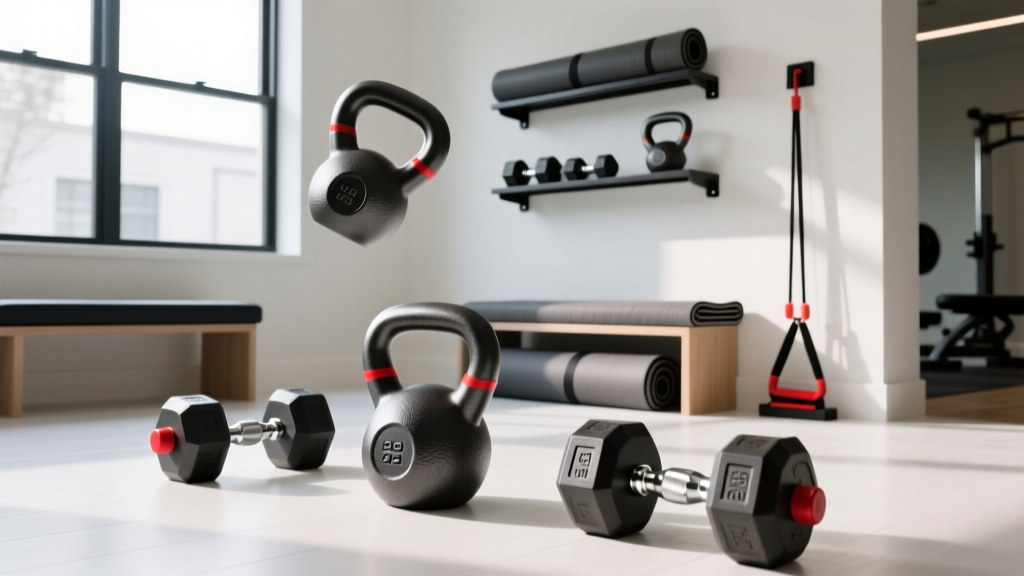
Optimizing Space: Kettlebell Guide & Bicep Tricep Dumbbell Exercises
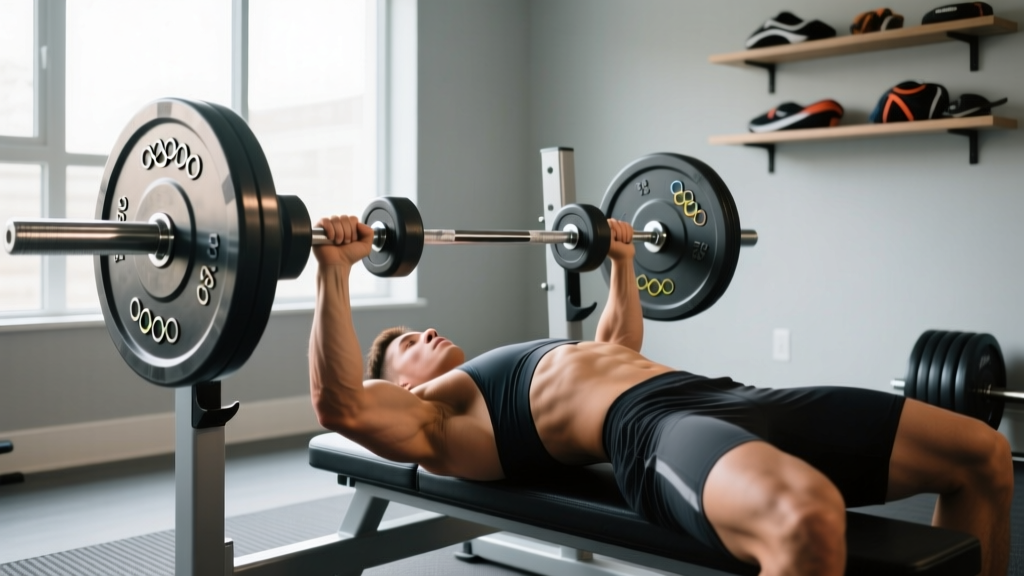
Olympic vs Standard Plates & Proper Dumbbell Bench Press Form

Barbell Buying Guide: Weight, Knurling & Dumbbell Spotting
