Olympic vs Standard Plates: Dumbbell Step Over Space Mistakes
Avoid home gym tripping hazards during a dumbbell step over. We troubleshoot Olympic vs standard weight plate storage, clearance, and buying mistakes.

The Hidden Danger in Your Home Gym Layout
When athletes build a home gym, the focus is usually on the big ticket items: the power rack, the barbell, and the adjustable dumbbells. However, the most common cause of home gym injuries isn't equipment failure—it's poor spatial planning and improper weight storage. This becomes glaringly obvious when performing dynamic, floor-based agility drills like the dumbbell step over.
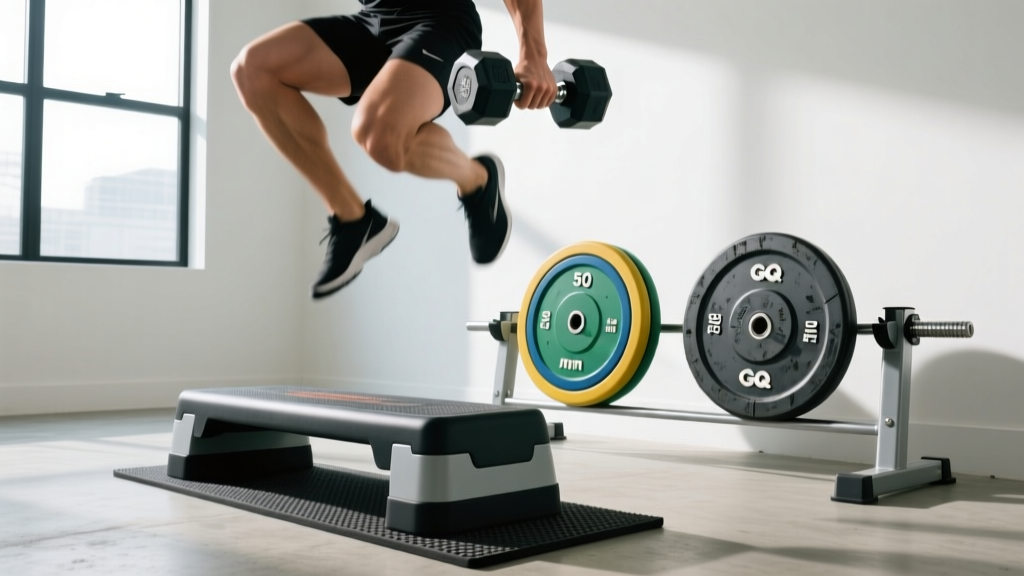
The dumbbell step over is a fantastic lateral plyometric and conditioning drill. You place a 20 to 35-pound hex dumbbell on the floor and rapidly step or bound over it laterally. But if your gym floor is cluttered with loose weight plates because you made a critical error in choosing between Olympic vs standard weight plates, a simple misstep can lead to a severe ankle sprain, a torn Achilles, or a lacerated shin. This troubleshooting guide breaks down the common mistakes athletes make when buying weight plates and how those decisions directly impact your floor clearance and workout safety.
⚠️ SAFETY WARNING: Never perform dynamic footwork drills like the dumbbell step over in a space where cast iron plates are stacked flat on the floor. Standard 1-inch plates lack standardized outer diameters and beveled edges, creating unpredictable tripping hazards.The Core Problem: Standard vs. Olympic Plate Footprints
To troubleshoot your home gym layout, you first need to understand the mechanical and dimensional differences between the two primary weight plate categories. The choice you make here dictates your entire storage ecosystem.
| Feature | Standard Plates (1-Inch Hole) | Olympic Plates (2-Inch Hole) |
|---|---|---|
| Hole Diameter | 1 inch (25.4 mm) | 2 inches (50.8 mm) |
| Outer Diameter | Varies wildly by brand/weight | Standardized (e.g., 450mm for bumpers) |
| Storage Ecosystem | Poor (Few vertical trees exist) | Excellent (Trees, rack horns, sleds) |
| Floor Hazard Level | High (Often left on floor) | Low (Easily racked vertically) |
| Average Cost (2026) | $1.20 - $1.80 per lb | $2.50 - $4.50 per lb |
Why Standard Plates Fail the 'Floor Test'
Standard plates are often marketed to beginners as a budget-friendly entry point. While the upfront cost per pound is lower, the hidden cost is storage. Because the fitness industry standardized around 2-inch Olympic sleeves for power racks and barbells decades ago, 1-inch storage solutions are practically obsolete. You will struggle to find a high-quality, vertical weight tree for 1-inch plates. As a result, athletes resort to stacking them flat on the floor or leaning them against walls. When you are fatigued in the middle of a HIIT circuit, navigating around a stack of 10-inch wide, sharp-edged cast iron standard plates to perform a dumbbell step over is a recipe for disaster.
The Olympic Advantage for Dynamic Workouts
Olympic plates, particularly bumper plates, adhere to strict dimensional standards. According to Rogue Fitness specifications, standard Olympic bumper plates all share a uniform 450mm (17.7-inch) outer diameter regardless of weight. More importantly, the 2-inch center hole fits perfectly onto vertical weight trees, A-frame storage racks, and the weight horns of your power rack. This allows you to clear your floor space entirely, creating a safe, open 4-foot by 6-foot zone specifically designated for agility work like the dumbbell step over.
Troubleshooting Common Buying and Storage Mistakes
If your home gym feels cramped and dangerous during dynamic movements, you are likely suffering from one of the following common mistakes.
Mistake 1: The 'Budget Trap' and Incompatible Gear
The Error: Buying an Olympic barbell and a standard power rack, but purchasing standard 1-inch cast iron plates to save $150 on a 300lb set.
The Result: The plates don't fit the barbell. You end up buying cheap, unstable 1-inch adapters (which bend under heavy loads), and because you have no 1-inch storage tree, the plates live on the floor.
The Fix: Always match your plates to your barbell sleeve. If you own an Olympic barbell, only buy Olympic plates. The American Council on Exercise (ACE Fitness) consistently emphasizes that equipment compatibility is the first line of defense in home gym injury prevention.
Mistake 2: Stacking Plates Flat on Rubber Mats
The Error: Stacking 45lb plates flat on top of each other on the floor to 'save space'.
The Result: A 3-inch high, 17-inch wide disc of iron becomes a massive tripping hazard. During a lateral dumbbell step over, your peripheral vision is focused on the dumbbell, not the floor mat. Catching your heel on a flat-stacked plate causes sudden, violent ankle inversion.
The Fix: Invest in a vertical Olympic weight tree (typically $60 to $120). A vertical tree holds up to 600 lbs while occupying less than 2 square feet of floor space.
Mistake 3: Mixing Bumper and Cast Iron on the Floor
The Error: Leaving rubber bumper plates on the floor because 'they won't damage the mat if dropped.'
The Result: While bumpers won't crack your concrete, their 17.7-inch width creates a massive visual and physical blind spot.
The Fix: Implement a strict 'floor is lava' rule for all weight plates. The only equipment allowed on the floor during a workout is the active dumbbell or kettlebell being used for the drill.
How to Audit Your Space for the Dumbbell Step Over
To ensure your gym is safe for lateral agility drills, perform this 3-step spatial audit:
- Establish the Strike Zone: Measure a 4-foot wide by 6-foot long rectangle of floor space. This is the minimum required clearance for safe lateral bounding over a dumbbell.
- Identify the Perimeter Hazards: Look at the 2-foot border surrounding your strike zone. Are there standard plates leaning against the squat rack? Are there 10lb Olympic change plates scattered without a designated bin?
- Implement Micro-Storage: For small fractional plates (2.5lb, 5lb, 10lb) that don't fit well on standard weight trees, purchase a dedicated fractional plate wall mount or a small steel bin to keep them entirely off the workout floor.
'The most expensive piece of equipment in your gym isn't your rack; it's the physical therapy bill from tripping over a poorly stored 45-pound plate. Clear the floor, rack the iron, and respect your workout space.' — Home Gym Engineering Best Practices
Real-World Storage Solutions for 2026 Home Gyms
If you are currently dealing with the aftermath of buying the wrong plates, here is how to troubleshoot and upgrade your storage to reclaim your floor space:
- For Standard 1-Inch Plates: Since vertical trees are rare, look into heavy-duty steel wall-mounted plate brackets. You can bolt 1-inch pegs directly into your garage wall studs, getting the iron off the floor and out of your step-over zone.
- For Olympic Cast Iron: Purchase an A-frame weight tree. Ensure it has a wide, weighted base to prevent tipping when fully loaded with 45lb plates.
- For Olympic Bumpers: Utilize horizontal plate storage pegs that attach directly to the uprights of your power rack, or invest in a rolling plate caddy if you need to move them frequently.
FAQ: Plate Sizing and Gym Clearance
Can I just use standard plates for my adjustable dumbbells?
Many older spin-lock adjustable dumbbell handles use 1-inch standard sleeves. While fine for isolated upper body work, the plates themselves still need storage. Do not leave them scattered. Use a dedicated 1-inch wall rack to keep them out of your footwork zones.
Are urethane Olympic plates safer than rubber bumpers for floor clearance?
Urethane plates (often used in commercial gyms) are highly durable and resist chipping, but they still feature a 2-inch hole and require proper racking. From a tripping hazard perspective, leaving a 45lb urethane plate on the floor is just as dangerous as leaving a cast iron one. Always rack your weights vertically.
What is the ideal dumbbell weight for the step over drill?
For most athletes, a 20lb to 35lb hex rubber-coated dumbbell is ideal. Hex dumbbells won't roll away if bumped, providing a stable, predictable obstacle. Ensure the dumbbell is placed parallel to your line of sight to maximize ground clearance visibility.
Ultimately, the debate between Olympic vs standard weight plates isn't just about barbell compatibility or budget—it's fundamentally about how you manage your physical space. By choosing equipment that integrates with vertical storage solutions, you eliminate the tripping hazards that turn a simple dumbbell step over into a trip to the emergency room. Invest in the right iron, rack it properly, and keep your floor clear for the work that matters.
More gear to consider
All reviews
Neoprene Dumbbell Mistakes Ruining Your Dumbbell Workout for Men

Olympic Barbell Weight & Knurling Guide + Dumbbell Front Raise GIF
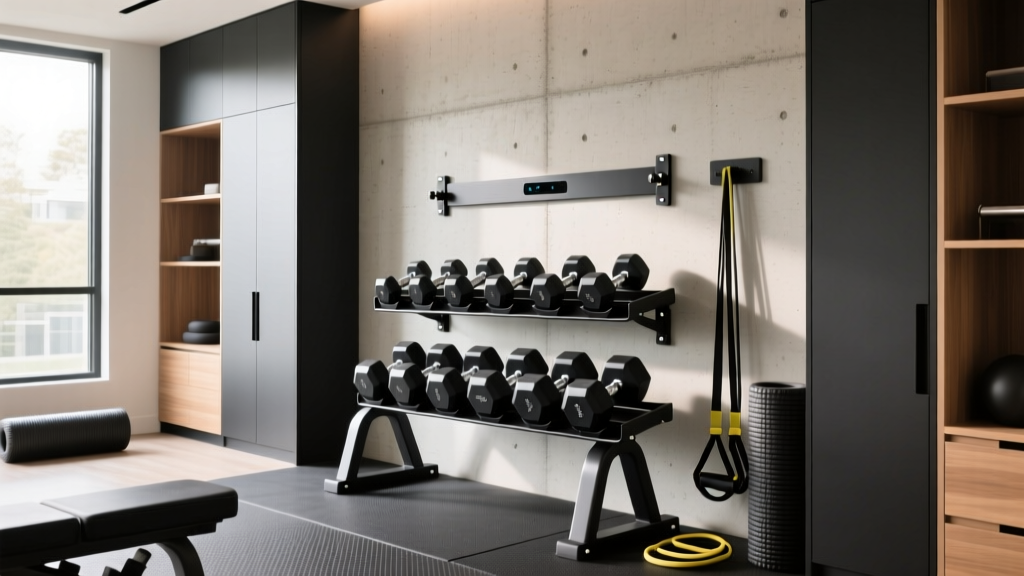
Beyond the Shake Weight Dumbbell: Smart Storage Layouts
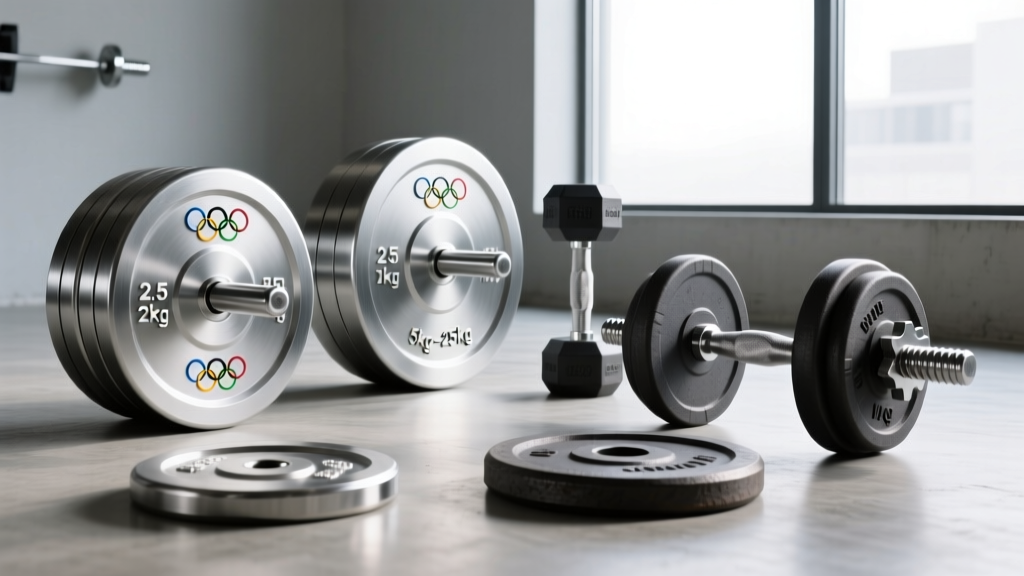
Standard vs Olympic Plates: Planning a Delt Workout with Dumbbells

Space Layouts for Working Out Only With Dumbbells: Loadable Plates
