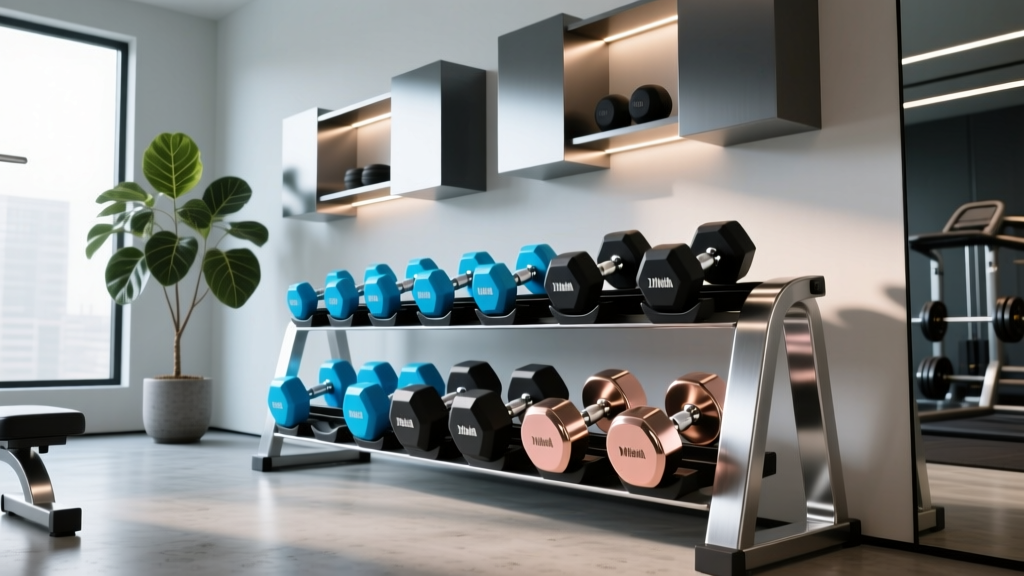
Optimize Your Dumbbell Schedule Workout: 2026 Rack & Storage Trends
Discover 2026 dumbbell rack and storage trends to optimize your dumbbell schedule workout. Compare top tiers, space-saving designs, and market shifts.

The Hidden Friction in Your Dumbbell Schedule Workout
When executing a high-volume dumbbell schedule workout, such as a 5-day push-pull-legs split utilizing drop-sets, supersets, and rest-pause techniques, transition time is a critical, often overlooked variable. Biomechanical pacing dictates that your muscles require specific rest intervals to clear metabolites and replenish ATP. If your physical environment creates friction—forcing you to dig through a disorganized pile of hex dumbbells on the floor—you lose 10 to 15 seconds per transition. Over a 60-minute session, that equates to up to 8 minutes of lost time under tension and disrupted metabolic stress.
As we move through 2026, the home and boutique gym market has recognized this bottleneck. The focus has shifted from merely acquiring weights to engineering the environment around them. Proper dumbbell rack and storage solutions are no longer just about aesthetics; they are performance-enhancing tools designed to streamline your dumbbell schedule workout, enforce progressive overload tracking, and mitigate safety hazards associated with asymmetrical loading.
2026 Market Shifts: The Evolution of Dumbbell Storage
The global fitness equipment market has seen a distinct pivot toward modular and space-efficient storage. According to recent industry analyses by Grand View Research, the home fitness storage segment is experiencing a 14% CAGR, driven by consumers upgrading from temporary pandemic-era setups to permanent, optimized garage and basement gyms.
Furthermore, the integration of smart-gym ecosystems has influenced physical storage. While 'smart racks' that auto-inventory weights remain a niche luxury, the physical design of racks has adapted to accommodate RFID-tagged dumbbells and adjustable dumbbell cradles, requiring wider shelf clearances and reinforced weight capacities to handle the denser footprint of adjustable models like the Nuobell or PowerBlock Pro series.
Tiered Storage Solutions: Matching Racks to Training Volume
Selecting the right rack requires aligning the equipment's physical specifications with the demands of your specific dumbbell schedule workout. A high-frequency endurance program requires rapid access to lighter weights, favoring shallow-angled shelves, while a heavy hypertrophy program demands robust steel gauge ratings to handle 100lb+ dumbbells.
| Brand / Model | Steel Gauge | Footprint (W x D) | Max Capacity | 2026 Price Range |
|---|---|---|---|---|
| Rogue RM-6 (3-Tier) | 11-Gauge | 47' x 34' | 6-10 Pairs | $695 - $795 |
| Rep Fitness SR-4000 | 11-Gauge | 48' x 30' | Modular / Expandable | $399 - $550 |
| Bells of Steel 3-Tier | 12-Gauge | 44' x 28' | 5-50lb Sets | $279 - $329 |
The Rogue RM-6 Rack remains the gold standard for commercial and high-end home gyms, utilizing 11-gauge steel and heavy-duty UHMW plastic liners to protect dumbbell handles. However, for budget-conscious lifters, the Rep Fitness Storage Systems offer a compelling modular alternative, allowing users to start with a 2-tier base and bolt on a third tier as their dumbbell collection expands.
Material Science: Shelf Deflection and Coating Degradation
A critical failure mode in budget dumbbell racks (typically priced under $150) is shelf deflection. When loaded with heavy hex dumbbells (e.g., five pairs of 70lb dumbbells), inferior 14-gauge steel shelves will bow in the center. Over time, this deflection causes dumbbells to roll inward, creating a dangerous pinch point and making it difficult to grip the handle during a fast-paced dumbbell schedule workout.
The Rubber vs. Urethane Interaction
Beyond the steel itself, the interaction between the dumbbell coating and the rack shelf is a major focal point in 2026. Cheap virgin rubber dumbbells are notorious for off-gassing and degrading, leaving a sticky, black residue on powder-coated steel racks. This residue acts as an adhesive, making it difficult to lift the dumbbell off the rack quickly.
Expert Insight: To combat rubber degradation, premium 2026 rack models are increasingly shipping with replaceable UHMW (Ultra-High-Molecular-Weight) polyethylene shelf liners. UHMW provides a slick, non-porous surface that prevents rubber residue buildup and significantly reduces the acoustic impact of racking heavy weights.
If your dumbbell schedule workout relies heavily on drop-sets where you must quickly re-rack and grab the next lighter pair, UHMW-lined shelves are a non-negotiable upgrade to maintain your workout tempo.
Safety and Failure Modes: The Tipping Point
The most severe risk associated with freestanding dumbbell racks is the forward-tip hazard. This occurs during asymmetrical loading—for instance, if your dumbbell schedule workout dictates heavy unilateral work, and you repeatedly pull 80lb dumbbells from the top right tier while the bottom left tier remains empty. The center of gravity shifts dramatically.
- Base Footprint: A safe 3-tier rack must have a depth-to-height ratio that prevents tipping. Look for racks with a minimum depth of 28 inches.
- Gusseting: Inspect the welds where the vertical uprights meet the horizontal base. Triangular steel gussets are mandatory for 11-gauge racks holding over 500 lbs.
- Weight Distribution Strategy: Always load your heaviest dumbbells on the bottom tier, closest to the floor. This lowers the rack's center of mass and exponentially increases stability.
Strategic Buying Framework for 2026
To ensure your storage solution actively supports your training goals, follow this decision matrix before purchasing:
- Audit Your Current and Future Inventory: Map out your current dumbbell set and your 12-month progression goal. If you plan to surpass 50lb dumbbells, eliminate 12-gauge and 14-gauge racks from your search immediately.
- Measure Your Clearance: Account for the 'pull zone.' A rack that is 34 inches deep requires an additional 36 inches of clearance in front of it to safely bend down and lift a heavy dumbbell without striking a wall or mirror.
- Evaluate Adjustable Dumbbell Compatibility: If your dumbbell schedule workout utilizes adjustable dumbbells, verify the rack's shelf width. Standard cradles designed for hex dumbbells often cannot accommodate the wider, blockier profiles of adjustable models.
- Prioritize Ergonomic Angles: Top-tier shelves should feature a slight upward tilt (typically 5 to 10 degrees). This prevents rolling and aligns the dumbbell handle perfectly with your natural grip angle when standing, reducing wrist strain during the initial lift-off.
Ultimately, optimizing your gym layout is an investment in your training consistency. By aligning your storage infrastructure with the specific demands of your dumbbell schedule workout, you eliminate environmental friction, protect your equipment, and ensure that every second of your session is dedicated to adaptation and growth.
More gear to consider
All reviews
Barbell Collar & Clamp Types: Tricep Push Down Dumbbell Safety

Best Neoprene Dumbbells for Home Use & Mid Chest Dumbbell Press

Barbell Clamp Setup: Types Compared & Ten Pound Dumbbell Test
Power Rack vs Squat Rack vs Stand: How to Hit Chest with Dumbbells

Lower Body Dumbbell Workout Plateau? Power Rack vs Squat Rack vs Stand
