
Dumbbell Routines at Home: Troubleshooting Neoprene Weight Mistakes
Fix common errors in your dumbbell routines at home. Learn to troubleshoot neoprene coated dumbbell grip, peeling, and weight selection issues.

The Hidden Biomechanical Flaw: Handle Diameter and Grip Fatigue
When building dumbbell routines at home, most lifters focus on the weight of the dumbbell, completely ignoring the physical dimensions of the handle. Neoprene-coated dumbbells—such as the widely popular Amazon Basics and Yes4All lines—are manufactured by dipping a cast-iron core into liquid polychloroprene (synthetic rubber). This process creates a seamless, hex-shaped weight, but it introduces a significant biomechanical hurdle: handle thickness.
Standard Olympic barbell sleeves and high-end urethane dumbbells feature a grip diameter of roughly 28mm to 32mm. However, on lighter neoprene dumbbells (typically the 5 lb to 15 lb range), the rubber coating completely encapsulates the handle, swelling the grip diameter to 35mm or even 40mm. During pulling movements like single-arm rows or Romanian deadlifts, this excessive thickness forces your forearm flexors into a state of premature fatigue. Your grip will fail long before your latissimus dorsi or hamstrings reach true muscular failure.
⚠️ Troubleshooting Grip Failure: If your forearms burn out during back or leg routines, do not simply drop the weight. Instead, utilize a lasso-style lifting strap for pulling movements, or apply a liquid rosin grip enhancer. Avoid standard gym chalk on neoprene, as the magnesium carbonate will embed into the porous rubber and create a permanent, slippery paste.Progressive Overload Roadblocks: The 5-Pound Jump Problem
According to the Mayo Clinic, progressive overload is the fundamental driver of muscle adaptation. However, budget-friendly neoprene dumbbell sets are almost exclusively sold in 5-pound increments (e.g., 10 lbs, 15 lbs, 20 lbs). While a 5-pound jump on a 50 lb goblet squat is a manageable 10% increase, a 5-pound jump on a 10 lb lateral raise is a massive 50% increase in load. This mathematical reality completely derails isolation-focused dumbbell routines at home.
The Neoprene Increment Matrix
| Exercise Type | Current Load | Neoprene Jump | % Increase | Troubleshooting Fix |
|---|---|---|---|---|
| Lateral Raises | 10 lbs | +5 lbs | 50% | Use 3-1-3 Tempo (3s eccentric) |
| Bicep Curls | 20 lbs | +5 lbs | 25% | Add 1.25 lb magnetic micro-plates |
| Goblet Squats | 40 lbs | +5 lbs | 12.5% | Standard progression (Safe) |
Expert Fix: When you max out your 10 lb neoprene dumbbells on shoulder isolation work, do not immediately jump to the 15 lb pair. Instead, manipulate the tempo. Perform the eccentric (lowering) phase for 3 full seconds, pause for 1 second at the bottom, and lift explosively. This increases time-under-tension, mimicking the stimulus of a heavier weight without stressing the rotator cuff with an unmanageable load.
Chemical Breakdown: Why Your Neoprene is Peeling and Gummy
Neoprene is highly resistant to water, which is why it is used in wetsuits, but it is surprisingly vulnerable to the chemical composition of human sweat and improper home gym cleaning routines. Sweat contains urea, lactic acid, and sodium chloride. When left to dry on the porous surface of a neoprene dumbbell, these salts crystallize and slowly break down the polymer chains of the rubber.
"The most common cause of 'gummy' or peeling neoprene in home gyms is the use of alcohol-based sanitizers or bleach wipes. These solvents strip the plasticizers from the polychloroprene, causing the coating to revert to a sticky, degraded state within weeks."
Furthermore, storing neoprene dumbbells directly on bare concrete garage floors draws moisture through the cement via capillary action, trapping it against the bottom hex-panel. This leads to the iron core oxidizing (rusting) from the inside out, eventually causing the rubber shell to split.
Step-by-Step Neoprene Maintenance Protocol
- Post-Workout Wipe: Use a microfiber cloth dampened with plain water to remove fresh sweat immediately after your session.
- Weekly Deep Clean: Mix two drops of mild, pH-neutral dish soap (like Dawn) into a spray bottle of warm water. Mist the dumbbells and wipe clean. Never submerge them.
- Proper Storage: Store on a wire rack or EVA foam mat. Never stack neoprene dumbbells on top of one another, as the friction will tear the coating over time.
- UV Protection: Keep them out of direct sunlight. UV radiation causes the rubber to dry-rot and chalk.
When to Retire Neoprene: The Urethane Upgrade Path
While neoprene dumbbells are an excellent entry point—typically costing between $1.50 and $2.20 per pound in 2026—they have a finite lifespan in a rigorous training environment. The Centers for Disease Control and Prevention recommends consistent, long-term resistance training for chronic disease prevention, meaning your equipment must be durable enough to last years, not months.
You should consider upgrading your home gym from neoprene to virgin urethane when you notice the following failure modes:
- Asymmetric Wear: The hex-edges on your most-used pairs (usually 20s and 30s) are flattened, causing them to roll slightly on hard floors.
- Odor Off-Gassing: A persistent chemical smell that doesn't dissipate, indicating the internal plasticizers are breaking down.
- Handle Delamination: The rubber on the grip is spinning independently of the iron core, a major safety hazard during overhead presses.
Urethane dumbbells cost roughly $3.50 to $5.00 per pound but offer superior drop-resistance, precise handle diameters (usually 30mm-32mm), and zero off-gassing. By understanding the material limitations of neoprene and adjusting your programming to account for its unique quirks, you can safely and effectively run highly productive dumbbell routines at home for years before making the leap to commercial-grade gear.
More gear to consider
All reviews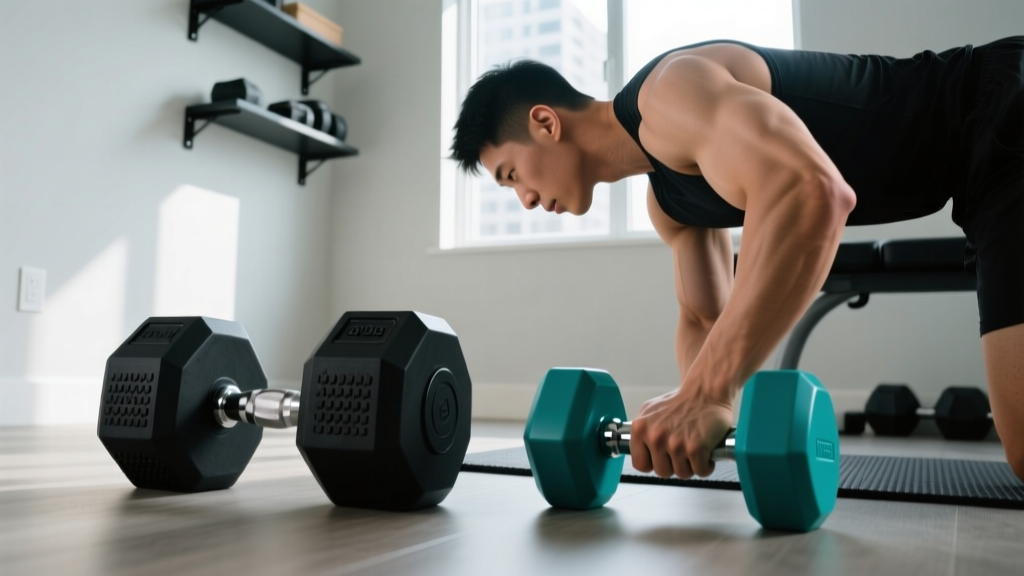
Single Arm Dumbbell Row Form: Rubber Hex vs Urethane in Small Gyms
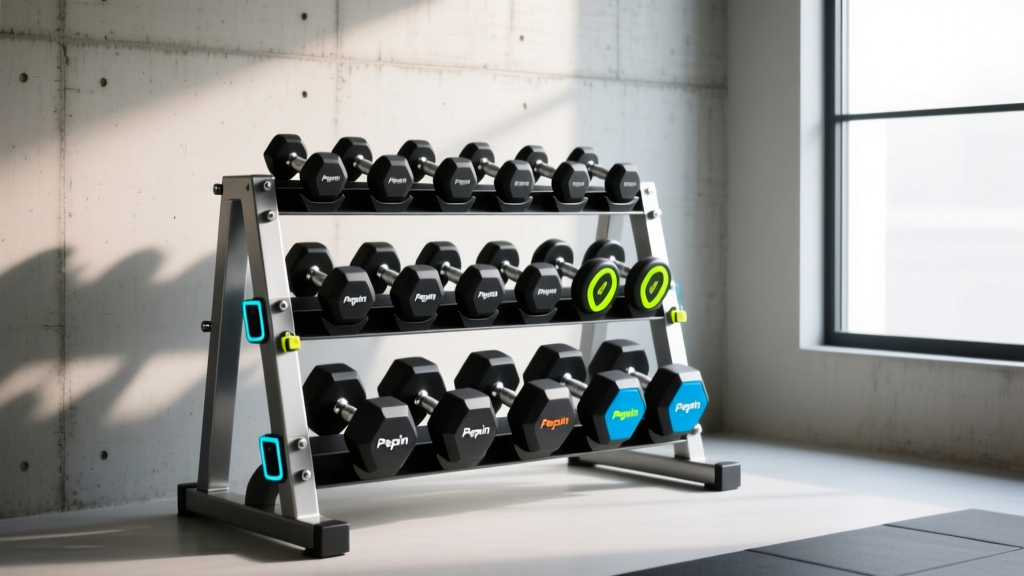
2026 Dumbbell Rack Trends: Storage for Pepin Fast Dumbbells & More

Cast Iron vs Competition Kettlebells for Your Dumbbell Routine for Men

Bumper vs Iron Plates: Deadlifts & Dumbbell Swing Muscles Worked

Olympic Barbell Guide: Weight, Knurling & the Dumbbell Plank Row GIF
