
Best Dumbbell Racks to Store Weights for Dumbbell Sit-Ups (2026)
Analyze the cost and value of top dumbbell racks in 2026. Maximize floor space for core routines like dumbbell sit-ups with our budget breakdown.

The Floor-Space Dilemma: Why Storage Matters for Core Work
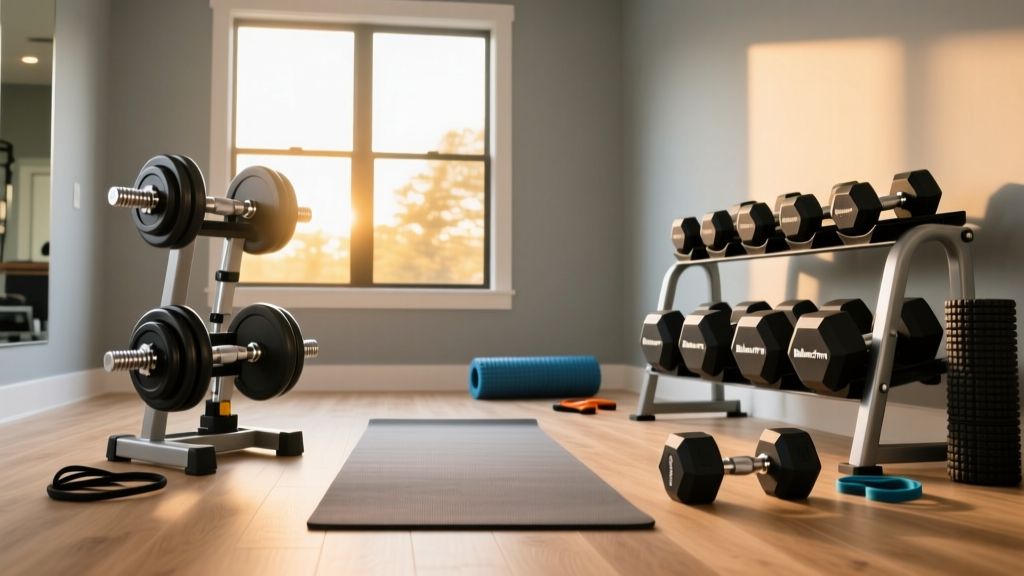
When designing a functional home gym, storage is often an afterthought until you find yourself tripping over a stray 25-pound hex dumbbell mid-workout. For floor-based movements, especially those requiring a full lay-down extension and rotational clearance like dumbbell sit-ups, clearing floor space is non-negotiable. According to the ExRx.net Exercise Directory, core flexion and rotational exercises require a minimum clearance of 6 feet by 3 feet to ensure a safe, unobstructed range of motion. If your dumbbells are scattered across the floor, your effective workout area shrinks, forcing you to compromise on form or skip essential core work.
In this 2026 budget breakdown and value analysis, we evaluate the top dumbbell rack configurations on the market. We will analyze not just the upfront cost, but the "cost-per-square-inch" of floor space saved, metallurgy quality, and how each rack supports the rapid grab-and-go ergonomics required for high-intensity core circuits.
Budget Breakdown Matrix: Horizontal vs. A-Frame vs. Vertical
To understand where your money goes, we must compare the three dominant rack footprints. The table below outlines the baseline specifications and 2026 market pricing for standard 3-tier models capable of holding 5 to 50-pound dumbbell sets.
| Rack Type | Typical Footprint | Steel Gauge | Avg. Price Range (2026) | Floor Space Saved |
|---|---|---|---|---|
| 3-Tier Horizontal | 35" x 22" | 14-Gauge | $70 - $120 | Low |
| A-Frame Tower | 24" x 24" | 12-Gauge | $130 - $220 | Medium |
| Vertical Tower | 23" x 25" | 11-Gauge | $250 - $450+ | High |
Tier 1: Entry-Level ($70 to $120) – The 3-Tier Horizontal Rack
The traditional 3-tier horizontal rack, popularized by brands like Yes4All and CAP Barbell, is the default choice for budget-conscious buyers. These racks lay the dumbbells flat across three staggered shelves, mimicking the layout of a commercial gym.
The Value Proposition
At an average cost of $89, a standard 3-tier horizontal rack offers the lowest barrier to entry. The primary advantage here is visibility; you can see every weight increment at a glance, which is ideal when you are fatigued and need to quickly select the right pair for your next set of weighted Russian twists or dumbbell sit-ups.
The Hidden Costs and Drawbacks
While cheap upfront, horizontal racks consume a massive 35 by 22-inch footprint. Furthermore, budget models often utilize 14-gauge steel and lack UHMW (Ultra-High Molecular Weight) polyethylene liners on the trays. Without UHMW liners, the metal-on-rubber friction will slowly degrade your dumbbell coatings and create a jarring metallic clatter every time you drop a 30-pound weight back into place.
Tier 2: Mid-Tier ($130 to $220) – The A-Frame Space Saver
The A-Frame rack represents the sweet spot for home gym owners who need to maximize their floor mat space for exercises like dumbbell sit-ups. By stacking the dumbbells vertically in an angled "A" shape, the footprint is reduced to a compact 24 by 24-inch square. You can view current A-Frame configurations via the Titan Fitness Dumbbell Storage catalog, which highlights the spatial efficiency of this design.
Ergonomics for Circuit Training
When performing AMRAP (As Many Reps As Possible) circuits that include dumbbell sit-ups, you are frequently transitioning from the floor to the rack and back. The A-Frame positions the lighter dumbbells (10 to 25 lbs) at waist and chest height. This eliminates the need to bend over and strain your lower back to retrieve the weights you use most often for core work, preserving your energy for the actual exercise.
Structural Integrity Check
Mid-tier A-Frames typically upgrade to 12-gauge steel. However, you must pay attention to the baseplate dimensions. If the base is narrower than 20 inches, the rack becomes susceptible to tipping if you aggressively pull a heavy pair of 40s from the bottom tier. Always look for models with flared base feet or pre-drilled holes for lag-bolting into wooden subfloors.
Tier 3: Premium ($250 to $450+) – Vertical Towers and Wall-Mounts
Premium vertical racks, such as those found in the Rogue Fitness Dumbbell Storage lineup, are engineered for lifetime durability. These racks store dumbbells vertically in individual cradles or on heavy-duty steel pegs, utilizing a footprint of roughly 23 by 25 inches while holding up to 1,500 pounds.
Unmatched Floor Space Optimization
If your home gym is a converted one-car garage or a spare bedroom, every square foot matters. A vertical tower pushes the weight upward rather than outward. By reclaiming the 4 to 6 square feet of floor space that a horizontal rack would occupy, you can comfortably fit a standard 71x24-inch weightlifting mat, giving you the exact dimensions needed to perform full-extension dumbbell sit-ups, V-ups, and lying pullovers without hitting a wall or a steel leg.
The Premium Price Justification
Why pay $385 or more? Premium racks feature laser-cut 11-gauge or 7-gauge steel, UHMW protective saddles that cradle the dumbbell heads without damaging the urethane, and a center of gravity engineered to remain stable even when fully loaded on one side. This is a "buy once, cry once" investment that outlasts multiple generations of adjustable dumbbells.
Real-World Value Analysis: Cost Per Square Inch of Floor Space
To truly evaluate value, we must calculate the cost-per-square-inch of the rack’s physical footprint. This metric reveals how efficiently the rack utilizes your gym’s real estate.
- Horizontal Rack (35" x 22" = 770 sq in): At $89, you pay $0.11 per square inch. While cheap, it dominates the room.
- A-Frame Rack (24" x 24" = 576 sq in): At $160, you pay $0.27 per square inch. A balanced trade-off for saving nearly 2 square feet of floor space.
- Vertical Tower (23" x 25" = 575 sq in): At $385, you pay $0.66 per square inch. However, vertical racks often hold 30% more weight, lowering the cost-per-pound stored and offering superior structural longevity.
"In a home gym environment, floor space is your most finite and expensive resource. Optimizing storage to protect your primary movement corridors is just as critical as the quality of the weights themselves."
Edge Cases & Failure Modes to Avoid
When shopping for a rack to support a dynamic workout routine, avoid these common pitfalls that compromise both safety and equipment lifespan:
Warning: The Tray Depth vs. Hex Head Mismatch
Many budget 3-tier racks feature trays that are only 8 inches deep. If you own rubber-coated hex dumbbells in the 40 to 50-pound range, the heads of those dumbbells can measure up to 11 inches wide. This causes the dumbbells to overhang the edge of the tray, creating a severe tipping hazard and risking damage to the dumbbell handles. Always measure your largest dumbbell head width before purchasing a horizontal or A-frame rack.
The Tipping Hazard During Rapid Transitions
During a high-intensity interval circuit, you might drop to the floor for 20 dumbbell sit-ups, sprint to the rack, grab the next weight increment, and return. If you are using a lightweight, unanchored horizontal rack, pulling a heavy dumbbell from the top tier while the bottom tier is empty shifts the center of gravity dangerously forward. Rule of thumb: If a rack weighs less than 40 pounds empty, it must be bolted to the floor or placed against a wall to prevent tip-overs during rapid weight selection.
Final Verdict: Maximizing Your Home Gym ROI
Choosing the right dumbbell storage solution is a balance between your available budget and your spatial requirements. If you have a large basement and a strict budget under $100, a heavy-duty 3-tier horizontal rack will get the job done, provided you verify the tray depth matches your dumbbell heads.
However, if you are training in a confined space and prioritize functional movements that require floor clearance—such as sprawling, burpees, and dumbbell sit-ups—the mid-tier A-Frame offers the best overall value. It reclaims vital floor space, positions your most-used core weights at an ergonomic height, and provides sufficient stability for aggressive home gym use. For those building a forever-gym with commercial-grade urethane sets, the premium vertical tower remains the undisputed king of spatial efficiency and long-term durability.
More gear to consider
All reviews
Bumper vs Iron Plates: Gym Space & Incline Dumbbell Press Shoulders

EZ Curl Bar vs Straight Bar & the Lateral Raise with Dumbbells
Adjustable Dumbbells vs BalanceFrom Rubber Encased Hex Dumbbells Setup

Best Neoprene Dumbbells for Bicep Dumbbell Exercises: 2026 Home Guide

Optimizing Gym Layout: Rubber Hex vs Urethane 45 lb Dumbbell
