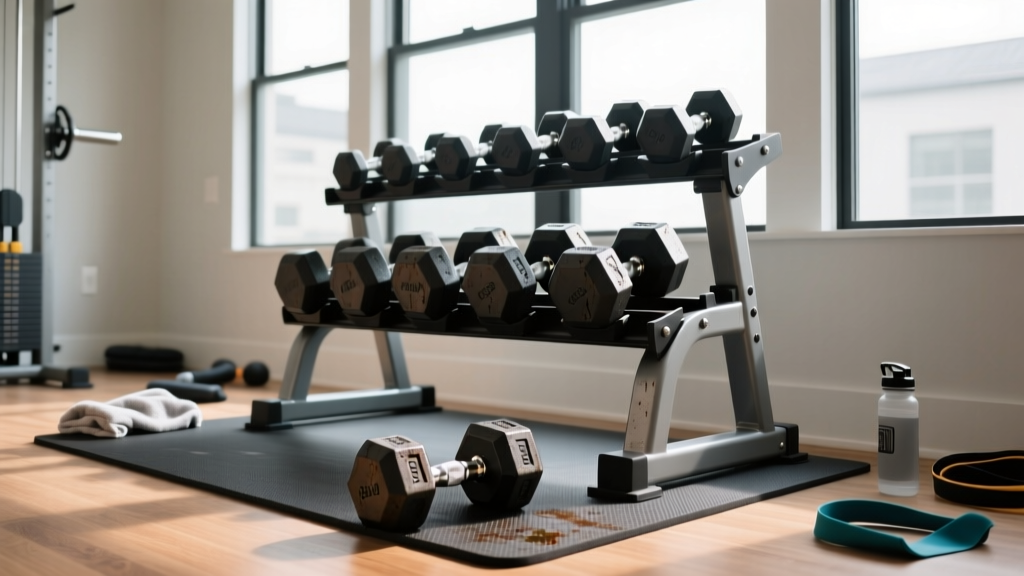
Dumbbell Rack Care and Storage After a Heavy Legs Dumbbell Workout
Learn essential dumbbell rack maintenance and storage tips to protect your equipment and floors after an intense, sweat-heavy legs dumbbell workout.

The Hidden Toll of Leg Day on Your Dumbbell Rack
When you finish a grueling legs dumbbell workout—loaded with heavy Bulgarian split squats, Romanian deadlifts, and walking lunges—the last thing you want to think about is wiping down your equipment. However, leg day places a uniquely destructive strain on your dumbbell rack and storage solutions compared to upper-body sessions. The sheer weight of the dumbbells required for lower-body hypertrophy (often ranging from 50 to 120 lbs per hand) combined with full-body systemic fatigue leads to careless re-racking, excessive sweat transfer, and heavy chalk buildup.
As of 2026, commercial and home gym equipment standards have evolved, but the fundamental vulnerability of steel and powder coatings to biological and mechanical stress remains unchanged. Neglecting post-workout maintenance doesn't just make your gym look unprofessional; it actively compromises the structural integrity of your storage racks and ruins the knurling and finishes of your dumbbells. In this guide, we break down the exact maintenance protocols and storage upgrades necessary to maximize the longevity of your free weight ecosystem after high-volume leg sessions.
⚠️ Equipment Warning: Dropping 100+ lb dumbbells onto a standard 3-tier horizontal rack after a failed set of goblet squats can cause micro-fractures in the welds. Always control the weight to the rack, or utilize specialized drop zones.Sweat, Chalk, and Steel: The Chemistry of Corrosion
During an intense legs dumbbell workout, your body's thermoregulation goes into overdrive. Sweat drips from your forearms and torso directly onto the dumbbell handles and the rack tiers. Human sweat has a pH ranging from 4.5 to 7.0, making it mildly acidic. When this acidic moisture mixes with magnesium carbonate (gym chalk), it forms a highly corrosive paste that clings to the crevices of your dumbbell rack.
According to equipment maintenance guidelines highlighted by BarBend's facility care resources, allowing chalk and sweat to sit on steel surfaces accelerates oxidation by up to 40% in humid environments. This is particularly damaging to the saddle areas of the rack where the dumbbell heads rest.
| Stress Factor | Source During Leg Day | Impact on Dumbbell Rack | Time to Visible Damage |
|---|---|---|---|
| Acidic Sweat (pH 4.5-7.0) | Heavy breathing, full-body exertion | Degrades powder coat, causes surface rust | 2-4 weeks (if uncleaned) |
| Magnesium Carbonate | Grip preservation for heavy RDLs | Traps moisture, creates abrasive paste | 1-2 weeks |
| Kinetic Impact | Fatigued re-racking after lunges | Bends tier lips, stresses structural welds | Immediate to 3 months |
Step-by-Step Post-Workout Maintenance Protocol
To ensure your dumbbell storage solutions last a lifetime, implement this 10-minute post-leg-day maintenance routine. This protocol is endorsed by strength and conditioning facility managers to maintain NSCA facility standards for equipment longevity.
- Dry Brush the Chalk (Minutes 0-2): Use a stiff nylon bristle brush to sweep away dried magnesium carbonate from the rack tiers and dumbbell heads. Never use a wire brush, as it will scratch the protective powder coating and expose bare steel to moisture.
- Neutralize the Acids (Minutes 2-5): Spray a microfiber cloth with a neutral pH cleaner (like a 50/50 mix of water and white vinegar, or a commercial gym wipe). Wipe down the rack rails, focusing on the areas where the dumbbell handles make contact. Avoid bleach-based cleaners, which accelerate steel corrosion.
- Inspect the Welds and UHMW Plastics (Minutes 5-8): Heavy leg workouts mean heavier dumbbells. Visually inspect the welds on the rack's gussets for hairline cracks. Check the UHMW (Ultra-High Molecular Weight) plastic liners on the rack tiers; if they are deeply gouged, the steel dumbbells will start grinding against the steel rack, ruining both.
- Lubricate Moving Parts (Minutes 8-10): If you are using an adjustable dumbbell system with a specialized storage cradle (like PowerBlock or Nuobell), wipe the cradle guide rods with a silicone-based lubricant to prevent the mechanisms from sticking due to chalk dust infiltration.
Upgrading Storage Solutions for Heavy Leg Days
Not all dumbbell racks are built to withstand the abuse of a heavy lower-body training block. If you are routinely using 80+ lb dumbbells for leg work, your storage solution must prioritize a low center of gravity and high-tensile steel construction.
Horizontal 3-Tier Racks vs. A-Frame Racks
When choosing a rack for a leg-focused home or commercial gym, the footprint and re-racking ergonomics are critical. Fatigued athletes are less likely to properly store weights if the rack requires awkward lifting.
- Horizontal 3-Tier Racks (e.g., Rogue 3-Tier Dumbbell Rack): Built from 11-gauge steel, the Rogue 3-Tier Dumbbell Rack is the gold standard for heavy leg days. Priced around $395, its angled shelves allow you to slide heavy dumbbells into place without lifting them vertically, saving your lower back after heavy RDLs. It holds up to 1,200 lbs and features a 23-inch footprint that prevents tipping.
- A-Frame Racks (e.g., Titan Fitness A-Frame Dumbbell Rack): While A-Frames save horizontal wall space, they require you to lift heavy dumbbells higher to reach the top tiers. After a grueling legs dumbbell workout, lifting a 100 lb dumbbell to chest height to re-rack it invites accidents and increases the likelihood of users dropping the weight onto the rack's side rails, causing cosmetic and structural damage.
Pro-Tip: If you must use an A-Frame rack, reserve the bottom two tiers for your heaviest leg-day dumbbells (50-120 lbs) and keep lighter isolation weights on the top tier to minimize injury risk and rack strain.
Floor Protection and Vibration Dampening
The longevity of your dumbbell rack is directly tied to the surface it sits on. When heavy dumbbells are slammed onto a rack, the kinetic energy travels down the legs into the floor. If the rack is sitting on bare concrete or thin foam tiles, the vibration can loosen the rack's assembly bolts over time and cause concrete spalling.
For dedicated leg workout zones, invest in 3/4-inch vulcanized rubber horse stall mats or specialized high-density drop pads. Unlike standard EVA foam puzzle mats (which compress and degrade under heavy point-loads), vulcanized rubber absorbs the shock of a misaligned re-rack, protecting both the rack's base plates and your subfloor. Ensure your rack is bolted to the floor or features widened, rubber-padded feet to prevent 'walking' caused by the vibrations of dropping heavy weights.
Frequently Asked Questions
How often should I clean my dumbbell rack if I do leg workouts 3x a week?
You should perform a dry brush after every single session, and a full chemical wipe-down at least twice a week. The high sweat volume generated during a legs dumbbell workout means acidic residue builds up much faster than during arm or shoulder days.
Can I use WD-40 to remove rust from my dumbbell rack tiers?
No. WD-40 is a solvent and water displacer, not a long-term lubricant or rust preventer. It will strip away any existing protective oils and leave the steel vulnerable. Use a dedicated rust remover like Evapo-Rust, followed by a coating of 3-IN-ONE oil or a silicone spray to protect the metal.
Do adjustable dumbbells require different rack maintenance?
Yes. Adjustable dumbbells (like Bowflex or Nuobell) have intricate mechanical dials and plastic housings. When storing them after a sweaty leg workout, you must ensure the cradle is completely dry. Moisture trapped in the cradle can seep into the dumbbell's internal selector mechanism, causing it to jam or fail.
More gear to consider
All reviews
Power Rack vs Squat Rack vs Stand: Dumbbell Chest Routine Setup

Bowflex Dumbbell Stuck? Fix It & Setup Olympic vs Standard Plates

Barbell Collar Types for a Safe Dumbbell Shoulder Press at Home
Bumper vs Iron Plates: Space for Standing Dumbbell Lateral Raises

Olympic Barbell Buying Guide & Dumbbell Zottman Curl Setup
