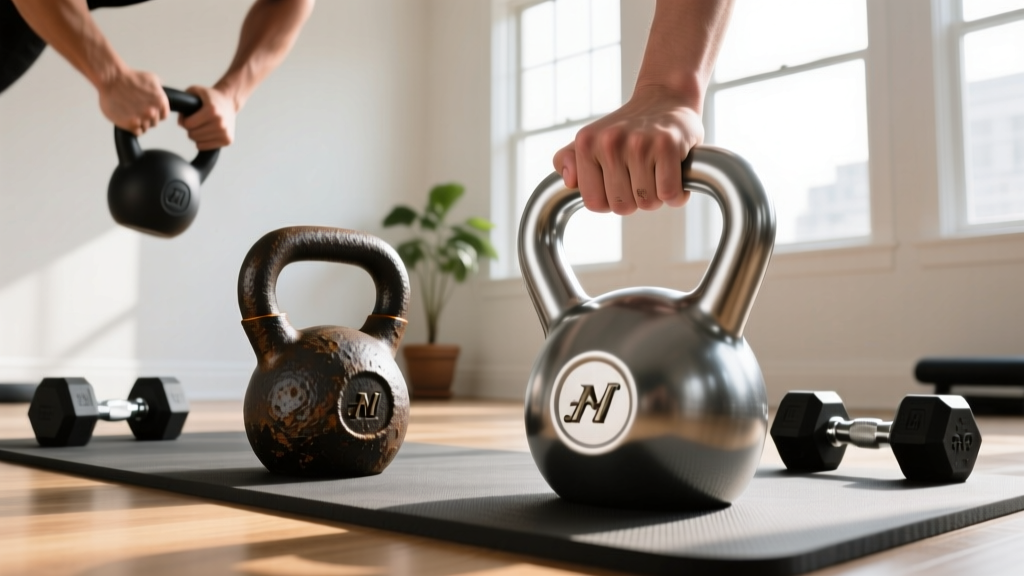
Power Rack vs Squat Rack vs Squat Stand for Dumbbell Pronation
Compare power racks, squat racks, and squat stands for 2026 home gyms. Discover the best setup for dumbbell pronation, cable attachments, and bench clearance.

The Intersection of Heavy Racks and Granular Forearm Isolation
When outfitting a home gym in 2026, most lifters prioritize power racks, squat racks, or squat stands based on their ability to handle heavy barbell squats and bench presses. However, a truly comprehensive training space must also accommodate granular isolation and rehabilitation work—specifically, forearm rotational movements like dumbbell pronation. The pronator teres and pronator quadratus muscles are critical for grip strength, wrist stability, and injury prevention, yet they are frequently bottlenecked by poor equipment geometry.
Performing dumbbell pronation (and its counterpart, supination) requires specific spatial allowances. Whether you are utilizing an offset-loaded dumbbell or rigging a low-pulley cable attachment for constant-tension rotational work, the physical footprint, upright depth, and attachment compatibility of your rack will dictate the quality of your isolation work. This guide breaks down the power rack vs squat rack vs squat stand debate specifically through the lens of versatile isolation setups, bench clearance, and attachment ecosystems.
Biomechanics and Rack Geometry: Why Space Matters
Dumbbell pronation involves rotating the radius bone over the ulna, turning the palm from a neutral or supinated position to a pronated (face-down) position. To execute this with a standard dumbbell, lifters typically use an 'offset grip'—holding the dumbbell by one head to create rotational torque.
Expert Insight: The Gravity Dead ZoneWhen performing dumbbell pronation seated on a flat bench, gravity only provides vertical resistance. This means that when your forearm is perfectly vertical (the midpoint of the rotation), the torque on the pronator teres drops to zero. To maintain constant time-under-tension, advanced lifters use rack-integrated low pulleys with a D-handle or wrist strap, pulling horizontally across the body. This requires a rack system that supports functional trainer or lat-pulldown attachments.
If you are seated inside a rack to perform these movements, the internal depth of the uprights becomes a critical factor. Standard adjustable dumbbells (like the 80lb Nuobells) measure roughly 16.5 inches in length, while heavy fixed hex dumbbells can exceed 18 inches. If your rack is too shallow, your elbows or the dumbbell heads will strike the uprights during wide rotational arcs or when setting up for heavy offset curls.
Power Racks: The Biomechanical Gold Standard
Full power racks (four-post or six-post enclosures) offer the highest degree of versatility for both heavy compounds and isolation work. Models like the REP Fitness PR-5000 V2 (typically priced between $1,499 and $2,100 in 2026) feature 3x3-inch 11-gauge steel uprights and modular depth options (24-inch, 30-inch, or 42-inch).
The Pulley Advantage for Pronation
Power racks are the only category that seamlessly integrates 1:1 or 2:1 low-pulley systems. By attaching a functional trainer carriage to the front or side of a power rack, you can set a D-handle at floor level. Sitting sideways on an adjustable bench inside the 30-inch or 42-inch depth of the rack allows you to perform cable pronation with a full range of motion, completely eliminating the gravity dead zone inherent to free weights. Furthermore, the enclosed nature of a power rack provides a safe environment to superset heavy rack pulls with forearm isolation without navigating around exposed barbell sleeves.
- Pros: Unmatched attachment compatibility; deep internal clearance for long dumbbells; built-in spotting for heavy benching supersets.
- Cons: Massive footprint (often 48x48 inches or larger); premium pricing; can feel claustrophobic for wide lateral movements.
Squat Racks (Half Racks): Balancing Space and Versatility
Half racks, or squat racks, typically feature two main front uprights and two rear stabilizing uprights, creating an open-front design. The Titan T-3 Half Rack (approximately $899 to $1,150) is a prime example. This open-front geometry is highly advantageous for dumbbell pronation and offset forearm work.
Open-Front Clearance
Because there are no front vertical posts to block your path, you can position a flat or incline bench so that it protrudes slightly past the front line of the rack. This allows you to use exceptionally long implements—such as specialized wrist rollers, leverage bars, or heavy 100lb+ fixed dumbbells—without worrying about striking the uprights during the pronation arc. While half racks support some pulley attachments (like weight-stack lat pulldowns mounted to the rear), they generally lack the dual-carriage functional trainer integration of a full power rack, limiting your cable pronation options to single-arm setups.
- Pros: Superior front clearance for long dumbbells; smaller footprint than full enclosures; excellent line-of-sight for form checking.
- Cons: Rear uprights can still impede bench positioning; fewer dual-cable attachment options compared to full power racks.
Squat Stands: The Minimalist Compromise
Squat stands consist of two independent, freestanding uprights. They are the most space-efficient and budget-friendly option, with heavy-duty models like the Rogue S-2 Squat Stand 2.0 retailing around $495. However, for lifters prioritizing isolation versatility, squat stands present significant limitations.
The Attachment Bottleneck
Squat stands do not support integrated pulley systems, weight stacks, or functional trainer carriages. If your forearm protocol relies on cable pronation for constant tension, a squat stand will force you to purchase a separate, freestanding cable machine—negating the space-saving benefits of the stands. Additionally, because the stands are independent, bench placement requires meticulous measurement to ensure you don't accidentally roll off the edge of the bench while focusing on intense forearm isolation, as there is no enclosed frame to provide spatial boundaries or safety spotting.
- Pros: Extremely affordable; minimal floor space required; easy to disassemble or move.
- Cons: Zero pulley integration; no safety spotting for heavy bench supersets; requires external equipment for cable-based pronation variations.
2026 Rack Comparison Matrix for Isolation Work
| Equipment Type | Avg. Price Range (2026) | Pulley/Cable Integration | Dumbbell Clearance | Best For |
|---|---|---|---|---|
| Power Rack (30"+ Depth) | $1,500 - $2,500+ | Excellent (Dual Functional Trainers) | High (Internal seating) | Complete gym replacements; cable pronation |
| Half Rack (Squat Rack) | $900 - $1,300 | Moderate (Rear-mounted stacks) | Very High (Open front) | Offset dumbbell work; space-conscious lifters |
| Squat Stands | $400 - $600 | None | Unlimited (No enclosure) | Strict barbell focus; minimal budgets |
Step-by-Step: Rigging Your Rack for Pronation Variations
If you have opted for a Power Rack or Half Rack with pulley integration, follow this protocol to set up an optimal cable pronation station:
- Set the Pulley Height: Adjust the low pulley carriage to the absolute bottom pin position (usually 2 to 4 inches off the floor).
- Attach the Handle: Use a standard single-grip D-handle or, preferably, a specialized wrist strap attachment. A wrist strap allows you to isolate the rotational torque without grip fatigue limiting the set.
- Bench Positioning: Place a flat bench parallel to the cable stack, approximately 18 inches away from the upright. Sit sideways on the bench, with your working arm closest to the rack.
- Execution: Rest your elbow on your thigh or the bench pad. Grasp the handle with a supinated (underhand) grip. Smoothly rotate your wrist inward across your body until fully pronated, holding the peak contraction for 1.5 seconds to maximize motor unit recruitment in the pronator quadratus.
Troubleshooting: Wrist Impingement and Rack Angles
A common failure mode when performing heavy dumbbell or cable pronation inside a rack is medial wrist impingement, often caused by forcing the rotation past the natural anatomical limit of the radioulnar joint. If you feel sharp pain on the pinky-side of your wrist, reduce the weight by 20% and ensure you are not anchoring your elbow too rigidly against the rack uprights. Allow the shoulder to naturally internally rotate slightly at the end of the pronation phase to relieve joint capsule pressure.
Final Verdict: Choosing Your 2026 Setup
If your training split heavily features isolation work, rehabilitation, and constant-tension cable variations like cable pronation, a Power Rack with integrated functional trainers is the undisputed champion. It provides the depth required for safe bench seating and the pulley ratios necessary for optimal forearm hypertrophy. For lifters who prefer the tactile feel of heavy, offset-loaded dumbbells and need maximum horizontal clearance without the claustrophobia of an enclosed cage, a Half Rack offers the perfect middle ground. Squat Stands, while phenomenal for pure barbell strength, should be avoided if rack-integrated isolation versatility is a priority for your home gym ecosystem.
More gear to consider
All reviews
Olympic vs Standard Plates: Setup for Military Press Dumbbells

12 Practical DIY Plunge Pool Ideas You Can Build in Under 8 Weeks

Best Adjustable Dumbbells for the Dumbbell One Arm Swing (2026)

EZ vs Straight Bar: Best Bicep Workout Without Dumbbells 2026
Adjustable Dumbbell Setup for Dumbbell Bench Press Hammer Grip