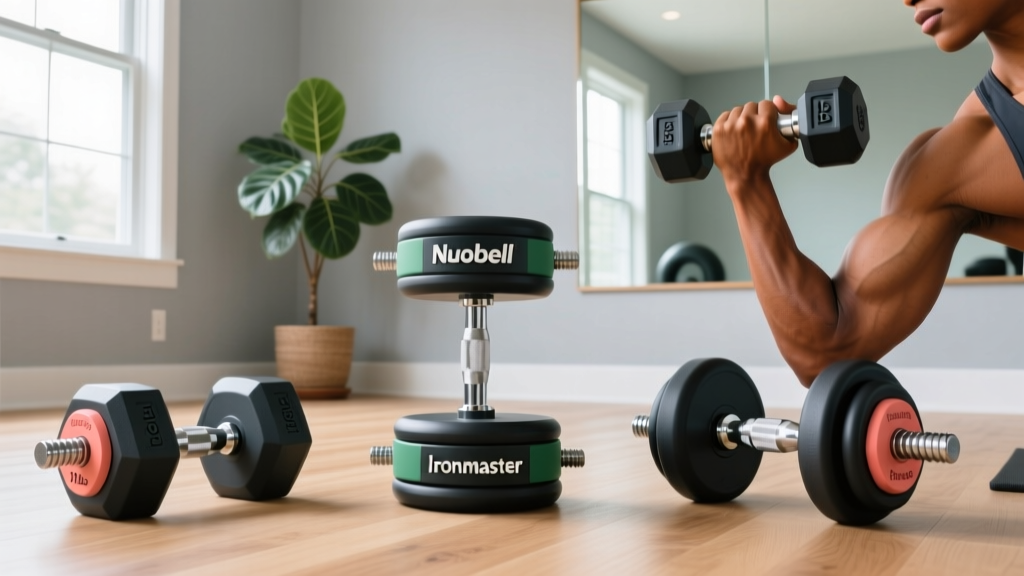
Meeting Dumbbell Press Standards: Hex vs Urethane Layouts
Optimize your gym layout by comparing rubber hex vs urethane dumbbells. Learn how material density impacts dumbbell press standards and rack spacing.

The Intersection of Dumbbell Press Standards and Gym Layout
When designing a high-performance home or commercial gym, space optimization is rarely just about fitting equipment into a room; it is about preserving the biomechanical clearance required for safe, effective lifting. Nowhere is this more critical than in the dumbbell pressing station. Adhering to established dumbbell press standards dictates specific lateral clearances, bench dimensions, and drop-zone mapping. However, the physical footprint of your dumbbell rack—dictated entirely by whether you choose rubber hex or urethane dumbbells—can either support or severely compromise these spatial requirements.
As we navigate the fitness equipment market in 2026, the price gap between premium urethane and standard rubber hex has narrowed, but their spatial implications remain vastly different. This guide breaks down how material density, head geometry, and rack tier spacing influence your gym layout, ensuring you meet safety standards without sacrificing valuable floor space.
Defining Spatial Dumbbell Press Standards
According to facility guidelines outlined by organizations like the American College of Sports Medicine (ACSM) and the National Strength and Conditioning Association (NSCA), a single-user free-weight bench station requires a minimum lateral clearance of 36 inches on all sides. For a standard 18-inch wide bench, this means your total operational footprint for a dumbbell press station is roughly 72 inches wide by 84 inches long. This accounts for the bench, the user's wingspan holding heavy dumbbells, and a safe peripheral drop zone.
Material Density and Storage Footprint: Hex vs. Urethane
The core spatial conflict in gym design arises from the storage rack. If your dumbbell rack is too deep or too wide, it encroaches on the 36-inch lateral clearance mandated by dumbbell press standards. The choice between rubber hex and urethane directly determines your rack's dimensions.
Rubber Hex Dumbbells: The Spatial Reality
Rubber hex dumbbells, such as the widely used Rogue Rubber Hex Dumbbells, feature a steel core encased in virgin rubber with a hexagonal head to prevent rolling. While highly durable and cost-effective (averaging $2.50 to $3.20 per pound in 2026), rubber is a low-density material.
- Head Width: A 50lb rubber hex dumbbell typically features a head width of 6.5 to 7 inches. By the time you reach 100lbs, the head width can exceed 8.5 inches.
- Rack Tier Spacing: Because of the bulky heads, 3-tier storage racks require wider horizontal spacing between cradles (often 10 to 12 inches per pair) to prevent the rubber heads from grinding against each other.
- Layout Impact: To store a full 5lb to 100lb set, you will likely need a 4-tier rack or a massively wide 3-tier rack, consuming up to 60 inches of horizontal wall space and protruding up to 24 inches into the room.
Urethane Dumbbells: Maximizing Compact Layouts
Urethane (polyurethane) is a high-density, custom-molded polymer that offers superior shock absorption and a significantly smaller physical footprint. Premium options like Rep Fitness Urethane Dumbbells represent the gold standard for space-constrained luxury gyms.
- Head Width: Urethane's density allows a 50lb dumbbell head to measure just 5.5 inches wide. Even at 100lbs, the head rarely exceeds 7 inches.
- Rack Tier Spacing: The compact profile allows for tight 3-tier rack spacing (7 to 9 inches per pair).
- Layout Impact: You can store a 5lb to 100lb set on a standard 48-inch wide, 3-tier rack. This saves 12 to 18 inches of horizontal wall space and reduces rack depth, keeping the storage zone well outside the user's lateral drop zone.
Dimensional Data: Spatial Footprint Comparison
The following table illustrates the exact spatial differences between standard rubber hex and premium urethane dumbbells, highlighting how material choice impacts rack dimensions and room layout.
| Metric (5-100lb Set) | Rubber Hex (e.g., Rogue) | Urethane (e.g., Rep Fitness) | Spatial Advantage |
|---|---|---|---|
| 50lb Head Width | ~6.75 inches | ~5.50 inches | Urethane (1.25" savings per DB) |
| 100lb Head Width | ~8.75 inches | ~6.80 inches | Urethane (1.95" savings per DB) |
| Required Rack Width | 60+ inches (or 4-tier) | 48 inches (3-tier) | Urethane (Saves 12"+ wall space) |
| Rack Depth (Protrusion) | 22 - 26 inches | 16 - 18 inches | Urethane (Preserves walkway) |
| Average 2026 Cost | $2.50 - $3.20 / lb | $4.50 - $5.50 / lb | Hex (More budget-friendly) |
Designing the Optimal Dumbbell Press Station
To ensure your layout respects dumbbell press standards while accommodating your chosen equipment, follow this step-by-step spatial mapping framework:
- Anchor the Bench: Place your adjustable or flat bench (standard 16"x45") in the room. Do not place it parallel to the dumbbell rack. Position it perpendicular or at a 45-degree angle to the rack to minimize the distance walked while carrying heavy loads.
- Map the Lateral Wingspan: Measure 36 inches outward from both long sides of the bench. This is your non-negotiable 'swing zone' for getting heavy dumbbells into the starting position via a knee kick-up.
- Establish the Drop Zone: Map a 24-inch semi-circle at the head and foot of the bench. This is where the dumbbells will be dropped post-fatigue.
- Position the Rack: Place the dumbbell rack outside the lateral wingspan. If using rubber hex dumbbells, the rack's 24-inch depth means it must be placed further back to avoid encroaching on the drop zone. If using urethane, the 16-inch depth allows the rack to sit closer to the wall, maximizing the central floor space for other movements like dumbbell lunges or goblet squats.
"In commercial facility design, the primary failure mode of a free-weight zone isn't equipment failure; it's spatial collision. When users are forced to step into a neighboring lifter's drop zone because a bulky rubber hex rack consumed the walkway, the facility has failed its spatial safety standards."
— Commercial Gym Layout Consultant, 2025 Facility Design Report
Floor Protection and Drop Zone Mapping
Space optimization also extends vertically to the floor. The geometry of your dumbbell dictates how you must layout your rubber flooring.
The Hex Advantage: Contained Drop Zones
Because rubber hex dumbbells feature flat edges, they do not roll when dropped. This allows you to design a tighter, more contained drop zone at the foot of the bench. You can confidently place a 4x6 foot rubber mat directly under the bench and trust that a dropped 80lb dumbbell will stay within that 4-foot boundary, protecting your subfloor without requiring wall-to-wall rubberization.
The Urethane Challenge: Roll-Out Mitigation
Most premium urethane dumbbells feature a round head profile (though some hex urethane options exist, they are rare and expensive). When a round urethane dumbbell is dropped, it can roll 12 to 24 inches away from the bench. To maintain safety standards, your rubber flooring layout must extend an additional 2 feet outward from the bench's perimeter. If your room features a mixed flooring layout (e.g., wood floors with a central rubber island), the roll-out factor of round urethane dumbbells requires a larger rubber island footprint, which can complicate space optimization in smaller rooms.
Final Verdict: Choosing Your Layout Strategy
Selecting between rubber hex and urethane is ultimately a calculation of spatial ROI (Return on Investment). Use the decision matrix below to finalize your equipment purchase based on your room's dimensions.
Choose Rubber Hex If:
- You have a dedicated room wider than 12 feet, allowing for 60-inch wide, 4-tier racks without violating the 36-inch lateral dumbbell press standards.
- Budget is the primary constraint, and you prefer allocating funds to a premium adjustable bench or power rack.
- You prefer the anti-roll safety of hexagonal heads for tight drop zones on isolated rubber mats.
Choose Urethane If:
- Your gym is in a multi-use space (garage, basement, spare bedroom) where saving 12-18 inches of horizontal wall space is critical for traffic flow.
- You require a 3-tier rack to keep heavy sets below waist height, minimizing the footprint while storing up to 100lb+ sets.
- You value the premium aesthetic, odor-free composition, and high-density compactness that allows for tighter storage configurations.
Ultimately, meeting dumbbell press standards is about respecting the user's physical envelope. By understanding the exact dimensional differences between rubber hex and urethane, you can design a layout that prioritizes safety, maximizes your square footage, and elevates the overall training experience in 2026 and beyond.
More gear to consider
All reviews
Bumper vs Iron Plates: 2026 Trends & Seated Dumbbell Bench Press

Power Rack vs Squat Stand Setup & The Dumbbell Floor Press Exercise
Olympic vs Standard Weight Plates: Upgrading Past Plastic Dumbbells

What Do Dumbbell Squats Work vs Kettlebells? Cast Iron Value Guide

Adjustable Dumbbells for a Beginner Dumbbell Workout Plan for Men