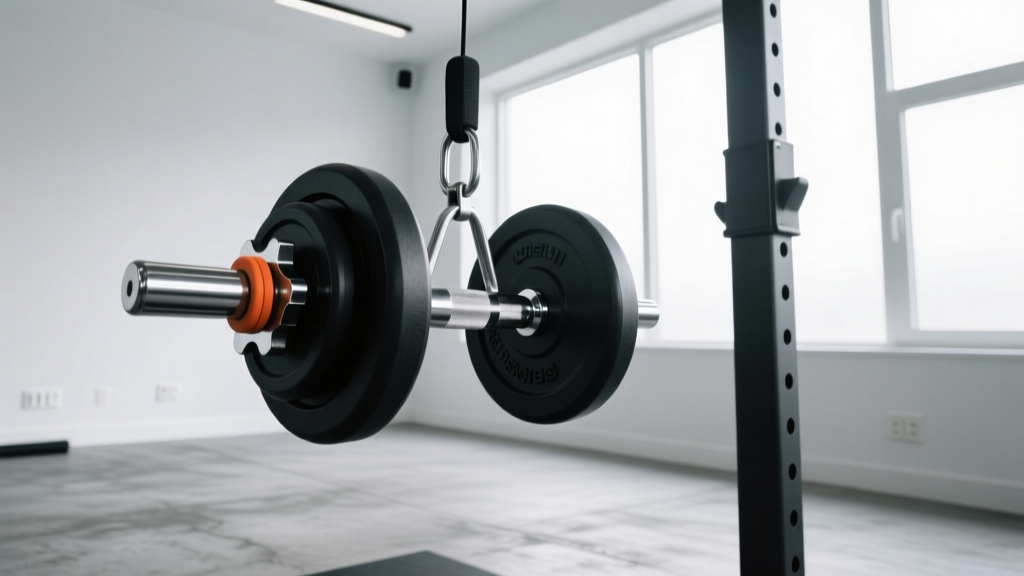
Dumbbell Lat Pullover Safety: Collar & Clamp Types Compared
Master free weight safety. We compare barbell collar and clamp types to prevent accidents during high-risk moves like the dumbbell lat pullover.

The Hidden Danger in Overhead and Pullover Movements
When building a home gym or outfitting a commercial facility in 2026, lifters often obsess over barbell whip, dumbbell knurling, and rack stability. Yet, the most critical safety component is frequently an afterthought: the collar. This oversight is particularly dangerous during exercises that involve extreme ranges of motion and overhead positioning. The dumbbell lat pullover and its barbell variations are prime examples. During the eccentric phase of a pullover, the arms extend far behind the head, placing the weight directly over the face and thoracic cavity. If a plate shifts or a collar fails, the resulting kinetic energy can cause catastrophic facial fractures or sternum injuries.
⚠️ Critical Safety Warning: Never perform pullovers with unsecured plates. According to Mayo Clinic guidelines on strength training safety, ensuring equipment integrity is the first line of defense against acute trauma. A slipping 10lb plate from a height of 3 feet generates enough force to shatter orbital bones.Biomechanics of the Pullover: Why Plates Shift
To understand why collar selection matters, we must examine the biomechanics of the pullover. Unlike a bench press, where gravity pulls the plates flush against the inner sleeve collar, the pullover introduces severe lateral shear force. As you lower the weight behind your head, the barbell or loadable dumbbell handle tilts. Gravity now pulls the plates down the sleeve toward the outer edge.
When using loadable Olympic dumbbell handles (which typically feature shorter 6-to-8-inch sleeves), the center of mass shifts rapidly. If the collar lacks sufficient radial clamping force, the vibration from the eccentric stretch can cause the collar to inch outward. Over a set of 10 repetitions, a standard spring collar can migrate up to 15 millimeters, creating a gap that allows plates to rattle, shift the dumbbell's balance, and severely compromise wrist stability at the bottom of the movement.
Barbell Collar & Clamp Types: A 2026 Comparison Matrix
Not all collars are created equal. The market has evolved significantly, moving beyond basic springs to engineered polymer and machined aluminum solutions. Below is a comprehensive comparison of the four primary collar types available in 2026, rated by clamping force, durability, and ideal use case.
| Collar Type | Avg. Clamping Force | Price Range (2026) | Best For | Primary Failure Mode |
|---|---|---|---|---|
| Spring Collars | 15 - 25 lbs | $5 - $12 / pair | Light isolation, straight-plane lifts | Metal fatigue, slipping on chrome |
| Spin-Lock Nuts | 40 - 60 lbs (Torque) | $15 - $25 / pair | Standard 1-inch adjustable dumbbells | Cross-threading, vibrating loose |
| Lever-Action Polymer (e.g., Lock-Jaw Pro) | 120 - 150 lbs | $35 - $45 / pair | Olympic dumbbells, dynamic movements | Polymer cracking in extreme cold |
| Machined Aluminum Clamps (e.g., Rogue Monster, Eleiko) | 180 - 250+ lbs | $30 - $75 / pair | Heavy pullovers, Olympic lifting, drop sets | Rubber insert degradation over years |
Deep Dive: Troubleshooting Collar Failure Modes
Understanding the specific failure modes of each collar type is essential for troubleshooting equipment issues in your gym. Here is a detailed breakdown of what goes wrong and how to fix it.
1. Spring Collars: The False Sense of Security
Spring collars are ubiquitous but fundamentally flawed for high-risk movements like the dumbbell lat pullover. They rely on the tension of bent steel wire. Failure Mode: After approximately 500 to 800 repetitions, the steel undergoes plastic deformation (metal fatigue), reducing the clamping force by up to 40%. Furthermore, on chrome-plated Olympic sleeves, the smooth surface offers almost zero friction. If you tilt a barbell or dumbbell past 45 degrees during a pullover, a fatigued spring collar will slide.
Troubleshooting: Retire spring collars the moment they can be easily squeezed with one hand. Never use them on chrome sleeves for overhead or pullover movements; reserve them for black oxide or zinc-plated sleeves where friction is higher.
2. Spin-Lock Nuts: The Thread-Stripping Hazard
Common on 1-inch standard adjustable dumbbells, spin-lock nuts require manual threading. Failure Mode: Cross-threading. When a lifter is fatigued, they often force the nut onto the sleeve at a slight 2-degree angle. This strips the soft zinc or cast-iron threads, creating a 2mm to 5mm gap between the nut and the plate. During the eccentric stretch of a pullover, this gap allows the plates to shift violently, altering the dumbbell's center of gravity and risking a torn rotator cuff.
Troubleshooting: Inspect the threads monthly. If you see shiny, stripped metal on the first two threads, replace the dumbbell handle immediately. Always start the nut with your fingers, ensuring it spins freely for the first three rotations before tightening.
3. Lever-Action Polymer Clamps: The Cold Weather Weakness
Brands like Lock-Jaw revolutionized the market with glass-reinforced nylon clamps that snap shut, delivering immense radial pressure. Failure Mode: Temperature sensitivity. If you train in an unheated garage gym where temperatures drop below 35°F (1.6°C), the polymer becomes brittle. A dropped clamp or an aggressive slap to secure it can cause the hinge mechanism to micro-fracture, leading to sudden failure mid-set.
Troubleshooting: Store polymer clamps indoors at room temperature. If you train in a cold environment, switch to machined aluminum clamps.
4. Machined Aluminum Clamps: The Tolerance Trap
Aluminum clamps with internal rubber gaskets (like Rogue Monster Clamps or Eleiko Training Collars) are the gold standard for security. Failure Mode: Sleeve tolerance mismatch. Olympic sleeves are nominally 50mm, but manufacturing tolerances mean some budget bars measure 49.5mm, while others measure 50.3mm. If your barbell sleeve is 50.3mm, an aluminum clamp designed for exactly 50mm will not fully close, leaving the rubber gasket uncompressed and providing zero grip.
Troubleshooting: Use digital calipers to measure your dumbbell and barbell sleeves. If your sleeves run thick (over 50.1mm), avoid rigid aluminum clamps and opt for lever-action polymer clamps, which have a wider tolerance forgiveness of up to 1.5mm.
Troubleshooting Guide: Common Mistakes During Pullovers
Beyond the hardware itself, user error contributes heavily to equipment failure. Avoid these common mistakes when setting up for the dumbbell lat pullover:
- Mistake 1: Stacking Plates Incorrectly on Loadable Dumbbells. Lifters often put the 10lb plate on the outside and the 25lb plate on the inside. Fix: Always place the heaviest, largest diameter plate closest to the inner sleeve collar. This lowers the center of mass and reduces the lever arm that causes outer plates to shift.
- Mistake 2: Using Standard Spin-Locks for Olympic Dumbbells. Some cheap adapters allow 1-inch spin-locks on Olympic sleeves. Fix: Never do this. The sheer weight of Olympic plates will snap the 1-inch adapter threads under the lateral load of a pullover.
- Mistake 3: Ignoring the 'Click' Test. Fix: After securing the collar, grab the outermost plate and attempt to slide it laterally. If you hear a 'click' or feel any movement, the collar is not seated properly. Loosen, push the collar flush against the plate, and re-secure.
Pre-Set Safety Checklist for High-Risk Movements
Before you lie back on the bench and lower the weight behind your head, run through this 10-second diagnostic checklist to ensure your hardware is secure:
✅ The 10-Second Pullover Safety Check
- Visual Flush Check: Are the plates perfectly flush against the inner sleeve? Is the collar pressed tightly against the outermost plate with zero visible gap?
- Shake Test: Hold the dumbbell or barbell horizontally and give it one sharp, controlled shake. Listen for the metallic rattle of loose plates.
- Grip Verification: Ensure your hands are positioned equidistant from the center knurling or dumbbell handle center to prevent asymmetric torque from twisting the collar loose.
Final Thoughts on Equipment Integrity
The biomechanical principles of shear force and leverage dictate that any weight extended away from the body's center of mass magnifies the stress on both your joints and your equipment. The dumbbell lat pullover is a phenomenal exercise for thoracic expansion and latissimus dorsi hypertrophy, but it demands absolute respect for equipment tolerances. Upgrading from $8 spring collars to a $40 pair of lever-action clamps or machined aluminum collars is not just a convenience—it is a vital investment in your long-term structural integrity. Inspect your threads, measure your sleeves, and never compromise on the hardware that stands between a heavy set and a trip to the emergency room.
More gear to consider
All reviews
Dumbbell Training for Seniors: Loadable Handle Maintenance
Loadable Dumbbells for Dumbbell Ab Exercises: 2026 Market Trends

Master the Dumbbell Squat for Glutes: Beginner Guide & Adjustable Dumbbell Review

Best Adjustable Dumbbells for the Single Arm Incline Dumbbell Press

Sumo Deadlift with Dumbbells: Rubber Hex vs Urethane Longevity & Care
