Dumbbell Deadlift vs Romanian Deadlift: Olympic vs Standard
Master the dumbbell deadlift vs Romanian deadlift. Our beginner guide breaks down form differences and how to load Olympic vs standard weight plates safely.

When stepping into the free weights section, beginners often face two overlapping dilemmas: choosing the right movement pattern and selecting the correct equipment to load it. If you are researching the dumbbell deadlift vs Romanian deadlift, you are already on the right track for building a bulletproof posterior chain. However, the effectiveness and safety of these lifts are deeply tied to the hardware you use. For home gym owners and beginners utilizing plate-loaded dumbbell handles or transitioning to a barbell, the ongoing debate of weight plate types: Olympic vs standard is the hidden bottleneck in your progression.
Whether you are loading a 1-inch standard dumbbell handle or a 2-inch Olympic barbell, understanding how plate dimensions, sleeve capacity, and material interact with your lifting mechanics is critical. This step-by-step beginner guide will decode the biomechanics of both lifts and provide a definitive, data-backed framework for choosing the right iron for your home gym in 2026.
The Biomechanics: Dumbbell Deadlift vs Romanian Deadlift
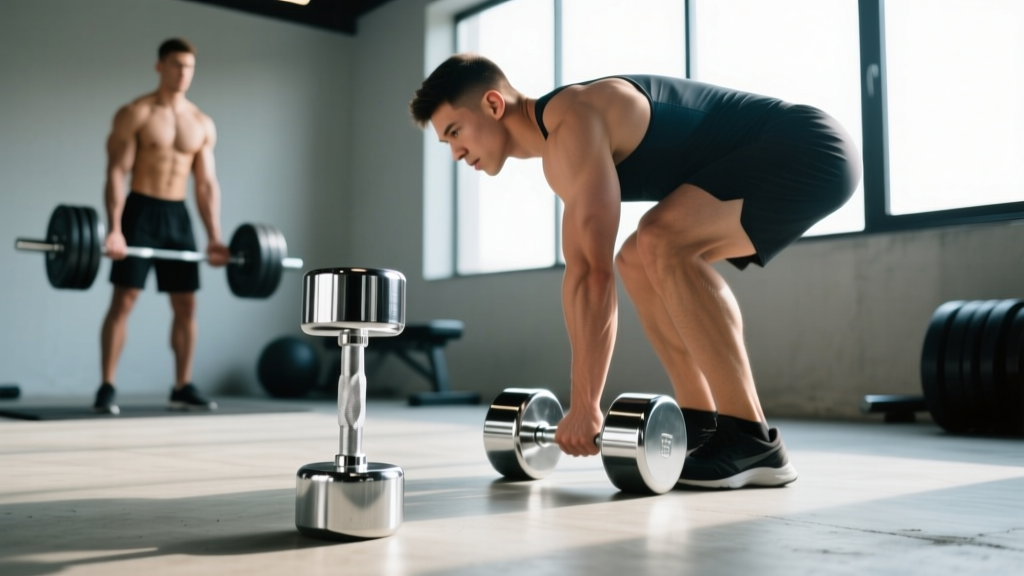
Before we load the sleeves, we must define the movement. While both exercises target the posterior chain (glutes, hamstrings, and erector spinae), their execution, joint angles, and equipment demands differ drastically. According to ExRx.net's Dumbbell Deadlift Guide, the conventional deadlift is a floor-starting movement that requires significant knee flexion, engaging the quadriceps heavily off the floor. In contrast, the Romanian Deadlift (RDL) is a top-down hip hinge that isolates the hamstrings through an eccentric stretch.
1. The Conventional Dumbbell Deadlift
The conventional dumbbell deadlift starts with the weights resting on the floor. Your hips 5-10 lbs per week. Standard handles will physically run out of sleeve space around 100-120 lbs per hand, forcing an upgrade.
Step 2: Execute the Hip Hinge
- The Setup: Stand with feet hip-width apart. If using standard dumbbells, keep them close to your shins to minimize shear force on the lower back.
- The Descent (RDL): Push your hips back as if closing a car door with your glutes. Keep a slight bend in the knees. Lower the weights only until your hips stop moving back (usually mid-shin).
- The Ascent: Drive your hips forward to stand tall. Squeeze the glutes at the top. Do not hyperextend the lumbar spine.
Step 3: Manage the Eccentric Load
The RDL is highly eccentric, meaning your muscles are lengthening under tension. This causes more micro-tearing and delayed onset muscle soreness (DOMS). Beginners should start with 3 sets of 8-10 reps, focusing on a slow 3-second descent. If your standard dumbbell handles are digging into your thighs due to the narrow plate profile, switch to Olympic bumper plates on a barbell to distribute the contact area more evenly.
Beginner Trap: Never use standard plates for high-rep RDLs if you are touching the floor. Standard cast iron plates are not designed for repeated dropping and will crack, chip your flooring, or bend the 1-inch sleeve of your dumbbell handle. Always use virgin rubber Olympic bumpers if your RDLs involve dropping the weight from the hip.Real-World Edge Cases and Failure Modes
As a domain expert reviewing hundreds of home gym setups, I see beginners make the same hardware mistakes repeatedly. Here are the edge cases you must avoid when pairing these lifts with standard or Olympic plates:
- The 'Standard Spin' Torque: Standard dumbbell handles lack rotating sleeves. When you perform a heavy RDL, the natural rotation of your wrists will force the entire weight stack to twist. With 1-inch standard plates locked by basic spring collars, this torque can loosen the collar mid-set, causing a 25lb plate to slide off your foot. Solution: Always use threaded spin-lock collars for standard RDLs.
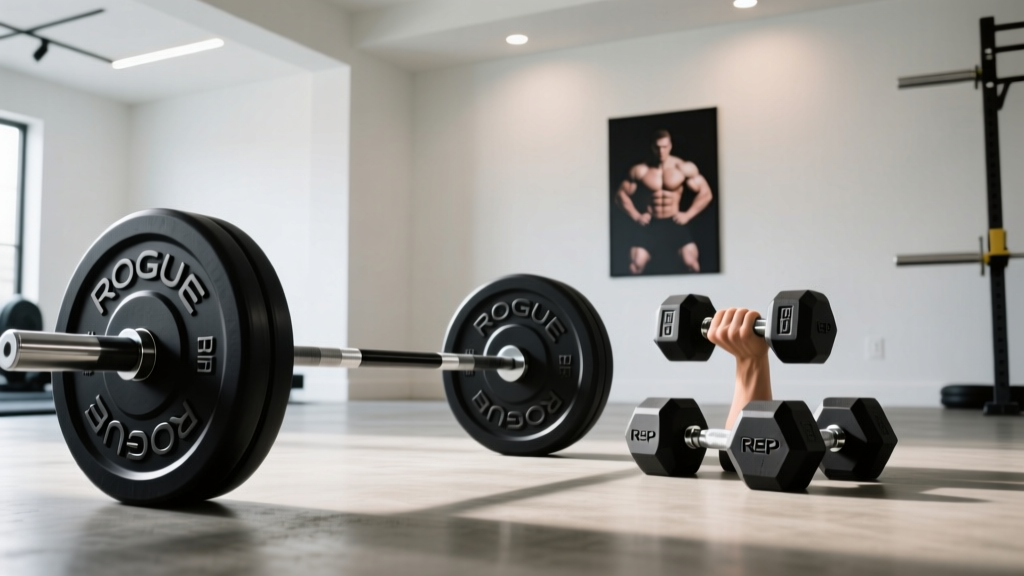
- The Olympic Bumper 'Dead Bounce': When performing conventional deadlifts from the floor with Olympic bumper plates, cheap recycled-rubber bumpers will bounce unpredictably, risking ankle strikes. Solution: Invest in Rogue Fitness Echo Bumper Plates or similar virgin-rubber bumpers with a low durometer rating for a dead-blow drop.
- Sleeve Space Exhaustion: A beginner buying 1-inch standard plates often purchases multiple 10lb and 5lb plates to increment weight. On a standard 10-inch dumbbell sleeve, you can only fit about four 1-inch thick plates per side. You will max out the physical space before you max out your leg strength. Olympic plates are denser and allow for 300+ lbs on a standard barbell sleeve.
Frequently Asked Questions
Can I use standard weight plates on an Olympic barbell or dumbbell?
No. Standard plates have a 1-inch center hole and will not fit over the 2-inch sleeve of an Olympic barbell or Olympic plate-loaded dumbbell handle. You can buy adapter sleeves (2-inch to 1-inch), but these are generally unsafe for heavy hip hinges like the RDL due to the added lateral play and risk of the adapter slipping off the sleeve during a drop.
Which lift is better for lower back pain beginners100> The RDL places higher shear force on the lumbar spine due to the long lever arm and eccentric stretch. If you have lower back sensitivity, the conventional DB deadlift (starting from the floor) or a trap-bar deadlift is generally safer as it allows a more upright torso.
Is it worth buying Olympic plates for a beginner home gym?
Absolutely. While the upfront cost is higher ($2.50/lb vs $1.50/lb), Olympic plates offer infinite scalability. You will outgrow standard dumbbell handles within 6 to 12 months of consistent deadlifting. Buying Olympic plates and a basic 7-foot Olympic barbell ensures you never have to repurchase your weight stack as your strength advances.
More gear to consider
All reviews
Bumper vs Iron Plate Care & Incline Dumbbell Skull Crusher Longevity
How to Spot Dumbbell Chest Press & Choose Olympic vs Standard Plates
Decline Press With Dumbbells: Power Rack vs Squat Rack Guide

Bowflex Dumbbell Reviews & Bumper vs Iron Plate Budget Guide

Loadable Dumbbell Care to Maximize Your Dumbbell Only Exercises