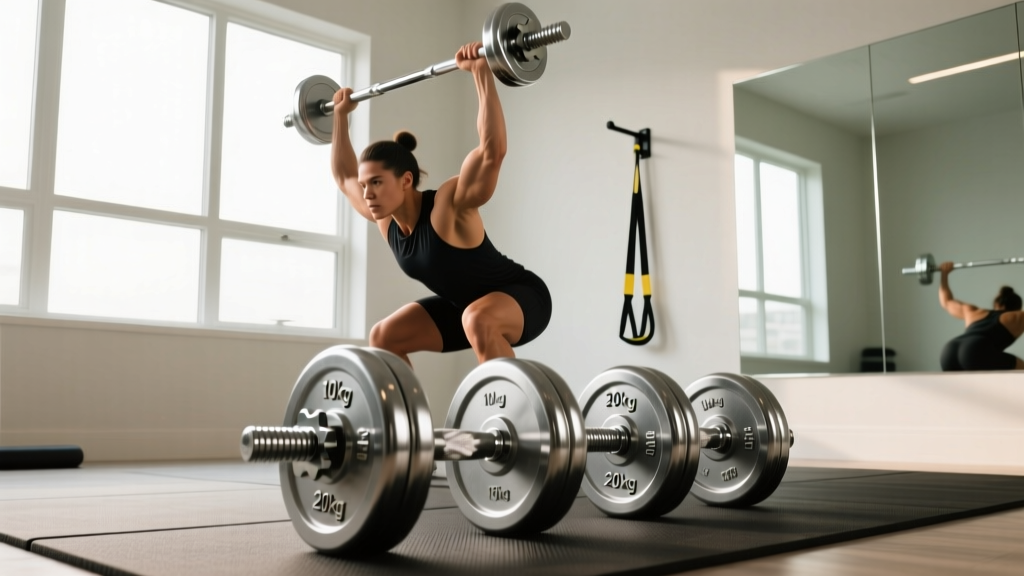
Dumbbell Deadlift to Press: Loadable Dumbbell ROI
Analyze the true cost and ROI of loadable dumbbells for the dumbbell deadlift to press. Compare handles, plates, and collars for a budget-friendly setup.

The dumbbell deadlift to press is one of the most metabolically demanding and biomechanically complex movements in strength training. It requires a seamless transition from a posterior-chain hinge, through an explosive triple-extension, into a strict overhead lockout. For home gym owners, executing this movement chain safely and effectively requires specialized equipment. While fixed rubber hex dumbbells are the traditional choice, their cost-to-weight ratio scales terribly as you get stronger. Enter the loadable dumbbell with interchangeable plates.
In this 2026 value analysis, we are breaking down the true budget required to build a loadable dumbbell setup optimized specifically for the dumbbell deadlift to press. We will examine handle geometries, the hidden costs of collars and plates, and the long-term ROI compared to fixed-weight alternatives.
The Biomechanical Demands: Why Handle Geometry Matters
When performing a fluid dumbbell deadlift to press, the equipment undergoes violent shifts in momentum. You are not just picking a weight up and putting it down; you are accelerating it, decelerating it at the shoulder rack position, and pressing it vertically. This creates two major equipment failure points that budget buyers often overlook:
- The Clavicle Impingement (Sleeve Length): If your loadable handle has a sleeve longer than 6 inches, the outer edge of the plates will protrude significantly past your hand. When you transition from the deadlift into the rack position for the press, that protruding sleeve will smash directly into your collarbone or anterior deltoid.
- Inertial Plate Shift (Collar Security): The rapid deceleration at the top of the clean phase generates massive outward kinetic force. Standard spring collars will slide, causing the dumbbell to become unbalanced mid-press, which is a primary cause of rotator cuff strains.
Expert Insight: For the dumbbell deadlift to press, the ideal loadable sleeve length is between 4.5 and 5.5 inches. This allows enough room for 60–80 lbs of compact iron plates per hand while keeping the overall profile narrow enough to rack safely at the shoulder without impingement.
2026 Loadable Handle Market: Pricing and Specifications
The market for Olympic (2-inch) loadable dumbbell handles has matured significantly. According to comprehensive testing by BarBend's equipment experts, the difference in knurling depth, sleeve tolerances, and material fatigue separates the $40 handles from the $150 handles. Below is a comparison of the top contenders for complex movements.
| Brand & Model | Price (Pair) | Loadable Sleeve | Sleeve Diameter | Best For |
|---|---|---|---|---|
| Rogue Loadable Dumbbell Handles | $95.00 | 6.62 inches | 1.97" (Olympic) | Heavy presses, durable knurl |
| Titan Fitness Loadable Handles | $59.99 | 6.00 inches | 1.96" (Olympic) | Budget-conscious Olympic setups |
| Yes4All Olympic Spin-Lock | $45.00 | 5.50 inches | 1.96" (Olympic) | Compact clearance, lighter loads |
| Eleiko Olympic Dumbbell Handle | $285.00 | 4.70 inches | 1.97" (Olympic) | Premium rack clearance, IPF spec |
As noted in the Garage Gym Reviews loadable dumbbell roundup, the Rogue handles offer the best balance of aggressive knurling and sleeve tolerance, but their 6.62-inch sleeve requires careful plate selection to avoid shoulder impingement during the press transition.
The Hidden Costs: Plates, Collars, and the 'Cost Per Pound' Trap
Buying the handles is only 20% of the financial equation. To execute a dumbbell deadlift to press, you need specific types of plates and heavy-duty collars.
1. The Collar Tax (Do Not Skip This)
For a standard bicep curl, a $12 pair of spring collars works fine. For a dynamic complex like the deadlift to press, spring collars are a liability. You must invest in machined aluminum collars or high-tension clamp collars.
- Budget Option: Lock-Jaw Pro Dumbbell Collars (~$35/pair). Excellent grip, but the plastic housing can crack if dropped from overhead.
- Premium Option: Rogue HG 2.0 Aluminum Collars (~$48/pair). Virtually indestructible, minimal profile, zero slip during explosive transitions.
Standard 45lb rubber bumper plates are roughly 3.2 inches thick. If you use a 6-inch sleeve handle, you can only fit one 45lb plate per side. To build heavier dumbbells (70+ lbs) for the deadlift phase, you must purchase compact cast iron plates or specialized 10lb/25lb fractional bumpers, which cost roughly 30% more per pound than standard cast iron.
2. Plate Acquisition Strategy
To maximize your budget, avoid buying pre-packaged dumbbell plate sets, which often overcharge for the smaller denominations. Instead, buy standard Olympic barbell plate sets and supplement with micro-plates. A 275lb Olympic iron plate set (two 45s, two 35s, two 25s, two 10s, four 5s) typically costs around $250–$300 in 2026, giving you enough incremental weights to build two identical dumbbells ranging from 15 lbs to 85 lbs.
Budget Tiers: Building Your Setup
Let us break down the actual out-of-pocket costs for three distinct home gym budgets, specifically optimized for the dumbbell deadlift to press.
Tier 1: The Entry-Level Complex Setup ($165)
- Handles: Yes4All Olympic Spin-Lock Handles ($45)
- Plates: 110 lbs of standard cast iron (used market or budget import) (~$110)
- Collars: Standard Spin-Lock nuts (included)
- The Verdict: The spin-lock nuts take 15 seconds to tighten and loosen, making drop-sets or rapid weight changes frustrating. Furthermore, the smooth inner sleeve of budget handles can cause the nuts to back off during the violent deceleration of the press. Only recommended for slow, controlled tempos.
Tier 2: The Mid-Range Workhorse ($385)
- Handles: Titan Fitness Loadable Handles ($60)
- Plates: 165 lbs of new cast iron Olympic plates ($275)
- Collars: Lock-Jaw Pro Dumbbell Collars ($35)
- The Verdict: This is the sweet spot for 80% of lifters. The 6-inch sleeve on the Titan handles accommodates a 45lb and a 25lb iron plate per side, yielding a 75lb dumbbell. The Lock-Jaw collars ensure the plates do not shift during the clean-and-press transition. The Rogue Loadable Dumbbell Handles can be swapped in here for an extra $35 if you prefer a deeper knurl pattern.
Tier 3: The Premium Unrestricted Setup ($680+)
- Handles: Rogue Loadable Dumbbell Handles ($95)
- Plates: 200 lbs of Machined Steel or Urethane Encased Plates ($450)
- Collars: Rogue HG 2.0 Aluminum Collars ($48)
- Fractional Plates: Pair of 1.25lb and 2.5lb micro-plates ($85)
- The Verdict: Machined steel plates are significantly thinner than cast iron, allowing you to load up to 95 lbs per hand on the Rogue sleeves without the plates hitting your shoulders during the rack phase. This setup mimics the feel of a commercial gym and will outlast the lifter.
Long-Term Value: Loadable vs. Fixed Hex Dumbbells
To understand the true ROI, we must compare our Tier 2 Loadable Setup ($385) against purchasing fixed rubber hex dumbbells to achieve the same weight range.
In 2026, high-quality virgin rubber hex dumbbells cost an average of $2.25 to $3.00 per pound. To replicate a range from 20 lbs to 75 lbs in 5-pound increments, you would need 12 pairs of dumbbells (24 individual dumbbells). At a conservative $2.50/lb, the total weight is 1,140 lbs, equating to a staggering $2,850. Furthermore, you would need a $400 three-tier dumbbell rack to store them.
By contrast, the $385 loadable setup takes up less than four square feet of floor space, requires no specialized rack, and allows for infinite micro-loading. The only advantage fixed dumbbells hold is the speed of weight changes between sets. If your programming relies heavily on rapid drop-sets, fixed dumbbells win on convenience. But for a movement like the dumbbell deadlift to press, where you typically stick to a single heavy working weight for the duration of the complex, the loadable setup provides a 86% cost savings.
Final Verdict: Maximizing ROI on Your Home Gym Floor
The dumbbell deadlift to press is a non-negotiable staple for full-body power and conditioning. Building a loadable dumbbell system to support it requires a strategic approach to sleeve length, collar security, and plate density.
For the budget-conscious lifter, the Titan Fitness handles paired with compact cast iron plates and Lock-Jaw collars represent the undisputed champion of value. You avoid the shoulder impingement risks of overly long sleeves, eliminate the danger of slipping spring collars, and save thousands of dollars compared to a full rack of fixed hex dumbbells. Invest in the right geometry and secure locking mechanisms, and your loadable dumbbells will safely support your heaviest complexes for decades.
More gear to consider
All reviews
Cast Iron vs Competition Kettlebells: Dumbbell Tattoos & Iron

EZ Curl Bar vs Straight Bar: Is a Hexagonal Dumbbell Better Value?

Olympic Barbell Setup & Best Lat Exercises With Dumbbells

Setup Guide: Adjustable Dumbbells for Shoulder Dumbbell Workouts
Power Rack vs Squat Rack vs Stand: Setup & Reverse Grip Curls Dumbbell
