
Best Dumbbell to Barbell Converter vs Kettlebells: 2026 Trends
Analyzing 2026 home gym trends: we compare the best dumbbell to barbell converter setups against cast iron and competition kettlebells for max ROI.

The 2026 Shift: Modularity vs. Dedicated Free Weights
The 2026 home gym landscape is defined by a relentless pursuit of spatial efficiency. As urban living spaces shrink and garage gyms reach maximum capacity, fitness enthusiasts are aggressively seeking modular solutions. This has driven a massive spike in search volume for the best dumbbell to barbell converter, a niche tool promising to bridge the gap between isolated dumbbell work and heavy bilateral barbell lifting. But does this modular compromise hold up when compared to the biomechanical necessity of dedicated free weights, specifically the booming cast iron and competition kettlebell markets?
Deconstructing the Dumbbell-to-Barbell Converter Market
A dumbbell-to-barbell converter is essentially a threaded steel or aluminum tube that screws into the inner collars of two matching dumbbells, effectively locking them together to form a makeshift barbell. In 2026, top-selling models like the Epoch Fitness Connector and various Yes4All adapters dominate the budget tier, typically retailing between $35 and $65.
Engineering Limitation Alert: While converters offer a cheap way to achieve a 100lb or 120lb barbell, they fundamentally alter the bar's whip, knurling continuity, and center of mass. The 6-to-8-inch gap between the dumbbell heads creates a structural dead zone, making heavy compound movements like back squats or Olympic cleans inherently unstable and unsafe.The Kettlebell Counter-Trend: Why Dedicated Bells Dominate
While the modularity trend attempts to force dumbbells into a barbell's role, the kettlebell market has surged in the opposite direction: hyper-specialization. You cannot engineer a converter to turn a dumbbell into a kettlebell. The offset center of mass and the unique horn geometry of a kettlebell are non-negotiable for ballistic movements. According to biomechanical analyses from the National Strength and Conditioning Association (NSCA), the extended moment arm created by a kettlebell's displaced center of gravity is what recruits the posterior chain so effectively during swings and snatches.
This brings us to the critical 2026 buying decision for free-weight purists: navigating the cast iron versus competition kettlebell divide.
Cast Iron vs. Competition Kettlebells: 2026 Buyer's Matrix
When allocating budget for dedicated kettlebells, buyers must choose between traditional cast iron and standardized competition bells. Here is how the market leaders stack up this year.
| Feature | Cast Iron (e.g., Rogue Fitness) | Competition (e.g., Kettlebell Kings) |
|---|---|---|
| Material | Single-piece cast iron, powder-coated or e-coated | Steel shell with steel/concrete composite core |
| Handle Diameter | Variable (30mm to 35mm depending on weight) | Uniform 35mm across all weights |
| Dimensions | Scales up in physical size as weight increases | Strict 280mm height x 210mm width universally |
| Price Range (24kg) | $75 - $95 | $130 - $165 |
| Best Use Case | Grinds, presses, tactical fitness, outdoor use | Girevoy sport, high-rep ballistics, muscle memory |
The Case for Cast Iron: Rugged and Tactile
Cast iron bells remain the workhorse of the garage gym. Brands like Rogue Fitness and CAP Barbell offer aggressive powder-coat finishes that absorb chalk and resist corrosion. The primary advantage of cast iron is the tactile feedback and the narrower handle widths on lighter bells (e.g., 8kg to 12kg), which are easier for smaller hands to grip during strict military presses. However, as experts at Rogue Fitness note, the varying dimensions mean your grip and rack position must constantly adapt as you move up in weight.
The Case for Competition Bells: Precision and Consistency
Competition kettlebells are engineered to exact International Union of Kettlebell Lifters (IUKL) standards. Whether you are lifting an 8kg or a 32kg bell, the physical dimensions remain identical. As highlighted in comprehensive testing by Garage Gym Reviews, this uniformity is critical for high-rep Girevoy sport or CrossFit workouts, where a shift in rack position by a single inch can cause wrist bruising or premature forearm fatigue. The 35mm handle is thick, demanding serious grip endurance, and the steel shell withstands the repeated impacts of drop-sets on rubber flooring far better than brittle cast iron.
Financial & Spatial ROI: Converters vs. Kettlebell Sets
Let us look at the hard data for outfitting a 2026 home gym with either a modular converter setup or a dedicated kettlebell arsenal.
Cost-Per-Pound & Footprint Analysis
- Modular Barbell Route: 200lb Hex Dumbbell Set ($350) + Best Dumbbell to Barbell Converter ($45) = $395 Total. Footprint: Requires a standard A-frame or 5-tier rack.
- Dedicated Kettlebell Route: 5-Piece Competition Set (8, 12, 16, 20, 24kg / approx 176lbs total) = $620 Total. Footprint: Can be stored in a single 3-foot vertical row on the floor.
Verdict: While the converter route is 36% cheaper and offers bilateral barbell mimicry, the kettlebell route provides a 40% smaller floor footprint and unlocks an entire modality of ballistic training that converters cannot replicate.
Expert Synthesis: Building the Ultimate Hybrid Setup
The most intelligent equipment allocation strategy for 2026 does not force a choice between modularity and specialization; it leverages both. We recommend utilizing an adjustable dumbbell system (like Nuobell or PowerBlock) paired with a high-quality converter for occasional heavy floor presses or goblet squats. However, do not attempt to use a converter for dynamic movements.
Instead, allocate the remainder of your budget to two dedicated competition kettlebells: a 16kg and a 24kg. This hybrid approach gives you the space-saving benefits of the modular dumbbell trend while respecting the biomechanical requirements of kettlebell ballistics.
Frequently Asked Questions
Is a dumbbell to barbell converter safe for heavy benching?
Converters are generally safe for controlled, moderate-weight movements like floor presses or front squats up to 120 lbs. However, they lack the safety collars and structural whip of a true barbell, making them risky for heavy, unsupported bench pressing where rotational torque could unscrew the adapter.
Can I use competition kettlebells outdoors?
It is not recommended. Competition bells are typically made of painted steel shells. Exposure to rain and humidity will cause the steel to oxidize and rust rapidly. For outdoor or garage gyms with high humidity, a powder-coated cast iron kettlebell is a much more durable investment.
Why do competition kettlebells feel heavier than cast iron of the same weight?
The physical size of a competition kettlebell is larger than a cast iron bell of the exact same weight (e.g., 16kg). Because the mass is distributed over a larger volume and sits further from the handle, the perceived weight and the leverage required to stabilize it during the 'rack' position can make it feel more demanding on the wrists and forearms.
More gear to consider
All reviews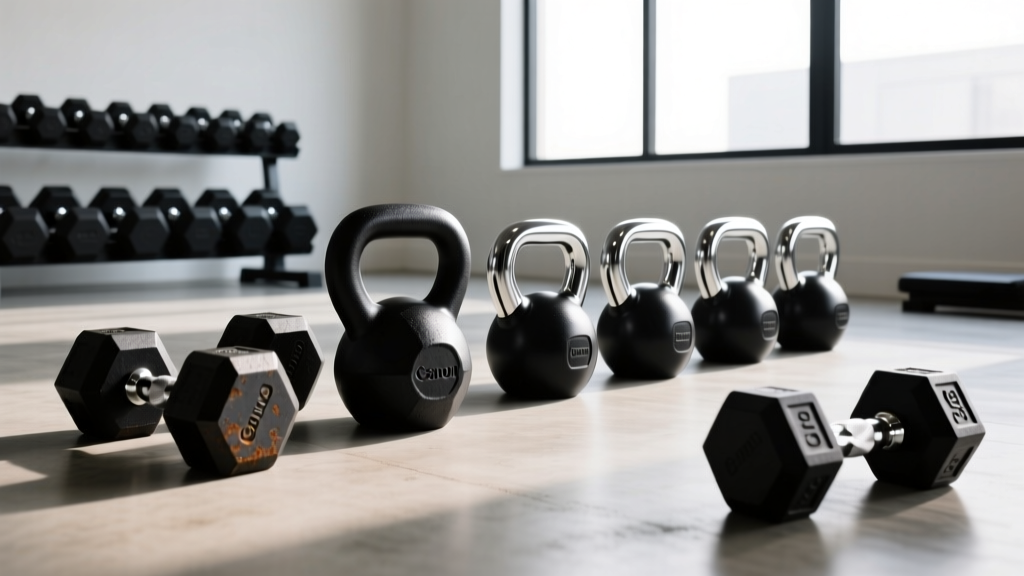
Beyond Decline Dumbbell Flyes: Cast Iron vs Competition Kettlebells

Barbell Clamp Types Comparison & Dumbbell Rear Delt Flys Safety
100lb Dumbbell Bench Press Plateaus: Olympic Barbell Knurling Guide
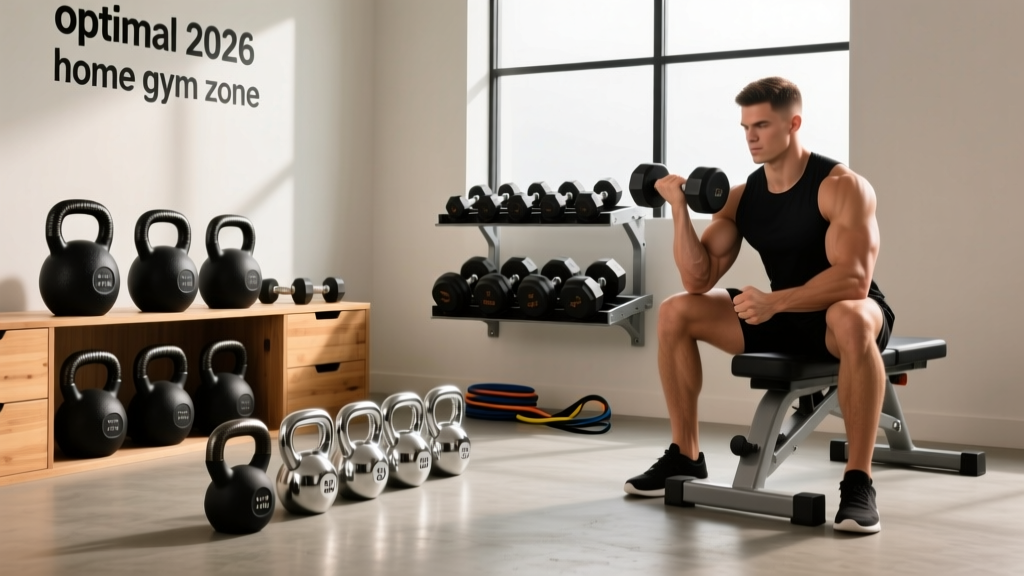
Cast Iron vs Competition Kettlebells & Seated Dumbbell Wrist Curl

Chest Supported Dumbbell Lateral Raise: Rubber vs Urethane
