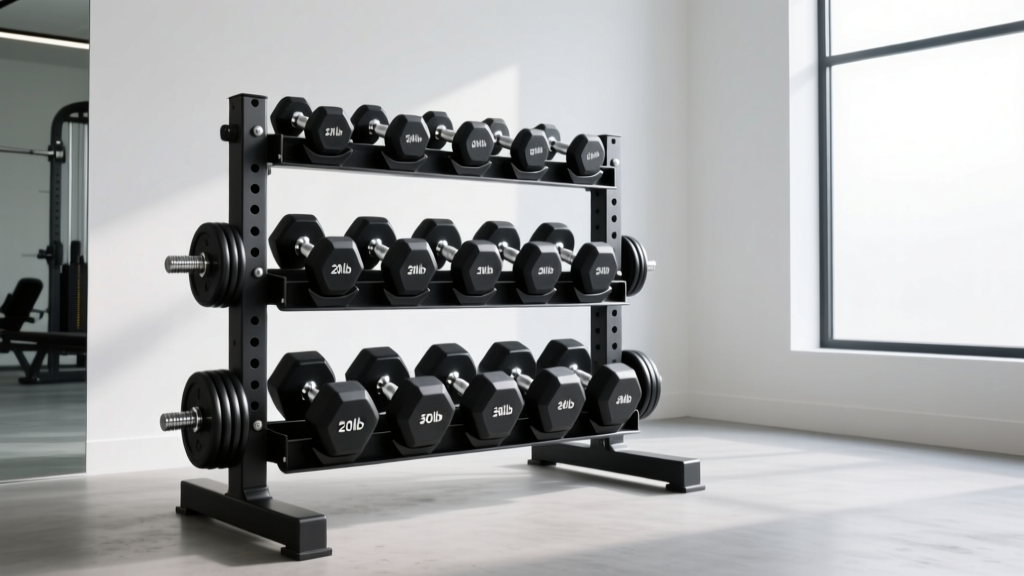
Beyond the Dumbbell Bracelet: Dumbbell Rack Storage Trends
Explore the 2026 fitness market shift from aesthetic accessories like the dumbbell bracelet to essential dumbbell rack and storage solutions for home gyms.

The Maturation of the Home Gym: From Aesthetics to Infrastructure
In the early 2020s, the viral popularity of the dumbbell bracelet—a silicone and metal fitness accessory worn to signal gym dedication and gamify workout streaks—symbolized a consumer market obsessed with the aesthetic and wearable elements of fitness culture. Fast forward to 2026, and the home fitness market has undergone a radical maturation. According to Statista's home fitness equipment market data, consumer spending has decisively pivoted away from novelty wearables and toward foundational, high-load infrastructure. The most prominent beneficiary of this shift? Premium dumbbell rack and storage solutions.
As home gym owners transition from single pairs of adjustable dumbbells to comprehensive, fixed-weight sets (ranging from 5 to 100+ pounds), the floor space required and the structural load imposed have necessitated a complete rethinking of weight storage. The 'dumbbell bracelet effect'—where fitness identity was once worn on the wrist—has been replaced by a desire to showcase meticulously organized, commercial-grade iron collections in the home.
2026 Market Insight: The global home gym equipment market has seen a 14% year-over-year increase in 'storage and organization' category spending, outpacing the growth of free weights themselves. Consumers are realizing that a $1,500 urethane dumbbell set requires a $500+ rack to protect both the equipment and the flooring.Market Segmentation: Dumbbell Rack Categories in 2026
The current storage market is strictly segmented by user footprint, budget, and the specific geometry of the dumbbells being stored. We have categorized the dominant market solutions into three distinct tiers based on structural integrity and load distribution.
| Model / Brand | Form Factor | Steel Gauge | Max Capacity | 2026 Price Range |
|---|---|---|---|---|
| Rogue Fitness 3-Tier Rack | Commercial Horizontal | 11-Gauge | 1,200+ lbs | $795 - $1,150 |
| Titan Fitness 3-Tier | Commercial Horizontal | 11-Gauge | 900 lbs | $399 - $499 |
| Rep Fitness A-Frame | Vertical / Space-Saver | 14-Gauge | 600 lbs | $149 - $199 |
| Bells of Steel Wall-Mount | Modular Shelving | 11-Gauge | 400 lbs / shelf | $120 - $180 |
The Shift Toward Urethane and Horizontal Storage
In 2026, rubber hex dumbbells are rapidly losing market share to virgin urethane models due to rubber's tendency to off-gas, degrade under UV light, and leave scuff marks. Urethane dumbbells, however, feature larger, more rounded heads. Consequently, traditional vertical 'tree' racks and narrow A-frames are being abandoned in favor of 3-tier horizontal shelving, which accommodates the wider footprint of modern urethane heads without forcing the user to awkwardly angle the handles.
Engineering Deep Dive: Material Science and Failure Modes
When evaluating dumbbell rack and storage solutions, the untrained eye looks at weight capacity. The domain expert looks at weld penetration, protective linings, and center-of-gravity dynamics. Here is a breakdown of the critical engineering factors defining the 2026 market.
- UHMW Polyethylene Lining: Premium racks now feature Ultra-High Molecular Weight (UHMW) plastic lining on the shelves. This prevents the metal handles of the dumbbells from grinding against the steel rack, preserving the knurling and drastically reducing acoustic impact (the 'clang' of dropping weights). Budget racks omit this, leading to premature rust on both the rack and the dumbbell handles.
- Welding Fatigue on Tier Joints: On horizontal 3-tier racks, the connection point between the vertical uprights and the horizontal shelf brackets bears immense shear force. According to Rogue Fitness 3-Tier Dumbbell Rack specifications, continuous MIG welds with gusseted brackets are mandatory for sets exceeding 50 lbs per dumbbell. Spot-welded brackets on imported budget models frequently snap under dynamic loading (when a user drops a heavy dumbbell onto the shelf rather than placing it gently).
- The A-Frame Tipping Hazard: A-frame racks are popular for small spaces, but they introduce a severe asymmetric loading hazard. If a user removes a pair of 70 lb dumbbells from the top tier while the bottom tier is empty, the center of gravity shifts dangerously upward and outward. In 2026, reputable manufacturers now include mandatory floor-bolting flanges or widened 30-inch base feet to counteract this rotational force.
The Adjustable Dumbbell Anomaly
The market explosion of adjustable dumbbells (e.g., Nuobell, PowerBlock, Bowflex 1090) has created a massive compatibility gap in the storage sector. Standard 3-tier racks are designed for fixed-weight dumbbells with uniform handle lengths. Adjustable models, which are often blocky, excessively long, or rely on delicate internal selector mechanisms, cannot be safely stored on angled rack shelves.
Storing a Nuobell or PowerBlock on a standard angled tier rack puts lateral stress on the selector pins and can void the manufacturer's warranty. The 2026 trend is the integration of flat, pull-out tray modules within power racks specifically designed for adjustable dumbbell footprints.
To solve this, companies like Rep Fitness and others have introduced modular flat-shelf attachments and dedicated adjustable dumbbell pedestals that keep the weights perfectly level, ensuring the internal locking mechanisms remain uncalibrated and secure.
Spatial Metrics and Safety Clearances
Proper integration of a dumbbell rack into a home gym requires strict adherence to spatial metrics. The most common failure in home gym design is placing the rack flush against a wall, which prevents the user from safely retrieving heavy weights.
Required Clearance Formulas
- Walkway Clearance: Maintain a minimum of 36 inches of unobstructed space in front of a horizontal 3-tier rack. This allows the user to squat and lift with a neutral spine when retrieving heavy dumbbells from the bottom tier (typically the 70-100 lb range).
- Shelf Depth Requirements: Standard 10-12 inch shelf depths are sufficient for 5-50 lb dumbbells. However, 100 lb+ urethane dumbbells feature massive heads that require a minimum 16-inch shelf depth to prevent overhang, which can cause the dumbbell to roll off if bumped.
- Wall-Mount Stud Targeting: For wall-mounted storage solutions, drywall anchors are a catastrophic failure point. Racks must be lag-bolted directly into 2x4 wooden studs or reinforced concrete using 3/8-inch structural lag screws, targeting a minimum of two studs per shelf bracket to support dynamic loads exceeding 300 lbs.
Conclusion: The Infrastructure Era
The trajectory of the home fitness market is clear. The era of signaling fitness identity through lightweight accessories like the dumbbell bracelet has been superseded by the 'Infrastructure Era' of 2026. As consumers invest thousands into premium, odor-free urethane dumbbell sets and precision-engineered adjustable models, the dumbbell rack has evolved from an afterthought into a critical piece of safety and organizational engineering. Whether opting for the commercial footprint of a 3-tier horizontal rack or the space-saving geometry of a reinforced A-frame, prioritizing gauge thickness, UHMW lining, and dynamic load safety remains the ultimate marker of a mature home gym.
More gear to consider
All reviews
Cast Iron vs Competition Kettlebells & Dumbbell Shoulder Press Bench

Maximizing Dumbbell Step Up Benefits: Top Loadable Dumbbells (2026)

Dumbbell Side Bend Good or Bad? Form Tips & Rack Layout Guide

Dumbbell Row Muscles Targeted: Top Neoprene Dumbbells Compared
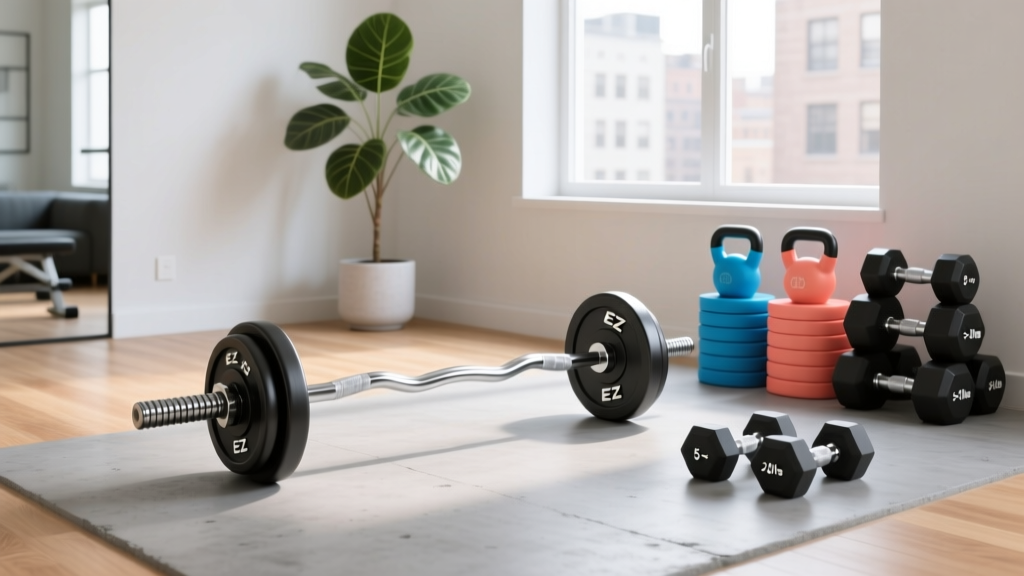
EZ Curl Bar vs Straight Bar: 2026 Trends & 45-Min Dumbbell Workouts