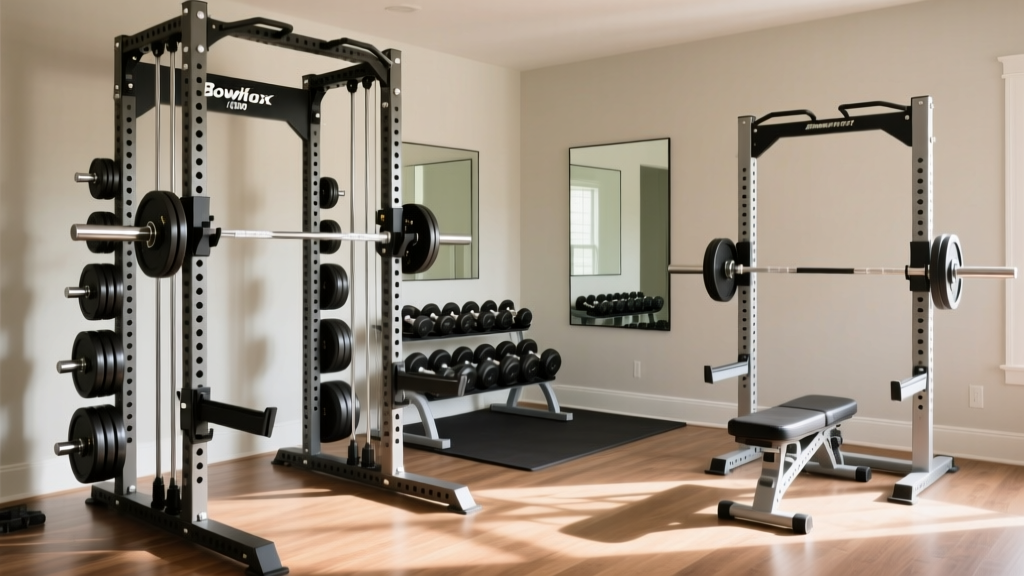
Targeting Dumbbell Bench Press Muscles Worked: Budget Rack Guide
Discover how the right dumbbell rack optimizes the dumbbell bench press muscles worked. We break down budget storage solutions, ROI, and 2026 pricing.

The Biomechanical Link: Why Storage Dictates Your Press
When building a garage gym, lifters often obsess over knurling patterns on barbells or the durometer rating of bumper plates, leaving dumbbell storage as an afterthought. However, your storage solution directly impacts your performance and safety on the bench. When analyzing the dumbbell bench press muscles worked—primarily the pectoralis major (sternal and clavicular heads), anterior deltoids, and triceps brachii—the setup phase is just as critical as the concentric press. According to ExRx.net's biomechanical breakdown, the dumbbell bench press allows for superior horizontal adduction compared to a barbell, leading to greater chest hypertrophy. But this increased range of motion requires heavier, bulkier implements to achieve progressive overload.
If you are forced to bend over and deadlift a pair of 80-pound hex dumbbells off the floor before sitting on the bench, you are pre-fatiguing your erector spinae and hamstrings. To fully isolate the dumbbell bench press muscles worked without compensating with your lower back, you need a rack that positions the weights at knee-to-hip height, allowing for a safe, biomechanically sound transfer to the starting position.
💡 Pro-Tip: The 'Knee Pop' TransferFor dumbbells over 50 lbs, never attempt to curl them into position. Sit on the bench, rest the dumbbell heads on your lower thighs (just above the knees), and simultaneously lean back while driving your knees upward to 'pop' the weights into the pressing position. A proper 3-tier rack positions the middle tier exactly where you need it to execute this maneuver safely.
2026 Dumbbell Rack Value Matrix
The fitness equipment market has seen fluctuations in steel tariffs and shipping costs leading into 2026, making budget analysis more important than ever. Below is a comparative matrix of the most prominent racks on the market, analyzing their true value proposition for home and commercial gyms.
| Brand & Model | 2026 Price | Steel Gauge | Max Tier Weight | UHMW Liners? |
|---|---|---|---|---|
| Titan Fitness 3-Tier | $149.99 | 12-Gauge | 50 lbs | No (Painted) |
| Bells of Steel 3-Tier | $249.99 | 11-Gauge | 100 lbs | Yes |
| Rogue 3-Tier Rack | $435.00 | 11-Gauge | 120+ lbs | Yes (UHMW) |
Deep Dive: Budget vs. Mid-Tier Solutions
Based on extensive durability testing and Garage Gym Reviews' equipment analysis, the gap between a $150 rack and a $250 rack is not just cosmetic—it is a matter of structural integrity and equipment preservation.
Titan Fitness 3-Tier (The Ultra-Budget Pick)
At $149.99, the Titan Fitness 3-Tier rack is the undisputed king of entry-level storage. It features a 48-inch width, accommodating up to 10 pairs of standard hex dumbbells. However, there are distinct trade-offs. The 12-gauge steel is adequate for lighter neoprene or rubber hex sets (5 to 50 lbs), but it exhibits minor flexing when loaded with 70+ lb cast iron. Furthermore, the lack of protective liners means the painted steel tiers will scrape against your dumbbell handles, eventually chipping the paint and exposing the rack to oxidation.
Bells of Steel 3-Tier (The ROI Sweet Spot)
For $249.99, the Bells of Steel 3-Tier rack offers the best return on investment for the serious home gym owner in 2026. The upgrade to 11-gauge steel eliminates the flexing seen in budget models, providing a rigid, commercial-grade feel. Crucially, Bells of Steel includes UHMW (Ultra-High-Molecular-Weight) polyethylene liners on the tiers. This seemingly minor addition protects both the rack and your dumbbell knurling or rubber coatings from friction damage. The angled tier design also ensures that heavier dumbbells sit securely without rolling, a common failure mode in flat-tier budget racks.
Material Science: The Hidden Cost of Bare Steel
Why do experts insist on UHMW plastic liners? The answer lies in the material science of modern dumbbells. Most budget-friendly hex dumbbells feature a rubber or urethane casing. When you drag a 60-pound rubber hex dumbbell across a bare, painted steel rack tier, the friction acts like coarse sandpaper. Over two to three years of daily use, this micro-abrasion tears the rubber casing at the handle junction.
Once the inner cast iron core is exposed to garage humidity, rust forms rapidly. This not only ruins the aesthetic of your gym but leaves rust stains on your flooring and hands. Spending an extra $100 for a rack with UHMW liners preserves a $1,500 dumbbell set, yielding a massive long-term ROI.
Space, Footprint, and the A-Frame Warning
Garage gym real estate is fiercely contested. A standard 3-tier horizontal rack measures roughly 48 inches wide by 24 inches deep, occupying 8 square feet of floor space. To save space, many budget shoppers turn to vertical 'A-Frame' or 'Tree' racks priced under $100. As a domain expert, I strongly advise against A-frames for anyone lifting heavy.
- The Tipping Moment Arm: When you remove a heavy pair of dumbbells from the top tier of an A-frame, the center of gravity shifts drastically. If the rack is not bolted to a platform, it becomes a severe tipping hazard.
- Clearance Issues: A-frames require 360-degree access, meaning they must be placed in the center of the room, effectively eating up more usable walking space than a horizontal rack pushed against a wall.
- Weight Limitations: Most budget A-frames max out at 500 lbs total capacity, which is quickly exceeded by a standard 5-50 lb rubber hex set (which weighs roughly 550 lbs).
If your footprint is strictly limited, consider wall-mounted dumbbell shelves. While installation requires drilling into load-bearing studs or reinforced concrete, wall mounts eliminate the floor footprint entirely and keep the heaviest dumbbells at the safest knee-height for your bench press setup.
Final Verdict: Maximizing Your Garage Gym ROI
Optimizing the dumbbell bench press muscles worked requires more than just good form; it requires an environment that facilitates safe, heavy lifting without pre-fatigue or injury risk. If your current dumbbell set caps out at 50 lbs, the Titan Fitness 3-Tier ($149.99) provides adequate, no-frills storage. However, if you are actively progressing into the 60-100 lb range to drive serious pectoral hypertrophy, the Bells of Steel 3-Tier ($249.99) is the undisputed value champion of 2026. The inclusion of 11-gauge steel and UHMW liners protects your investment, ensures structural rigidity, and allows you to execute the 'knee pop' setup with absolute confidence.
For further engineering specifications on heavy-duty storage, you can review the Rogue Fitness 3-Tier Rack specs, which remain the gold standard for commercial facilities, though their $435 price tag represents diminishing returns for the average home gym owner. Invest in the rack that matches your lifting trajectory, protect your equipment, and press with purpose.
More gear to consider
All reviews
Incline Dumbbell Curl Bench Angle: Loadable Dumbbell Value Analysis

What Does Dumbbell Fly Work? Barbell Collars & Clamps Compared

Rubber Hex vs Urethane: Best Gear for Dumbbell Exercises for Men
Power Rack vs Squat Rack vs Stand: Standing Dumbbell Curl Guide
Barbell Collar & Clamp Types Comparison: Mid Back Dumbbell Exercises