Dumbbell Shoulder to Overhead CrossFit: Power vs Squat Rack vs Stand
Master the dumbbell shoulder to overhead CrossFit movement. Our 2026 step-by-step guide compares power racks, squat racks, and stands for your garage gym.

Introduction: Building a Gym for Overhead CrossFit Movements
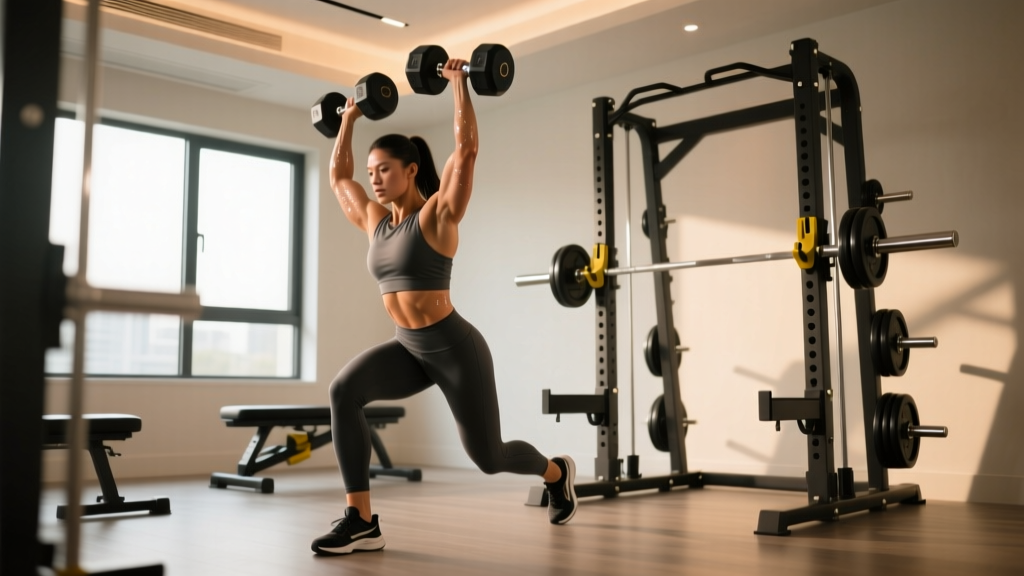
Setting up a functional home gym in 2026 requires more than just buying a set of adjustable dumbbells and a rubber mat. If your training involves high-volume functional fitness, you need a centralized, heavy-duty anchor for your equipment. While the dumbbell shoulder to overhead CrossFit movement is primarily performed standing on the floor, the reality of CrossFit programming means you will inevitably couple this movement with barbell thrusters, strict presses, kipping pull-ups, and heavy squats within the same workout. Choosing the right racking system is the most critical, expensive, and space-defining decision you will make for your garage gym.
As a beginner navigating the fitness equipment market, the terminology can be confusing. Manufacturers use terms like 'power rack,' 'squat rack,' and 'squat stand' somewhat interchangeably, but they serve vastly different purposes. This step-by-step guide will walk you through evaluating your space, understanding the biomechanical needs of overhead movements, and selecting the exact rack configuration that fits your budget and training style.
Step 1: Understand the Biomechanics and Space Requirements
Before dropping $500 to $1,500 on steel, you must understand the spatial demands of overhead lifting. According to the CrossFit Journal, overhead movements require a stable base, a clear vertical path, and a safe bail-out zone if you fail a repetition. When performing the dumbbell shoulder to overhead CrossFit movement, you need roughly 4 feet of lateral clearance to avoid striking walls or mirrors with your elbows during the dip-and-drive phase.
Furthermore, if you transition from dumbbells to a barbell for thrusters or push presses, your ceiling height becomes the ultimate limiting factor. A standard 7-foot barbell loaded with 45-pound bumper plates reaches roughly 85 inches in the overhead lockout position. If your garage ceiling is the standard 8 feet (96 inches), you have less than a foot of clearance. This dictates whether you can safely use a tall 90-inch power rack or if you must opt for a shorter 82-inch squat stand.
Pro Tip: The Drop ZoneWhen doing high-rep dumbbell shoulder-to-overhead WODs, fatigue will cause your form to break down. You will need to drop the dumbbells from overhead. Ensure your rack is positioned so that you can step forward and drop the weights onto thick horse-stall mats without clipping the rack's uprights or spotter arms.
Step 2: Compare Your Rack Options (2026 Market Breakdown)
The market has stabilized in 2026, with clear tiers established for home gym equipment. Below is a comparison matrix of the three primary rack categories, tailored for the functional fitness athlete.
| Feature | Power Rack (Full Cage) | Squat Rack (Half Rack) | Squat Stand (Foldable/Open) |
|---|---|---|---|
| Average 2026 Price | $1,200 - $1,800 | $450 - $750 | $250 - $400 |
| Footprint (L x W) | 43" x 43" or 43" x 24" | 48" x 48" (with storage) | 24" x 20" (per stand) |
| Pull-Up Bar | Yes (Multi-grip standard) | Yes (Single or multi-grip) | Rarely (Add-on required) |
| Safety Mechanism | Internal pin-pipe or straps | External spotter arms | External spotter arms (Bolt-down required) |
| Kipping Stability | Excellent (Heavy, enclosed) | Good (Counterbalanced) | Poor (Tipping hazard) |
Step 3: Evaluate Power Racks for Heavy WODs and Gymnastics
A power rack (often called a full cage) is the gold standard for safety and versatility. Models like the Rogue R-3 Power Rack or the Rep Fitness PR-4000 feature 11-gauge steel uprights and a fully enclosed design. For the CrossFit athlete, the power rack is unparalleled because it safely accommodates both heavy barbell lifting and high-momentum gymnastics.
Why Power Racks Excel for CrossFit
- Gymnastics Integration: Butterfly pull-ups, toes-to-bar, and muscle-ups generate massive horizontal force. A 300+ pound power rack bolted to a concrete slab will not budge, whereas lighter racks will 'walk' across your garage floor.
- Internal Spotting: When failing a heavy back squat or a strict press behind the neck, the internal safety straps or pin-pipes catch the barbell without requiring you to dump it forward, protecting your collarbones and your floor.
- Accessory Mounting: Power racks allow you to mount dip stations, landmine attachments, and cable pulley systems, turning your rack into a complete functional fitness station.
The Drawback: The primary disadvantage is the footprint and the price. A 43x43 inch rack consumes 13 square feet of floor space, and the front uprights can occasionally impede the clean-and-jerk motion if you are practicing Olympic lifts from the floor inside the cage.
Step 4: Assess Squat Racks for Open-Front Versatility
If you want the stability of a heavy rig but need an open front for Olympic lifting and dumbbell work, the half-rack (or squat rack) is your best option. The Titan Fitness X-2 Half Rack and the Bells of Steel Residential Half Rack are prime examples of this category.
The Open-Front Advantage for Dumbbell Work
When performing the dumbbell shoulder to overhead CrossFit movement, you often need to clean heavy dumbbells (50+ lbs per hand) from the floor to your shoulders before pressing them overhead. In a full power rack, the front uprights and crossmembers can restrict your elbow path during a heavy dumbbell clean. An open-front squat rack eliminates this obstruction, giving you a wide, unobstructed staging area for your dumbbells, kettlebells, and wall balls.
According to guidelines from the National Strength and Conditioning Association (NSCA), maintaining an unobstructed bar path and joint alignment is critical for shoulder health during overhead pressing. The open-front design inherently supports better biomechanics for tall athletes who might otherwise feel claustrophobic or restricted inside a standard 43-inch deep cage.
Warning: Spotter Arm LengthWhen buying a half-rack, ensure the external spotter arms are at least 24 inches long. If you fail a barbell bench press or a front squat, a short 18-inch arm might not catch the sleeves of the barbell, leading to a dangerous forward dump.
Step 5: Consider Squat Stands for Budget and Space Constraints
Squat stands are essentially two independent vertical posts with J-cups. They are the most affordable and space-efficient option, with models like the Rep Fitness PR-1500 or Rogue S-2 Squat Stand 2.0 dominating the budget tier. For beginners who primarily do dumbbell shoulder to overhead CrossFit WODs and only occasionally barbell squat, stands can be highly effective.
When to Choose Squat Stands
- Space is at a Premium: If you are building a gym in a spare bedroom or a small apartment balcony, foldable squat stands can be pushed against the wall when not in use, reclaiming 80% of your floor space.
- Budget Limitations: You can outfit a pair of heavy-duty squat stands, a quality barbell, and a set of bumper plates for under $800, leaving room in your budget for premium dumbbells.
- Strict Overhead Pressing: Squat stands allow you to set the J-cups at exact shoulder height, walk the barbell out, and perform strict overhead presses without any overhead crossmembers blocking your bar path.
The Fatal Flaw: Squat stands are notoriously unstable for kipping pull-ups. If you attempt a butterfly pull-up or toes-to-bar on unbolted squat stands, the momentum will tip the stands backward, resulting in severe injury. If you buy squat stands for CrossFit, you must purchase the manufacturer's bolt-down kit or stabilization crossmember and anchor them into concrete.
Step 6: Check Ceiling Clearance and Hardware Compatibility
Before finalizing your purchase, grab a tape measure and verify your ceiling height. In 2026, most premium racks utilize either 3x3 inch uprights with 5/8-inch hardware (the Rogue standard) or 1-inch hardware (the Rep Fitness standard). Ensure that the rack you buy has 'Westside hole spacing' (1-inch hole spacing in the bench press and overhead press zones). This allows you to set your J-cups or safety spotter arms at the exact millimeter required for your specific limb lengths.
For the dumbbell shoulder to overhead CrossFit movement, you do not need the rack itself, but you do need a designated storage solution. Look for racks that offer vertical dumbbell storage horns or attachable weight shelves. Storing 50-pound dumbbells on the floor creates a tripping hazard during high-heart-rate WODs; storing them at waist-height on the rack's side uprights keeps your workout area safe and efficient.
Frequently Asked Questions (FAQ)
Can I do the dumbbell shoulder to overhead movement inside a power rack?
Yes, but it is not recommended. The front uprights of a standard 43-inch deep power rack will restrict your elbow movement during the 'dip' portion of the push press, and the crossmembers may block your overhead lockout. Perform dumbbell movements in the open space directly in front of your rack.
Do I need UHMW plastic liners on my J-cups?
Absolutely. If you are transitioning between heavy barbell thrusters and dumbbell work, you will be re-racking your barbell frequently. UHMW (Ultra-High-Molecular-Weight) plastic liners protect the knurling on your barbell from being ground down by bare steel J-cups, extending the life of your equipment.
What is the best rack for a garage with an 8-foot ceiling?
If your ceiling is exactly 96 inches, you must purchase an 82-inch or 84-inch 'short' power rack or squat stand. A standard 90-inch rack will leave you with only 6 inches of clearance, making it impossible to safely load bumper plates or perform overhead barbell lockouts without scraping the ceiling drywall.
Are foldable wall-mounted racks safe for CrossFit?
Wall-mounted foldable racks (like the PRx Profile) are excellent for strict strength training and dumbbell work. However, they are generally not safe for dynamic CrossFit movements like kipping pull-ups or muscle-ups due to the sheer shear-force exerted on the wall studs. Stick to floor-bolted cages or half-racks for high-momentum gymnastics.
More gear to consider
All reviews
Rubber Hex vs Urethane Care for a Home Dumbbell Workout for Women
Point and Recovery Compared: Precision, Performance, and Real-World Tradeoffs in Industrial Weighing Systems

Beyond the Davidoff Dumbbell Perfume Hype: Olympic Barbell Knurling & Weight Compared

Best Adjustable Dumbbells for a Heavy Leg Workout With Dumbbells
Best Dumbbell Weight for Beginners: Rubber vs Urethane 2026 Trends