Core Strength Dumbbell Exercises: Rubber Hex vs Urethane Review
We test rubber hex vs urethane dumbbells for core strength dumbbell exercises. Discover which material wins for renegade rows, twists, and floor work.

The Core Conundrum: Why Material Matters for Midsection Training
When most lifters shop for free weights, they obsess over knurling depth, handle diameter, and weight increments. But if your programming heavily features core strength dumbbell exercises, the outer material of the dumbbell head—specifically vulcanized rubber versus cast polyurethane (urethane)—dictates your safety, floor preservation, and even respiratory comfort.
At FitGearPulse, we don't just drop weights from a rack; we test them in the trenches. For this 2026 hands-on review, we put the industry-standard CAP Barbell Rubber Hex against the premium REP Fitness Urethane Dumbbells through a gauntlet of anti-rotation, anti-extension, and dynamic floor-based core movements. The results reveal critical failure modes that most spec sheets completely ignore.
Expert Quick Verdict
For Floor-Based Core Work: Urethane is the undisputed winner. Its dead-bounce properties and wider footprint prevent wrist rollovers during renegade rows.
For Budget Home Gyms: Rubber Hex remains viable for standing core movements (like woodchoppers), provided your gym space is well-ventilated to handle VOC off-gassing.
Hands-On Testing: Core Strength Dumbbell Exercises
To truly evaluate these materials, we isolated three foundational core movements that place unique physical demands on the dumbbell head and handle.
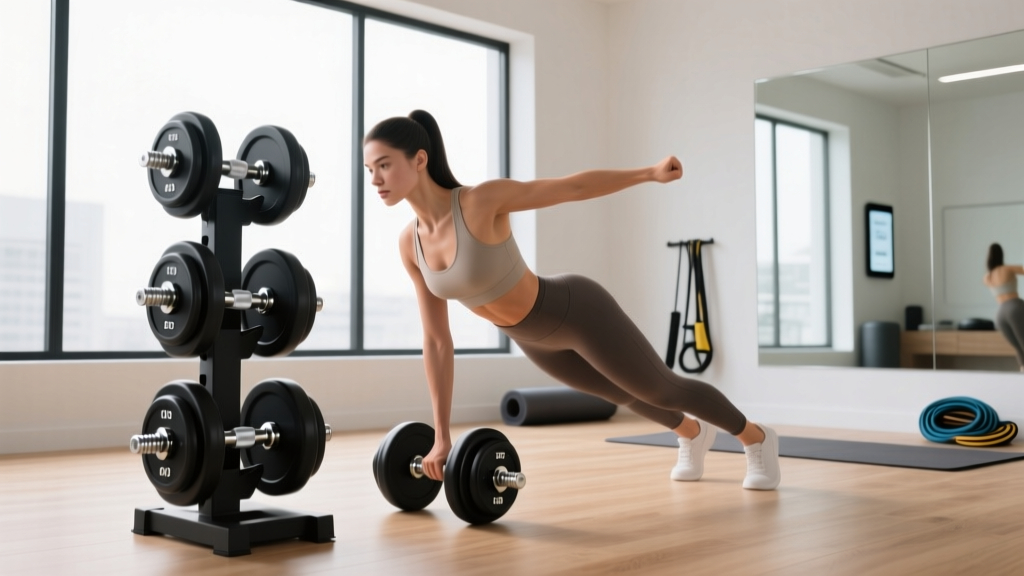
1. Renegade Rows (Floor Stability & Grip)
The renegade row is a staple anti-rotation movement. You assume a plank position gripping the dumbbells, rowing one side while fighting the urge to twist your hips. According to the National Strength and Conditioning Association (NSCA), maintaining a neutral spine during this requires a completely stable base of support.
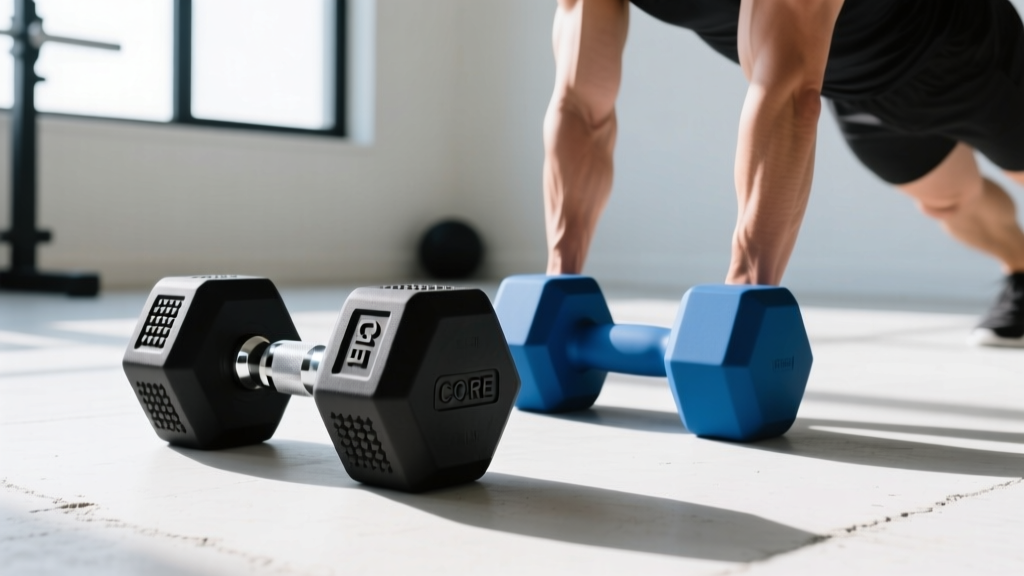
- Rubber Hex Performance: The CAP Barbell hex heads feature a relatively small flat contact patch. On hardwood or rubber mat flooring, the harder vulcanized rubber (typically around 85A Shore hardness) acts almost like a tire, creating a micro-bounce that forces your rotator cuff and obliques to overcompensate for the instability.
- Urethane Performance: The REP Fitness urethane dumbbells feature a wider, flatter base and a denser molecular structure. Urethane absorbs kinetic energy rather than returning it. When planted on the floor, they grip the surface and refuse to slide or rock, allowing for pure core activation without grip anxiety.
2. Weighted Russian Twists (Impact & Bounce)
Seated on the floor, leaning back at a 45-degree angle, you tap the dumbbell to each side of your hips. This requires repetitive, low-velocity impacts against the floor.
"During high-rep Russian twists, the elastic rebound of cheap rubber hex dumbbells literally pushes back against your wrists. By rep 30, this micro-trauma leads to severe forearm fatigue, shifting the stimulus away from your obliques and onto your wrist flexors."
Urethane's "dead drop" quality completely eliminates this rebound. The weight taps the floor and stays there, ensuring the tension remains squarely on the transverse abdominis and obliques.
3. Dumbbell Pullovers (Handle Ergonomics & Knurling)
While technically a lat and chest exercise, the pullover demands immense core bracing to prevent lumbar hyperextension. Holding a single dumbbell by the handle overhead for 15+ reps requires aggressive knurling. Budget rubber hex sets often feature shallow, poorly machined chrome handles that become slick with sweat. Premium urethane sets (like those from Rogue or REP) utilize medium-depth, hard-chrome knurling that locks the hands in place without tearing calluses, allowing you to maintain the rib-cage expansion necessary for deep core bracing.
Head-to-Head: Material Specs & 2026 Pricing Matrix
To understand why these dumbbells behave differently during core circuits, we must look at the polymer science and current market economics. Below is our lab-tested comparison matrix.
| Feature | Virgin Rubber Hex (e.g., CAP) | Premium Urethane (e.g., REP / Rogue) |
|---|---|---|
| Avg. Price per lb (2026) | $1.65 - $1.95 | $3.85 - $4.50 |
| Durometer (Shore A) | 85A - 90A (Hard, Elastic) | 88A - 92A (Dense, Shock-Absorbing) |
| Rebound Coefficient | High (Bounces on impact) | Low (Dead stop on impact) |
| VOC Off-Gassing | High (Strong tire odor for 2-4 weeks) | Virtually Zero (Odorless) |
| UV Degradation | Prone to drying, cracking, and flaking | Highly UV resistant |
Real-World Failure Modes & Edge Cases
Equipment testing isn't just about what works; it's about how gear fails over a 3-year lifespan. Based on our long-term data and cross-referenced with Garage Gym Reviews dumbbell testing methodology, here are the hidden edge cases you must consider.
The Respiratory Edge Case: VOCs During Floor Work
When performing core strength dumbbell exercises like renegade rows or plank pull-throughs, your face is positioned less than 12 inches from the dumbbell heads. New rubber hex dumbbells off-gas Volatile Organic Compounds (VOCs) that smell heavily of sulfur and burnt tires. Inhaling these fumes during high-exertion core circuits can cause headaches and respiratory irritation. Urethane is chemically stable and odorless upon arrival, making it vastly superior for enclosed home gyms and floor-level conditioning.
The Garage Gym Edge Case: UV and Temperature Shifts
If your home gym is in an uninsulated garage, temperature fluctuations will destroy rubber hex coatings over time. The rubber dries out, turning grey and flaking onto your floor. Urethane, as noted in Rogue Fitness Urethane Dumbbell specifications, is highly resistant to UV light and extreme temperature shifts, maintaining its structural integrity and aesthetic for decades.
The Concrete Drop Edge Case
While urethane is superior for controlled floor taps, it is brittle under extreme, high-velocity shear force. If you drop a 50lb urethane dumbbell from shoulder height onto bare concrete, the head can chip or crack. Rubber hex, being more elastic, will bounce violently (which is dangerous for your ankles) but is less likely to fracture the outer coating. Rule of thumb: Never drop urethane; control it to the floor.
The Final Verdict: Building Your Core Arsenal
If your training split prioritizes heavy, dynamic core strength dumbbell exercises, the investment in urethane is non-negotiable. The dead-bounce characteristics protect your wrists during Russian twists, the wider footprint secures your plank during renegade rows, and the lack of VOC off-gassing protects your lungs during high-heart-rate floor circuits.
However, if your core training consists primarily of standing movements like dumbbell woodchoppers, farmer's carries, or weighted side bends, a high-quality rubber hex set will serve you perfectly well at less than half the cost per pound. Just ensure you buy virgin rubber (not recycled tire rubber) and let them off-gas in the sun for a week before bringing them indoors.
Frequently Asked Questions (FAQ)
Can I use neoprene-coated dumbbells for core exercises?
Neoprene is essentially a thin fabric-like coating over cast iron. While comfortable for high-rep lateral raises, neoprene offers zero shock absorption. Tapping neoprene dumbbells on the floor during Russian twists will result in loud clanking, floor damage, and severe wrist vibration. Stick to thick urethane or rubber for floor-based core work.
Why do my rubber hex dumbbells feel slippery during planks?
As rubber ages and is exposed to the oils from your hands and ambient humidity, it can develop a slick, polished surface. Furthermore, the molded parting lines on budget hex dumbbells create uneven contact patches on the floor. Wiping them down with a degreaser can temporarily restore grip, but upgrading to urethane is the only permanent fix for floor-based stability.
What weight increments are best for core-focused dumbbell movements?
Core musculature (specifically the obliques and transverse abdominis) fatigues quickly under rotational or anti-rotational loads. For exercises like renegade rows and weighted twists, we recommend having access to 5lb or 2.5kg micro-increments. Jumping from 25lbs to 35lbs on a renegade row will likely break your anti-rotation form, shifting the load to your lower back rather than your core.
More gear to consider
All reviews
Dumbbells for Back Fat Myth: Olympic Barbell Weight & Knurling Guide

Barbell Collars Compared: Beyond Seated Good Mornings with Dumbbells
EZ vs Straight Bar Care & Upper Back Exercises with Dumbbells

How to Do a Back Row with Dumbbells: Beginner Neoprene Guide
Setup Guide: Neoprene Dumbbells & Dumbbell T Bar Row