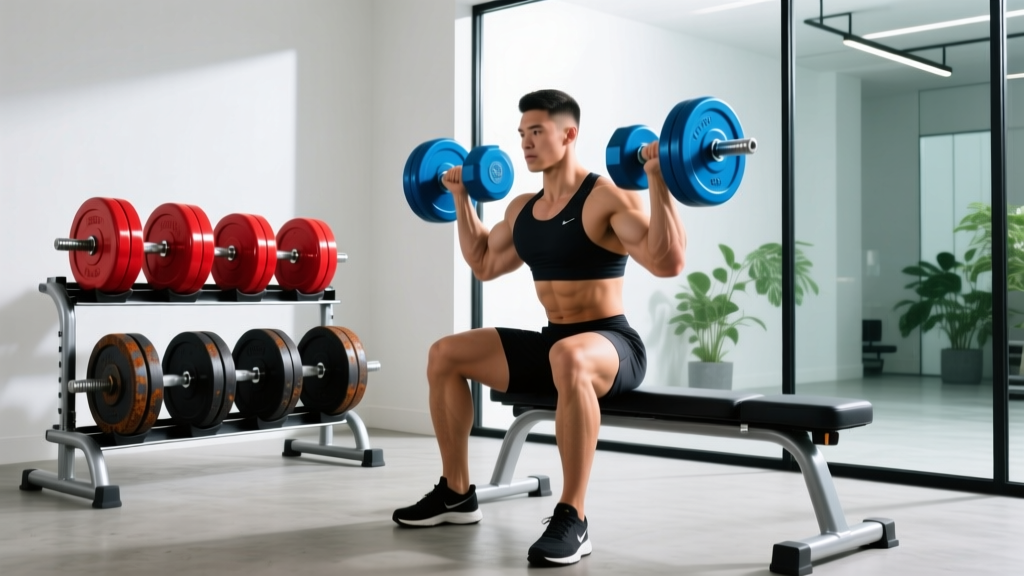
Barbell Collar Comparison: Best for Upper Pec Dumbbell Exercises
Compare barbell collars and spinlock clamps. Discover the best locks for heavy lifts and precise upper pec dumbbell exercises in our 2026 head-to-head guide.

The Hidden Variable in Your Chest Day: Why Collar Choice Matters
Most lifters spend hundreds of dollars on calibrated plates, knurled barbells, and ergonomic dumbbells, only to secure their loads with $5 spring clips that slip mid-rep. In 2026, the fitness equipment market offers a highly specialized array of locking mechanisms, yet the importance of these tools is frequently underestimated. Whether you are loading a 29mm Olympic barbell for heavy incline presses or assembling 1-inch standard adjustable dumbbells for precise upper pec dumbbell exercises, the locking mechanism dictates your safety, weight distribution, and biomechanical balance.
When performing isolation movements targeting the clavicular head of the pectoralis major—such as the incline dumbbell press or the dumbbell guillotine press—any lateral shift in the weight plates alters the moment arm. According to ExRx Kinesiology breakdowns of the incline press, even a minor asymmetrical weight shift forces the rotator cuff to overcompensate, increasing injury risk and reducing upper pec activation. This makes the humble collar one of the most critical, yet overlooked, pieces of free weight equipment.
Head-to-Head Matrix: Spring Clips vs. Lockjaw vs. Screw-Down vs. Spinlock
Before diving into the specific mechanics of each clamp, review our 2026 comparison matrix to understand the baseline specifications, pricing, and ideal use cases for the four dominant collar types on the market.
| Collar Type | Best Application | Avg. Price (2026) | Sleeve Compatibility | Lateral Slippage Risk |
|---|---|---|---|---|
| Steel Spring Clip | Light Olympic lifts, quick changes | $10 - $18 / pair | 50mm (Olympic) | High (under heavy load) |
| Polymer Snap (Lockjaw) | CrossFit, drop sets, bumper plates | $30 - $45 / pair | 50mm (Olympic) | Low (but degrades over time) |
| Aluminum Screw-Down | Heavy powerlifting, static presses | $65 - $90 / pair | 50mm (Olympic) | Zero |
| Standard Spinlock Nut | Adjustable dumbbells, home gyms | $20 - $40 / pair | 25mm (1-inch Standard) | Moderate (if improperly tightened) |
The Olympic Barbell Lockdown: Spring vs. Polymer vs. Aluminum
1. Steel Spring Clips (The Outdated Standard)
Spring clips rely on tension to grip the sleeve. While they are incredibly fast to apply and remove, BarBend's comprehensive barbell collar testing consistently shows that spring clips fail under heavy, uneven loads. If you are benching 300+ lbs and the bar tilts slightly during a rack, the plates can slide outward, compressing the spring and leading to a catastrophic weight dump. Verdict: Relegate these to warm-up sets or lightweight accessory work.
2. Polymer Snap Collars (e.g., Lockjaw)
Polymer collars use a rigid plastic shell with an internal gripping mechanism that locks onto the sleeve. Priced around $34.99, they are the gold standard for dynamic movements where plates frequently change. However, they possess a critical edge-case failure mode: temperature sensitivity. In unheated garage gyms during winter months, the polymer can become brittle. Dropping a barbell with frozen Lockjaw collars can result in micro-fractures that eventually cause the hinge to snap mid-lift.
3. Aluminum Screw-Down Collars (e.g., Rogue HG 2.0)
Retailing between $72.50 and $85.00, machined aluminum collars utilize a threaded screw to press a steel or composite pad directly against the sleeve. As highlighted in Rogue Fitness's official collar lineup, these provide absolute zero lateral shift. They are mandatory for heavy incline barbell presses, floor presses, and any lift where the barbell is subjected to severe angles or uneven force vectors.
⚠️ WARNING: Knurling DestructionNever use cheap, unpadded metal screw-down collars on a barbell with full-length knurling. The bare metal threads will grind against the knurl peaks, permanently ruining the bar's grip within a few weeks. Always ensure your aluminum collars feature a replaceable UHMW (Ultra-High-Molecular-Weight) polyethylene padding pad.
The Standard Dumbbell Dilemma: Spinlocks and Upper Pec Work
While Olympic barbell collars get the spotlight, millions of home gym owners rely on 1-inch standard adjustable dumbbells. This is where the collar choice directly impacts the efficacy of your upper pec dumbbell exercises. When executing an incline dumbbell press, your wrists must remain perfectly neutral, and the center of mass must align precisely with your forearm.
Standard dumbbell handles utilize a threaded sleeve and a spinlock nut. If you are using outdated, smooth-sided star nuts, you are compromising your chest day. Here is why upgrading your dumbbell collars is non-negotiable for upper pec hypertrophy:
- The Rattle Effect: Smooth star nuts rarely tighten flush against the plate. During the eccentric (lowering) phase of an incline fly, the plates rattle. This acoustic and physical vibration disrupts the mind-muscle connection and forces your stabilizers to work overtime.
- Grip Width Interference: Bulky, poorly designed spinlock nuts extend past the sleeve, forcing you to widen your grip. A wider grip on an incline press shifts tension away from the upper pecs and places undue stress on the anterior deltoids and AC joint.
- Thread Pitch Mismatches: Most 1-inch handles use either 12 TPI (Threads Per Inch) or 16 TPI. Forcing a 16 TPI nut onto a 12 TPI handle will cross-thread the steel, permanently destroying the sleeve and creating a dangerous slip hazard.
The 2026 Solution: Hex-Nut O-Ring Spinlocks
To solve this, upgrade to Hex-Nut Spinlocks with integrated rubber O-rings (typically $25-$40 per pair). The hexagonal shape allows you to use a standard wrench or socket to torque the nut down to exactly 35-40 ft-lbs, ensuring the plates are completely immobilized. The rubber O-ring acts as a shock absorber, preventing the nut from vibrating loose during high-rep upper pec isolation sets.
Step-by-Step: Securing a Spinlock Dumbbell for Incline Presses
To guarantee maximum safety and optimal weight distribution for your upper pec dumbbell exercises, follow this precise assembly protocol:
- Inspect the Threads: Wipe the dumbbell sleeve with a microfiber cloth and apply a single drop of 3-in-One oil to prevent rust seizing.
- Load Symmetrically: Slide your plates on, ensuring the flat side of the cast iron plate faces the handle, leaving the raised lip facing outward.
- Seat the O-Ring: Ensure the rubber washer is sitting flush against the outer plate.
- Hand-Tighten: Thread the hex nut on by hand until it meets resistance. Do not use tools yet, to avoid cross-threading.
- Torque and Lock: Use a rubber mallet to tap the hex nut a quarter-turn clockwise, or use a wrench to apply firm, even pressure. The plates should have zero millimeter of lateral play.
Failure Modes & Edge Cases: When Clamps Slip
Understanding how and why collars fail is the hallmark of an experienced lifter. The most common failure mode in 2026 is material fatigue in composite clamps. Polymer clamps left in direct sunlight or exposed to UV rays from garage windows degrade rapidly, losing up to 40% of their clamping force within 18 months.
Another edge case involves micro-loading. If you are using fractional plates (e.g., 0.25 lb or 0.5 lb plates) to progressively overload your upper pec dumbbell exercises, standard spring clips cannot apply enough surface pressure to hold these thin plates in place. For micro-loading, you must use magnetic collars (like those from Faction Fitness) or specialized screw-down collars with extended threading to reach past the thin plates and grip the sleeve.
'The integrity of your lift begins at the sleeve. A shifting plate isn't just an annoyance; it's an unplanned alteration of your biomechanical leverages. Treat your collars with the same respect you treat your lifting belt.' — 2025 NSCA Biomechanics Symposium Notes
Expert Verdict: Building Your Clamp Arsenal
Your collar selection should be dictated by your specific training environment and the exercises you prioritize. For commercial gym-goers focusing on heavy Olympic barbell work, invest the $80 in a pair of machined aluminum screw-down collars; they will outlive your barbell. For CrossFit or high-volume hypertrophy blocks where speed is essential, polymer snap collars remain the undisputed champion, provided you replace them every two years.
However, if your training relies heavily on adjustable standard dumbbells for targeted upper pec dumbbell exercises, immediately discard your smooth star nuts. Upgrading to torqued hex-nut O-ring spinlocks is the cheapest, most effective equipment upgrade you can make this year to improve joint safety, stabilize your grip, and maximize clavicular pec recruitment.
More gear to consider
All reviews
Kettlebell Guide: Cast Iron vs Competition & How to Hold a Dumbbell Correctly

Barbell Collar Types and Adjusting Weight Dumbbells Setup Guide

Top Neoprene Dumbbells for a Home Traps Workout With Dumbbells

Cast Iron vs Competition Kettlebells & Dumbbell Front Raises Muscles Worked

EZ vs Straight Bar: Compact Layouts & Weighted Dips Dumbbell