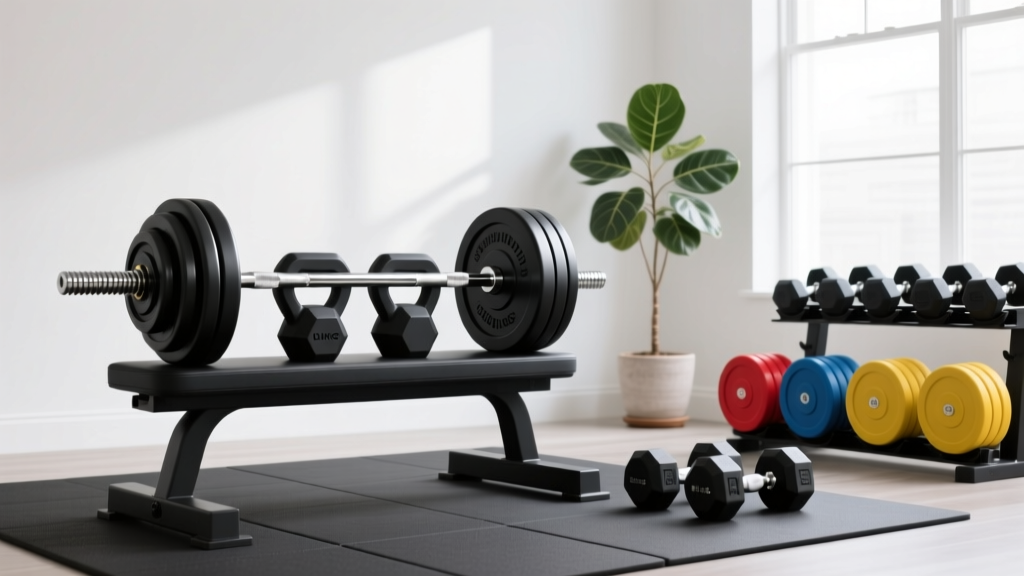
Chest Workout Using Dumbbells vs Barbell: Knurling & Weight Guide
Deciding between a chest workout using dumbbells or a barbell? Compare top Olympic bars for benching, focusing on weight, knurling, and tensile strength.

The debate over the optimal chest day stimulus is as old as iron itself. While a chest workout using dumbbells is unparalleled for targeting the pectoralis major through a deep range of motion and allowing horizontal adduction across the body's midline, the Olympic barbell remains the undisputed king for mechanical tension and absolute load progression. If you are transitioning from dumbbells to the barbell bench press—or simply looking to upgrade your home gym's primary pressing tool—understanding the nuances of Olympic barbell weight, tensile strength, and knurling geometry is non-negotiable.
In this head-to-head guide, we break down the biomechanics of both modalities before diving deep into a specialized Olympic barbell buying guide. We will compare three of the top bench-pressing bars on the market in 2026, analyzing their knurling profiles, shaft diameters, and real-world durability.
The Biomechanics: Dumbbell vs. Barbell Chest Workouts
Before investing hundreds of dollars into a specialized barbell, it is crucial to understand why you are using it. According to kinesiological data from ExRx, the barbell bench press restricts the natural arc of the shoulder joint compared to dumbbells, but it drastically increases the amount of external load you can stabilize.
Modality Comparison:- Dumbbells: Superior for unilateral deficit correction, deeper pectoral stretch, and joint-friendly wrist rotation. Limited by grip strength and the physical act of kicking heavy weights into position.
- Barbell: Superior for central nervous system (CNS) overload, progressive overload tracking, and accommodating elite-level weight (500+ lbs). Requires strict scapular retraction to protect the rotator cuff.
When you max out on adjustable dumbbells (typically capping at 90-120 lbs per hand in most commercial and home gyms), the Olympic barbell becomes mandatory for continued hypertrophy and strength adaptations.
Decoding Olympic Barbell Weight & Tensile Strength
Not all 20kg bars are created equal. The International Weightlifting Federation (IWF) mandates that a standard men's Olympic barbell must weigh exactly 20kg (44 lbs) and feature a 28mm shaft diameter. However, the material science dictates how that bar behaves under a heavy bench press.
Tensile Strength and the "Whip" Factor
Tensile strength, measured in Pounds per Square Inch (PSI), determines how much weight the bar can hold before permanently bending. For a dedicated bench press or powerlifting bar, you want a minimum of 190,000 PSI.
Why? A heavier bench press requires a stiffer shaft. If you use a bar with lower tensile strength (e.g., 150,000 PSI), the bar will "whip" or bounce excessively when you pause it on your chest, destabilizing your press and increasing the risk of a pec tear. Conversely, elite weightlifting bars are designed to whip intentionally to aid in the clean and jerk, making them suboptimal for heavy chest pressing.
Knurling Profiles: Hill, Mountain, and Volcano
Knurling is the machined pattern on the steel shaft that provides grip. For a chest workout using dumbbells, the knurling on the handle is usually a standard, medium-aggression diamond pattern. Olympic barbells, however, feature highly engineered knurling geometries that drastically alter your bench press performance.
- Hill Knurling: The tops of the knurl peaks are rounded off. It feels smooth and is forgiving on the hands, but under a 315 lb bench press with sweaty palms, your grip will slip.
- Mountain Knurling: Sharp, aggressive peaks that dig deeply into the skin. Excellent for deadlifts, but it will tear up your calluses and hands during high-volume bench pressing.
- Volcano Knurling: The gold standard for powerlifting and benching. The machine cuts a deep valley but leaves a sharp, grippy rim at the top. It acts like Velcro against your skin without tearing the tissue.
"A common mistake lifters make is buying an Olympic Weightlifting bar for bench pressing. Weightlifting bars lack center knurling. For the bench press, a center knurl is critical—it grips your t-shirt or skin, preventing the bar from sliding down your sternum during the eccentric descent."
Head-to-Head Comparison: Top 3 Olympic Barbells for Benching
Let's compare three premier barbells dominating the 2026 market, specifically evaluating their suitability for heavy chest pressing.
| Feature | Rogue Ohio Bar (Cerakote) | Rep Fitness Excalibur | Titan Cerakote Olympic |
|---|---|---|---|
| Price (Approx.) | $345 | $349 | $249 |
| Tensile Strength | 190,000 PSI | 190,000 PSI | 190,000 PSI |
| Knurl Type | Volcano (Medium) | Volcano (Aggressive) | Mountain/Hill Hybrid |
| Center Knurl | Yes (Dual IWF/IPF marks) | Yes (IPF mark only) | Yes (Single mark) |
| Finish | Cerakote Shaft / Hard Chrome Sleeves | Hard Chrome Shaft & Sleeves | Cerakote Shaft / Chrome Sleeves |
| Bushing/Bearing | Composite Bushings | 8-Piece Needle Bearings | Brass Bushings |
1. Rogue Ohio Bar (Cerakote Edition)
The Rogue Ohio Bar is the benchmark of the industry. Its composite bushings provide the perfect amount of spin for the bench press without the excessive, wobbly rotation of needle bearings. The Cerakote finish (a ceramic-polymer coating originally designed for firearms) offers unparalleled corrosion resistance, meaning you can leave it in a humid garage gym without the shaft rusting. The volcano knurl is perfectly balanced—grippy enough for a 405 lb bench, but smooth enough for high-rep dumbbell-to-barbell superset days.
2. Rep Fitness Excalibur Bar
The Excalibur is a dedicated powerlifting bar. It features an aggressive volcano knurl that will grab your hands immediately. Unlike the Ohio Bar, the Excalibur uses needle bearings. While bearings are typically reserved for Olympic lifting, Rep engineered these to spin smoothly but stop quickly, preventing the bar from twisting in your hands during the bench press lockout. The hard chrome shaft requires occasional oiling but offers a raw, uncoated steel feel that purists love.
3. Titan Cerakote Olympic Bar
For budget-conscious lifters transitioning from a chest workout using dumbbells to their first serious barbell setup, the Titan Cerakote is a massive value at $249. The knurling is slightly less refined than Rogue's, leaning toward a mountain profile that can feel sharp during heavy eccentrics. However, the 190k PSI tensile strength ensures it will not permanently bend under standard powerlifting loads.
Bushings vs. Bearings: What Matters for the Bench Press?
When shopping for an Olympic barbell, you will see references to the sleeve construction.
- Bronze/Composite Bushings: These are solid rings that allow moderate sleeve rotation. Best for Bench Press and Squats. They provide a stable, rigid feel when the bar is resting on your chest.
- Needle Bearings: These allow the sleeves to spin rapidly and independently of the shaft. Best for Cleans and Snatches. If you use a pure weightlifting bar with bearings for a heavy bench press, the sleeves can spin too freely, creating a gyroscopic effect that destabilizes your wrists at the bottom of the press.
If you purchase a barbell with a Cerakote or Zinc finish, be aware that repeated racking on standard UHMW plastic J-cups will eventually wear the coating off the sleeves. If your rack uses bare metal J-cups, the steel-on-steel contact will gouge the barbell sleeves. Always ensure your power rack features high-quality UHMW plastic liners to protect your investment.
Final Verdict: Building Your Ultimate Chest Arsenal
A comprehensive chest development program should not force you to choose strictly between a chest workout using dumbbells or a barbell; it should integrate both. Use heavy dumbbell presses for deep stretch-mediated hypertrophy and unilateral stability. Then, move to the barbell to overload the CNS and push absolute mechanical tension to its limits.
When making your barbell purchase, prioritize a 190,000 PSI tensile strength, a 28mm or 28.5mm shaft, and a volcano knurl with a center mark. The Rogue Ohio Bar remains the safest, most versatile recommendation for 90% of lifters in 2026, offering the perfect bridge between Olympic lifting durability and powerlifting bench-press stability. Invest in the right steel, respect the knurl, and watch your pressing numbers climb.
More gear to consider
All reviews
Shoulder Workout Routine with Dumbbells: Adjustable Gear & Fixes
Wood Chop Exercise with Dumbbell: Best Neoprene Picks Compared
Pectoral Workout With Dumbbells: Rubber Hex vs Urethane Care Guide

Power Rack vs Squat Rack: Drag Curls with Dumbbells Setup Mistakes

Olympic vs Standard Plates and 8 Pound Dumbbells: Home Gym Guide
