
Cast Iron vs Competition Kettlebells: Women's Beginner Dumbbell Workout
Transitioning from a women's beginner dumbbell workout? Our 2026 market analysis compares cast iron vs competition kettlebells to help you buy the right bell.

The 2026 Market Shift: Why Graduates of Dumbbell Routines Are Choosing Kettlebells
For years, the standard entry point into resistance training has been the traditional women's beginner dumbbell workout. Dumbbells are accessible, symmetrical, and excellent for isolated hypertrophy. However, as we move through 2026, fitness industry analysts are tracking a massive behavioral shift: a record number of women are graduating from foundational dumbbell routines to ballistic kettlebell training. The catalyst? A growing emphasis on posterior chain development, functional hinge mechanics, and metabolic conditioning that standard dumbbells simply cannot replicate.
But this transition brings an immediate purchasing dilemma. The kettlebell market is currently dominated by two distinct manufacturing philosophies: Cast Iron and Competition (Pro-Grade). If you are upgrading your home gym after mastering a women's beginner dumbbell workout, choosing the wrong style can lead to grip fatigue, torn calluses, and stalled progress. This comprehensive market analysis and buying guide breaks down the technical specifications, 2026 pricing trends, and biomechanical realities of cast iron versus competition kettlebells.
📊 2026 Market Trend Insight
According to recent fitness equipment retail data, adjustable dumbbell sales have plateaued post-pandemic, while premium kettlebell sales have surged by 18% year-over-year. Consumers are prioritizing space-efficient, high-velocity ballistic tools. Furthermore, supply chain stabilization in 2025 has drastically reduced the cost of powder-coated cast iron, making premium options more accessible than ever before.
Cast Iron vs. Competition: The Technical Breakdown
Before diving into brand-specific recommendations, it is critical to understand the anatomical differences between these two tool categories. The geometry of the handle (the 'horn') and the bell's center of mass will dictate how smoothly you transition from your previous dumbbell movements.
| Feature | Cast Iron (Standard) | Competition (Pro-Grade) |
|---|---|---|
| Handle Diameter | Variable (32mm - 38mm+ based on weight) | Standardized 35mm across all weights |
| Bell Dimensions | Scales up with weight (heavier = larger) | Uniform size (8kg to 48kg are identical) |
| Window Aperture | Narrower, better for single-hand snatches | Wider, accommodates two-handed swings easily |
| 2026 Avg. Price/lb | $1.50 - $2.50 per pound | $4.00 - $6.50 per pound |
| Best For | Grinds, single-arm work, smaller hands | Sport, double-bell work, technique consistency |
Deep Dive: Cast Iron Kettlebells (The Pragmatic Choice)
For 90% of athletes transitioning from a women's beginner dumbbell workout, premium cast iron kettlebells are the optimal investment. They are forged or cast from a single piece of iron, meaning the handle and the bell are one continuous unit.
Pricing & Market Availability
In 2026, the cast iron market is highly competitive. Brands like Rogue Fitness and Rep Fitness dominate the premium tier. A high-quality 12kg (26lb) cast iron bell typically retails between $45 and $65. When evaluating options, you must look closely at the coating. Avoid cheap, glossy enamel coatings found on big-box store bells; these chip easily, rust when exposed to sweat, and become dangerously slippery during high-rep swings. Instead, seek out powder-coated or e-coated finishes, which provide a matte texture that grips chalk and resists corrosion.
Failure Modes & Edge Cases
The primary failure mode of budget cast iron kettlebells is the presence of casting seams. When molten iron is poured into a mold, a ridge forms where the mold halves meet. On cheap bells, this seam runs vertically down the handle, acting like a cheese grater on your palms during ballistic movements. Premium manufacturers machine these seams down to a smooth finish. Furthermore, because cast iron bells scale in physical size as they get heavier, the handle diameter on a 24kg bell might be 35mm, while an 8kg bell might feature a slender 30mm handle. For women with smaller hands graduating from standard dumbbells, lighter cast iron bells offer a much more secure, ergonomic grip than their competition counterparts.
Deep Dive: Competition Kettlebells (The Precision Tool)
Competition kettlebells are manufactured from steel and are built to a strict international standard. Whether you are lifting an 8kg or a 32kg bell, the physical dimensions of the handle and the bell remain exactly the same. The weight difference is achieved by filling the hollow steel shell with varying densities of scrap metal or ball bearings.
The 35mm Standard and Technique Consistency
The primary advantage of competition bells is neuromuscular consistency. According to the standards set by organizations like StrongFirst's Simple & Sinister protocols, maintaining identical equipment dimensions allows athletes to build flawless motor patterns without adjusting to different handle thicknesses. However, the standardized 35mm handle can feel overly thick for smaller-handed athletes performing one-handed snatches. Additionally, the 'window' (the gap between the handle and the bell) is significantly wider on competition bells to allow the bell to rest comfortably on the forearm during the 'rack' position. While excellent for double kettlebell front squats, this wide window can cause the bell to shift awkwardly during single-arm swings if the user lacks the grip strength to control it.
The Transition Framework: Mapping Dumbbell Moves to Kettlebells
To maximize your investment, you must understand how to translate the mechanics of your women's beginner dumbbell workout into kettlebell training. The center of mass on a kettlebell extends beyond the handle, creating an offset load that demands intense core stabilization and grip strength.
- The Goblet Squat Translation: In a dumbbell workout, you likely held a single dumbbell vertically by the top head. With a kettlebell, you will grip the 'horns' (the sides of the handle). This wider grip forces your elbows to track inside your knees, naturally prying your hips open and improving squat depth. Recommendation: Start with a 12kg or 16kg cast iron bell.
- The Hinge Pattern (RDL to Swing): Dumbbell Romanian Deadlifts (RDLs) teach the hip hinge under a slow, controlled tempo. The kettlebell swing takes this exact hinge pattern and adds explosive velocity. The offset center of mass pulls you forward, requiring your lats and hamstrings to work overtime to decelerate the bell. Recommendation: Use a heavier bell (16kg-20kg) than you think you need, as the momentum of the swing requires a heavier load to properly engage the posterior chain.
- Overhead Pressing Mechanics: Pressing a dumbbell requires a neutral or pronated wrist. Pressing a kettlebell requires the bell to rest on the back of your forearm in the 'rack' position before being driven upward. This demands greater thoracic mobility and wrist flexibility. As noted in ACE Fitness Education Resources, mastering the rack position is a prerequisite for safe overhead kettlebell pressing to avoid wrist impingement.
Expert Verdict: Which Should You Buy in 2026?
If you are a female athlete transitioning from a structured women's beginner dumbbell workout into functional kettlebell training, premium powder-coated cast iron kettlebells are the definitive choice. The narrower window and variable handle diameters on lighter weights (8kg - 12kg) are vastly superior for smaller hands learning the nuances of the snatch and the clean. Brands like Rogue Fitness Kettlebells or Kettlebell Kings offer the best balance of machining quality, aggressive powder-coat textures, and reasonable 2026 pricing.
Reserve your budget for competition kettlebells only if you plan to enter formal kettlebell sport (Kettlebell lifting/Girevoy sport), or if you intend to perform heavy double-kettlebell front squats and jerks where the uniform rack position is non-negotiable. For the vast majority of home gym enthusiasts seeking metabolic conditioning and functional strength, a well-curated set of cast iron bells (typically one 12kg and one 16kg) will provide years of progressive, joint-friendly training.
Pro-Tip for Dumbbell Converts: Do not attempt to mimic your dumbbell rep ranges immediately. The systemic fatigue generated by a 10-minute kettlebell swing session far exceeds a 10-minute dumbbell lateral raise session. Start with low volume (e.g., 10 reps on the minute for 10 minutes) to allow your connective tissue and grip to adapt to the unique sheer forces of the kettlebell arc.
More gear to consider
All reviews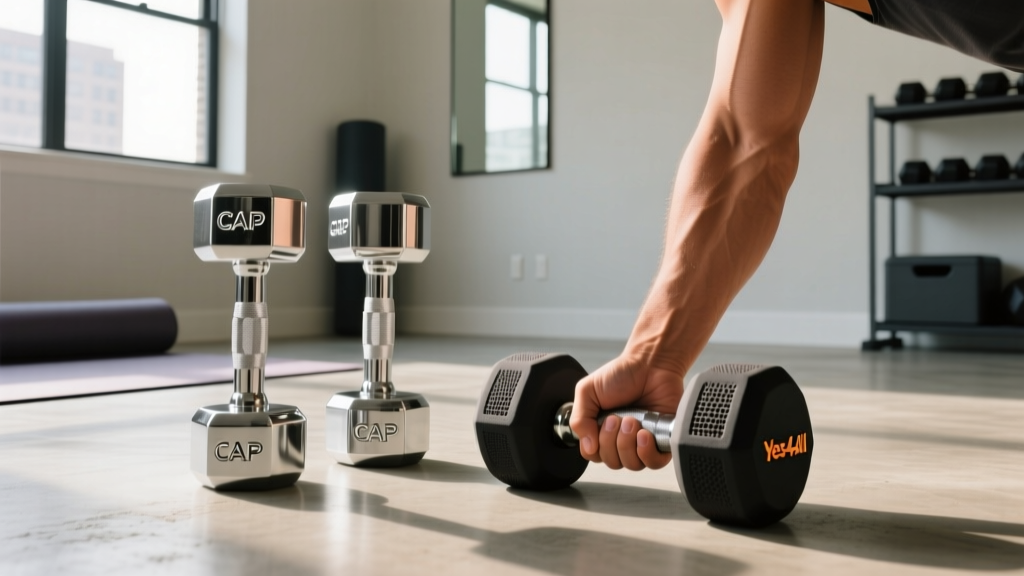
How to Workout Using Dumbbells: CAP vs. Yes4All Neoprene

Power Rack vs Squat Rack vs Stand + Dumbbell Thigh Exercises
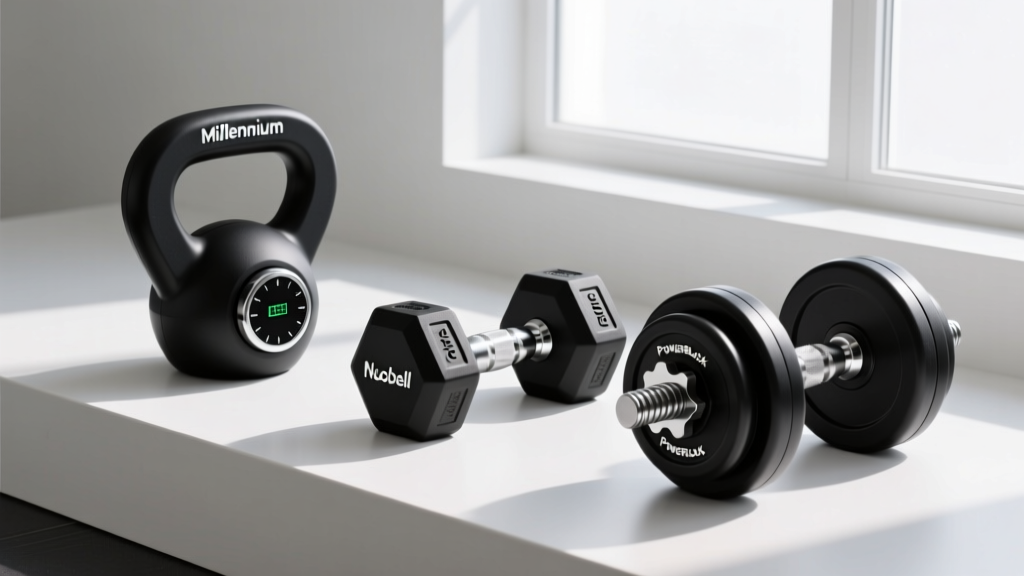
Millennium Dumbbell vs Nuobell & PowerBlock: 2026 Comparison

2026 Trends: Loadable Gear for Dumbbell Serratus Anterior Exercises

Top Dumbbell Racks for Heavy Lifts & Seated Dumbbell Good Mornings
