
Cast Iron vs Competition Kettlebells: 2026 Trends & Dumbbell Diagonal Raises
Analyze the 2026 kettlebell market comparing cast iron vs competition models, pricing trends, and how dumbbell diagonal raises impact buyer choices.

The 2026 Free Weight Market: A Tale of Two Kettlebells
The free weights market has undergone a significant evolution over the past few years, and as we navigate 2026, the kettlebell segment remains one of the most dynamic categories in commercial and home gym equipment. No longer just a niche tool for hardstyle swings and Turkish get-ups, kettlebells are now central to hybrid training methodologies that blend ballistic power with targeted hypertrophy. For gym owners, strength coaches, and serious home-gym builders, the primary purchasing dilemma remains unchanged but more nuanced than ever: should you invest in traditional cast iron kettlebells or standardized competition kettlebells?
This trend report and market analysis breaks down the manufacturing economics, pricing shifts, and biomechanical applications of both styles. Furthermore, we will explore how the rise of hybrid isolation movements—specifically the adaptation of dumbbell diagonal raises using kettlebells—is influencing handle geometry preferences and driving new purchasing behaviors in the current fitness landscape.
2026 Market Insight: According to recent fitness industry equipment reports, hybrid functional bodybuilding has surged in popularity. Athletes are increasingly merging traditional kettlebell ballistics with slow-tension isolation work, forcing manufacturers to pay closer attention to handle ergonomics and horn clearance across all weight classes.Cast Iron Kettlebells: Market Share, Pricing, and Manufacturing
Cast iron kettlebells dominate the market in terms of sheer volume. Manufactured via sand casting, these bells are poured into molds, resulting in a product where the physical dimensions scale proportionally with the weight. A 32kg cast iron kettlebell is significantly larger and features a thicker handle than a 12kg model from the same product line.
The Economics of Sand Casting and Coatings
The primary advantage of cast iron is cost-efficiency. In 2026, the average price per pound for high-quality cast iron kettlebells ranges from $1.80 to $3.50, depending on the coating and brand prestige. Entry-level models from brands like CAP Barbell utilize basic enamel paints that are prone to chipping and require frequent maintenance to prevent oxidation. However, premium manufacturers like Rogue Fitness and Rep Fitness have elevated the cast iron market by utilizing advanced powder coatings and ceramic-based finishes like Cerakote.
These premium coatings not only resist corrosion and UV degradation but also provide a superior tactile grip, reducing the need for excessive chalk during high-repetition endurance sets. The failure mode for cheap cast iron is almost always the handle seam; poorly finished molds leave burrs that tear calluses. Premium brands now employ CNC machining or robotic grinding to ensure a seamless, polished handle, a feature that has become a baseline expectation for consumers in the mid-to-high-tier market.
Competition Kettlebells: Standardization and the Premium Tier
Competition kettlebells are engineered for uniformity. Whether you are lifting an 8kg or a 48kg bell, the outer dimensions remain exactly the same: 280mm in width, 210mm in height, and a standardized 33mm handle diameter. Constructed from forged steel or welded steel shells filled with a dense filler (often a mixture of iron ore, lead-free steel shot, and resin), these bells are designed for the sport of kettlebell lifting (Girevoy sport) where technique consistency across varying loads is paramount.
Forged Steel and Color-Coded Precision
The market for competition bells is a premium tier, with pricing generally sitting between $4.50 and $7.50 per pound. Brands like Kettlebell Kings and Onnit lead this space, offering International Kettlebell and Fitness Federation (IKFF) approved dimensions. The color-coded bodies (e.g., yellow for 16kg, green for 24kg, red for 32kg) allow for rapid weight identification in busy commercial gyms or competition platforms.
According to Kettlebell Kings, the uniform window size (the space between the handle and the bell) on competition models is strictly regulated. While this standardization is perfect for cleans and snatches, it creates specific biomechanical limitations for non-traditional exercises, a factor that is increasingly relevant in modern programming.
Head-to-Head Matrix: Cast Iron vs. Competition (2026 Data)
To help buyers navigate the 2026 landscape, we have compiled a direct comparison matrix highlighting the critical specifications and market averages for both categories.
| Feature | Cast Iron (Standard) | Competition (Steel) |
|---|---|---|
| Price per Pound (2026 Avg) | $1.80 - $3.50 | $4.50 - $7.50 |
| Handle Diameter | Variable (30mm - 40mm+) | Uniform (33mm) |
| Bell Dimensions | Scales with weight | Uniform (280x210mm) |
| Inner Window Clearance | Expands on heavier bells | Fixed (approx. 115mm) |
| Primary Failure Mode | Enamel chipping / Rust | Dent / Shell puncture |
Biomechanical Crossover: Kettlebells and Dumbbell Diagonal Raises
One of the most fascinating trends in 2026 strength and conditioning is the blending of equipment modalities. Coaches are no longer strictly siloing equipment; they are exploiting the unique physics of one tool to enhance the biomechanics of an exercise traditionally meant for another. A prime example is the programming of dumbbell diagonal raises using light-to-moderate kettlebells.
The dumbbell diagonal raise (often performed in the scapular plane to target the medial and anterior deltoids while respecting shoulder joint mechanics) relies on a specific grip and lever arm. When an athlete substitutes a dumbbell for a kettlebell to perform dumbbell diagonal raises, the offset center of mass fundamentally changes the tension curve. The weight pulls not just downward, but outward and forward, demanding significantly more rotator cuff stabilization and core anti-rotation at the top of the movement.
Why Handle Geometry Dictates the Exercise Choice
This is where the cast iron vs. competition debate directly intersects with modern hypertrophy programming. When executing dumbbell diagonal raises with a kettlebell, the athlete typically grips the horn or the top of the handle in a neutral or slightly pronated position. As the arm elevates diagonally across the body, the wrist naturally supinates slightly at the peak contraction.
- The Competition Bell Limitation: Because competition kettlebells have a fixed, narrow inner window (approx. 115mm) and a uniform 33mm handle, the bell's body sits very close to the forearm. During the supination phase of dumbbell diagonal raises, the bulky 16kg or 20kg steel shell can pinch the wrist or dig into the radial bone, causing discomfort and limiting the range of motion.
- The Cast Iron Advantage for Isolation: Conversely, a 24kg or 28kg cast iron kettlebell features a much wider handle window and larger horn clearance. This extra space allows the wrist to rotate freely during dumbbell diagonal raises without the iron horn impinging on the forearm. As noted by the American Council on Exercise (ACE), understanding the subtle differences in grip clearance and center of mass is critical when adapting traditional exercises to non-traditional implements.
Therefore, if a commercial gym or functional bodybuilding facility is outfitting a space specifically for hybrid hypertrophy work—including kettlebell variations of lateral and dumbbell diagonal raises—stocking heavier cast iron bells with wide windows is actually preferable for upper-body isolation work, despite the sport-specific superiority of competition bells for ballistic lower-body movements.
Buyer Decision Framework: Which Should You Stock in 2026?
Purchasing free weights is a capital-intensive decision. Based on current market pricing and training trends, here is a practical decision framework for gym owners and home-gym builders.
Opt for Cast Iron If:
- Budget is a Primary Constraint: You need to outfit a full gym with increments from 8kg to 32kg. The savings of $2+ per pound across a full rack will amount to thousands of dollars.
- Focus is on Two-Handed Ballistics and Hypertrophy: If your programming heavily features two-handed swings, goblet squats, and hybrid isolation moves like dumbbell diagonal raises, the variable handle thickness and wider windows of heavier cast iron bells provide superior ergonomics.
- Space is Limited: Cast iron bells are generally more compact at lower weights, making them easier to store in tight home gym corners.
Opt for Competition Kettlebells If:
- Technical Consistency is Paramount: You are training for Girevoy sport, or you run a facility where members frequently cycle through heavy complexes (e.g., clean and jerk to snatch) where a changing bell size would disrupt muscle memory and rack position.
- Durability in High-Traffic Environments: Steel shells withstand the abuse of being dropped on rubber mats in commercial settings far better than brittle cast iron, which can crack or chip its coating upon high-impact drops.
- Aesthetics and Organization: The uniform size and color-coding make inventory management and visual organization in a premium fitness studio significantly easier.
Final Market Verdict
The 2026 kettlebell market is not a zero-sum game between cast iron and competition steel; it is a spectrum of application. While competition kettlebells remain the undisputed champions of technical sport and high-volume unilateral complexes, premium cast iron kettlebells have carved out a massive niche in functional bodybuilding. By understanding the biomechanical nuances—such as how handle clearance impacts the execution of hybrid movements like dumbbell diagonal raises—buyers can make highly informed, performance-driven investments that yield maximum returns on the training floor.
"The best equipment buyers don't just look at the price per pound; they look at the price per movement. If the bell's geometry restricts the exercise you're trying to perform, it's the wrong tool, regardless of the material." — Garage Gym Reviews Equipment Analysis
For further reading on optimizing your free weight rack, ensure you regularly audit your equipment's coating integrity and handle seams to maintain a safe, high-performance training environment.
More gear to consider
All reviews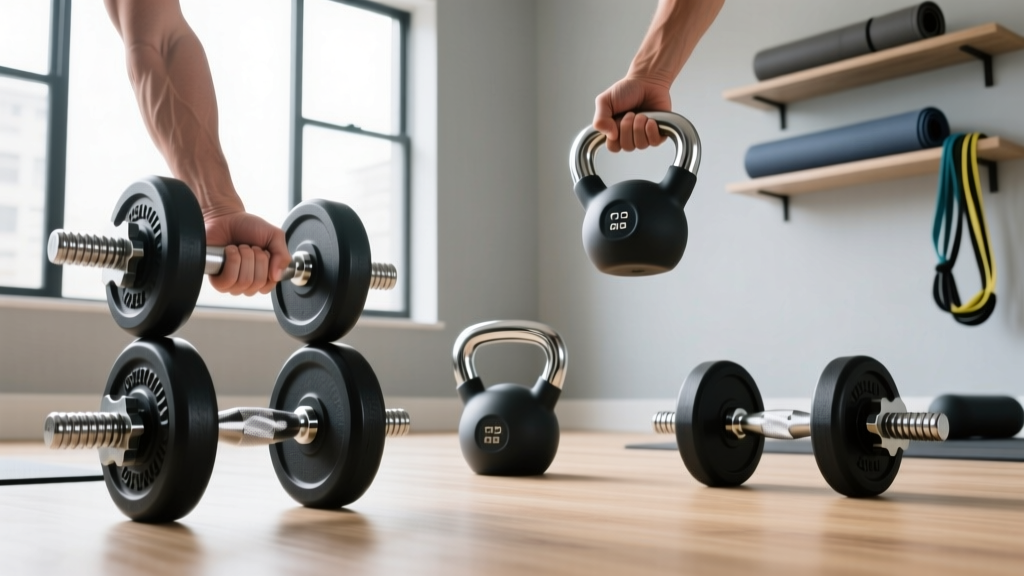
Dumbbell and Kettlebell Workout Upgrade: Barbell Weight & Knurling

Prone Dumbbell Row Safety: Maintaining Loadable Dumbbells
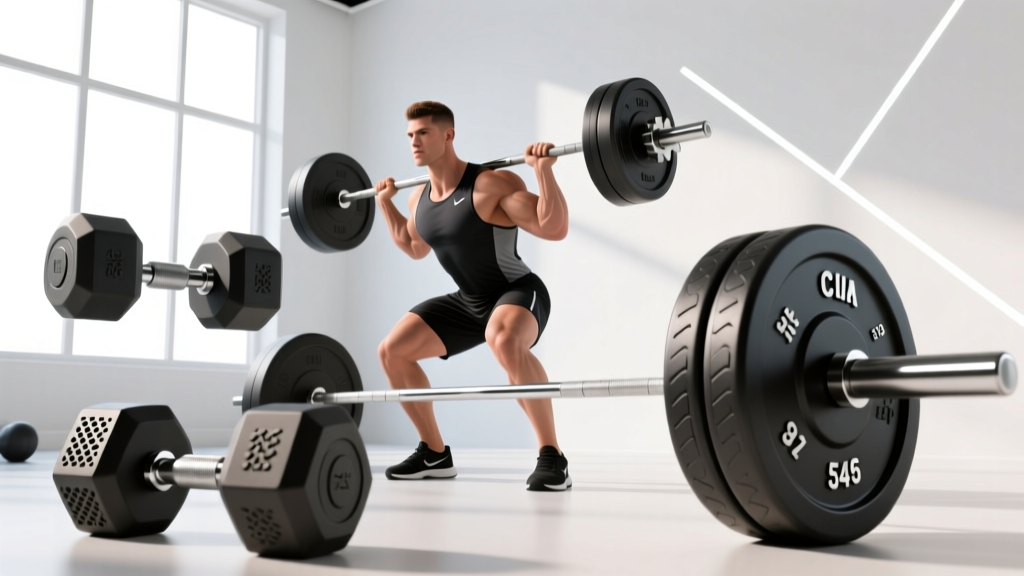
Dumbbell Cross Body Raise to Barbell: Weight & Knurling Guide

Loadable Dumbbells: Chest Exercises with Dumbbells at Home (2026)
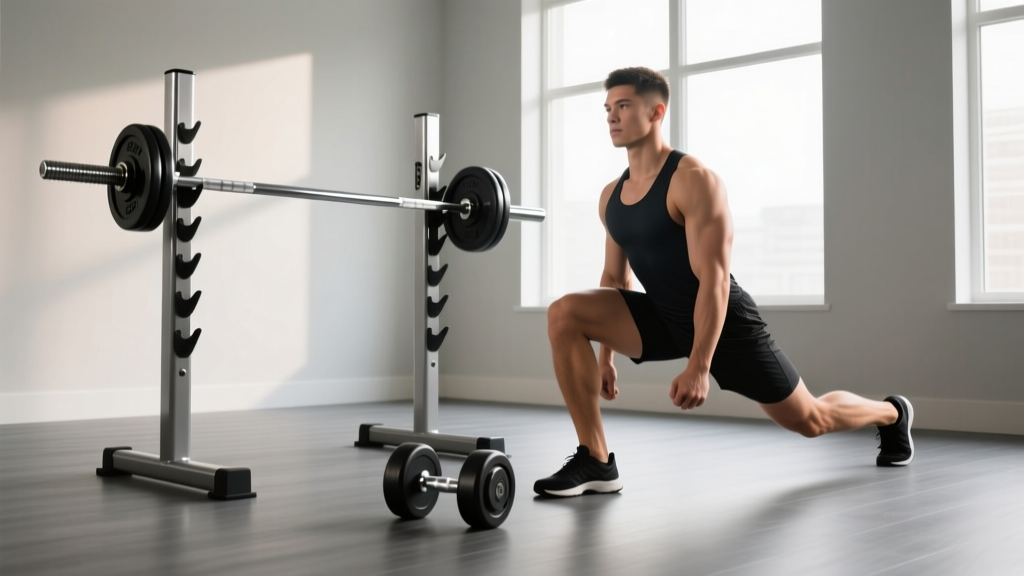
EZ Bar vs Straight Bar Care & Single Dumbbell Split Squat Tips
