Cast Iron vs Competition Kettlebells: Dumbbell Front Raise Workout 2026
Analyze 2026 market trends for cast iron vs competition kettlebells and discover how they are transforming the traditional dumbbell front raise workout.

The free weight equipment market in 2026 is undergoing a fascinating biomechanical renaissance. While the traditional dumbbell front raise workout has long been the undisputed king of anterior deltoid isolation, a significant shift is occurring in both commercial and elite home gyms. Athletes and strength coaches are increasingly pivoting toward offset-loading implements—specifically kettlebells—to introduce multi-planar stability demands that standard dumbbells simply cannot replicate. However, this shift brings a critical purchasing decision to the forefront: should you invest in standardized competition steel kettlebells or traditional cast iron models? This 2026 market analysis and buying guide breaks down the metallurgical, biomechanical, and financial differences between cast iron and competition kettlebells, specifically through the lens of modern shoulder programming.
The Biomechanical Shift: Beyond the Standard Dumbbell Front Raise Workout
When designing a hypertrophy or strength block, the traditional dumbbell front raise workout is highly effective for isolating the anterior deltoid. However, it suffers from a distinct biomechanical limitation: the moment arm is predictable, and the implement's center of mass aligns perfectly with the grip. Once the dumbbell reaches 90 degrees of shoulder flexion, the stabilizer muscles are largely disengaged.
In 2026, sports science emphasizes "offset loading" for joint health and core integration. By utilizing a kettlebell in a "bottom-up" (inverted) or "horn-grip" front raise, the center of mass is displaced several inches away from the wrist joint. This forces the rotator cuff, serratus anterior, and deep core musculature to fire aggressively to prevent the bell from flipping forward. According to biomechanical analyses published in PubMed research on kettlebell kinematics, this offset loading increases electromyographic (EMG) activation in the forearm flexors and anterior core by up to 40% compared to symmetrical dumbbell raises, without requiring heavier absolute loads that might impinge the shoulder joint.
2026 Market Matrix: Cast Iron vs. Competition Kettlebells
The global fitness equipment market continues to expand, with Grand View Research noting a distinct consumer preference toward standardized, competition-grade gear for boutique and home setups. But what exactly separates the two primary kettlebell categories on the market today?
| Feature | Competition Kettlebell (Steel) | Cast Iron Kettlebell |
|---|---|---|
| Bell Diameter | Uniform 216mm (All weights) | Variable (Increases with weight) |
| Handle Thickness | Standardized 33mm | Variable (30mm to 38mm+) |
| Material | Solid Steel / Hollow-core steel | Cast Iron (E-coat or Powder) |
| Avg. Price (16kg) | $135 - $160 | $45 - $70 |
| Best For | Technical lifts, Bottom-up work | Grinds, Swings, Budget buyers |
Deep Dive: Competition Kettlebells for Advanced Shoulder Protocols
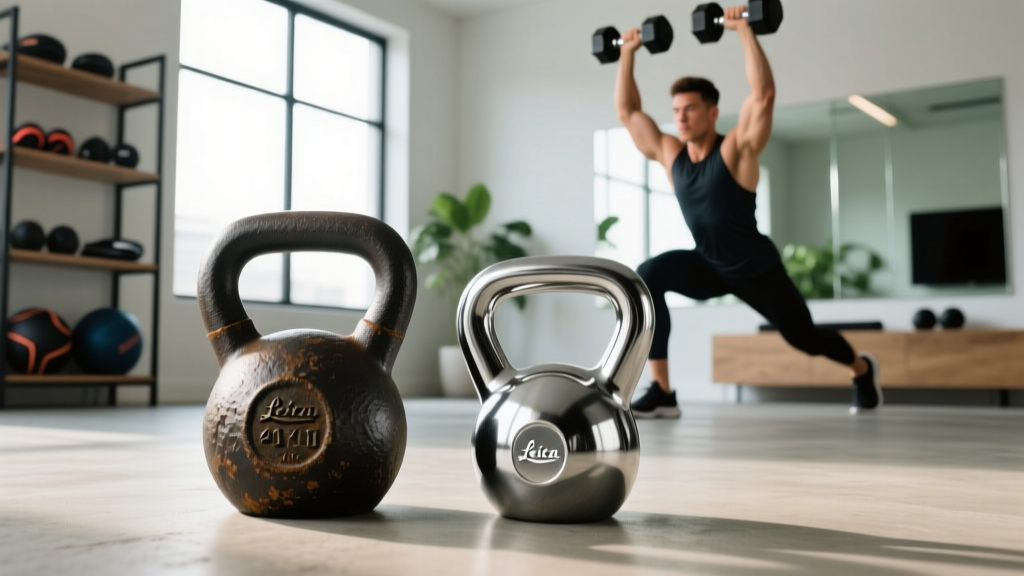
Competition kettlebells are engineered to a single, unyielding specification: a 216mm bell diameter and a 33mm handle thickness, regardless of whether the bell weighs 8kg or 48kg. Brands like Rogue Fitness and Kettlebell Kings dominate this space, utilizing high-grade steel to achieve these dimensions. Lighter bells feature internal voids or steel shavings encased in the shell to maintain the exact external volume.
Why This Matters for the Front Raise
If you are substituting your standard dumbbell front raise workout with kettlebell variations, motor pattern consistency is paramount. With a competition bell, the leverage, handle thickness, and bell clearance remain identical as you progress from a 12kg to a 16kg to a 20kg bell. This allows the lifter to focus entirely on the concentric and eccentric phases of the front raise without adjusting to a thicker handle or a wider bell that might brush against the forearm.
Expert Warning: The Bottom-Up Failure ModeWhen performing a bottom-up kettlebell front raise, the limiting factor is rarely the anterior deltoid. Instead, failure occurs via wrist extension collapse. The flexor carpi radialis and ulnaris will fatigue before the shoulder does. If your wrist begins to bend backward, terminate the set immediately to avoid dropping the steel bell on your foot or straining the medial epicondyle.
Deep Dive: Cast Iron Kettlebells (The Budget & Bulk Reality)
Cast iron kettlebells are the workhorses of the commercial gym industry. They are cheaper to manufacture, denser, and take up less physical space for heavier weights. However, their variable geometry presents unique challenges for technical shoulder work.
- Handle Scaling: A 12kg cast iron bell might feature a 30mm handle, while a 32kg bell can swell to 38mm. This massive jump in grip demand alters the neurological recruitment pattern during a front raise.
- Bell Proximity: Because heavier cast iron bells are physically larger, the center of mass shifts further away from the wrist during a horn-grip front raise, drastically increasing the torque on the shoulder joint compared to a competition bell of the exact same weight.
- Coating Durability: In 2026, powder-coated cast iron remains the gold standard for grip (absorbing chalk well), whereas cheap e-coat or painted bells become slick with sweat during high-rep shoulder isolation sets.
Programming the Offset Front Raise: A 2026 Protocol
Transitioning away from the traditional dumbbell front raise workout requires a structured approach to offset loading. Below is a proven 4-week progression protocol utilizing a single competition kettlebell.
- Week 1: The Horn-Grip Raise (Acclimation)
Hold the kettlebell by the horns (sides of the handle) upside down. Keep the bell close to the sternum and raise to eye level. 3 sets of 10 reps per arm. Focus on scapular upward rotation. - Week 2: The Bottom-Up Clean to Hold (Isometric)
Clean the kettlebell to the bottom-up position. Instead of raising it, hold the inverted bell at 90 degrees of shoulder flexion for 15-20 seconds. 4 sets per arm. This builds the wrist stability required for dynamic movement. - Week 3: Bottom-Up Partial Raises (Eccentric Focus)
Start with the bell inverted at 90 degrees. Slowly lower the bell (3-second eccentric) to 45 degrees, then raise back to 90 degrees. Do not let the bell drop below 45 degrees to maintain constant tension on the anterior delt and wrist flexors. 3 sets of 8 reps. - Week 4: Full Range Bottom-Up Front Raise
Perform the full movement from the hip to overhead. The torque at the top of the movement is immense. Use a weight 30% lighter than your standard dumbbell front raise working weight.
Supply Chain and Pricing Trends for 2026
From a market analysis perspective, the price gap between cast iron and competition steel has widened slightly in 2026 due to global steel tariffs and the specialized machining required to create hollow-core competition bells. While a 16kg CAP Barbell cast iron model can still be sourced for roughly $55, the shipping costs for lighter competition bells (which are physically large but light) have driven retail prices for an 8kg competition bell up to $110. For serious lifters replacing their dumbbell front raise workout with kettlebell mechanics, the $140 investment in a 16kg or 20kg Rogue or Eleiko competition bell yields a vastly superior biomechanical return on investment, offering a lifetime of standardized, joint-friendly shoulder training.
Final Verdict: Which Should You Buy?
If your primary goal is general conditioning, heavy swings, and budget-friendly home gym outfitting, cast iron kettlebells remain the undisputed champion of value. However, if you are a strength athlete, physical therapist, or advanced lifter specifically targeting shoulder stability, offset loading, and replacing the traditional dumbbell front raise workout with dynamic kettlebell variations, competition kettlebells are non-negotiable. The standardized 33mm handle and 216mm bell diameter ensure that your motor patterns remain pristine, allowing you to push your anterior deltoids and core stabilizers to their absolute limits safely.
More gear to consider
All reviews
EZ Curl vs Straight Bar: Neutral Grip Dumbbell Bench Layouts

Rubber Hex vs Urethane Dumbbells: Market Trends and Anticholinergic Grip Factors

Olympic vs Standard Plates: Incline Dumbbell Curl Guide

Elevated Dumbbell Squat Setup: Olympic vs Standard Plates
Dumbbell Landmine Press: Rubber Hex vs Urethane Value Guide